
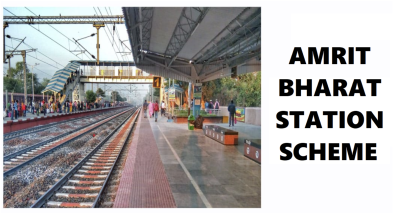
Indian Railways has reported major progress in station redevelopment, bridge safety, coach modernisation, cleanliness and passenger grievance systems. The developments reflect a wider push to improve travel experience, operational safety and infrastructure capacity across the railway network. The Amrit Bharat Station Scheme remains central to this transformation, alongside large-scale upgrades in rolling stock, catering oversight and digital complaint redressal.
Station Redevelopment Under Amrit Bharat Scheme
The Railways Ministry has completed redevelopment works at 172 stations under the Amrit Bharat Station Scheme. A total of 1,337 stations have been identified for phased redevelopment across the country. The scheme focuses on long-term station modernisation with improved passenger amenities and urban integration. Key features include:
- Better station access and circulation.
- Upgraded waiting halls, toilets, lifts and escalators.
- Wider foot overbridges and improved platforms.
- Facilities for Divyangjans.
- Multimodal connectivity and passenger information systems.
- Parking spaces, executive lounges and kiosks for local products.
- Eco-friendly designs and station development as future city centres.
Bridge Safety and Inspection Protocols
Indian Railways gives highest priority to bridge safety. All railway bridges are inspected twice a year, before and after the monsoon. More frequent inspections are ordered for bridges based on condition, as decided by the Chief Bridge Engineer. During 2022–25, up to December 2025, 8,626 railway bridges were repaired, rehabilitated, strengthened or rebuilt. Major bridges undergo comprehensive technical inspection, with 20 per cent covered annually. Special technical audits are also conducted. Road under bridges and subways are inspected before and after the monsoon to prevent waterlogging.
Modern Coaches and Manufacturing Expansion
Indian Railways has sharply increased production of LHB coaches, which are considered safer and more advanced than older ICF coaches. Between 2004 and 2014, 2,337 LHB coaches were manufactured. Production rose to 42,677 coaches during 2014–25, marking a more than 18-fold increase. India has three operational coach manufacturing units:
- Integral Coach Factory, Chennai.
- Rail Coach Factory, Kapurthala.
- Modern Coach Factory, Raebareli.
The Raebareli unit was established at a cost of ₹3,042.83 crore. A further ₹2,443 crore has been sanctioned for upgradation and augmentation of all three units.
Passenger Services, Cleanliness and Grievance Redressal
Indian Railways has allotted 11,650 stalls and units through e-auction and e-tendering, including to eligible SC and ST applicants. There is no provision for free allocation of stalls under the current policy. For cleanliness, dedicated budgetary support is provided for hygiene in stations and trains. Measures include mechanised coach cleaning, onboard housekeeping, Clean Train Station services and bio-toilets in all passenger coaches. Since 2014, over 3.61 lakh coaches have been fitted with bio-toilets. The Railways serves around 58 crore meals annually. Complaints are very low, at about 0.0008 per cent. Over the last three years, fines of ₹2.6 crore have been imposed after catering-related inquiries. To curb overcharging, Railways have introduced POS machines, SMS alerts with menu and tariff links, e-pantry services, QR-enabled identity cards for catering staff and rate stickers on food items. Passenger grievances are handled through RailMadad and RailOne, which provide single-window complaint redressal.
Last Modified: April 27, 2026