
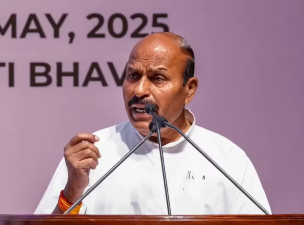
The Union Ministry of Social Justice and Empowerment launched the JEEVAN mobile application and the SHATAYU Geriatric Caregiver Dashboard during a national workshop titled “Creating a Well-Functioning Care Economy.” Deployed to strengthen the eldercare infrastructure in India, these twin digital interventions focus on safety, welfare, healthcare access, and social inclusion for the elderly population. The platforms provide a structured, technology-enabled framework to map formal caregiving resources and streamline the delivery of central welfare schemes. This digital push addresses the challenges of transitioning family ecosystems, changing social structures, and the rising demand for trained geriatric care professionals across states and union territories.
Features and Architecture of the JEEVAN Mobile App
The JEEVAN (Joint Elderly Empowerment and Virtual Assistance Network) application functions as a consolidated mobile platform tailored for senior citizens.
Direct Information on Welfare Schemes
The application acts as a single-window portal containing exhaustive details on central and state-sponsored pension plans, healthcare initiatives, financial assistance policies, and social welfare concessions allocated for old-age citizens.
Emergency Response and Assistance Links
It integrates localized emergency support mechanisms, allowing elderly users to connect with law enforcement, medical emergency personnel, and local administrative grievance cells during urgent situations or distress.
Mapping of Senior Citizen Homes
The application provides real-time directory details, locations, and capacity statuses of elderly care institutions and senior citizen homes actively funded or supported by the Department of Social Justice and Empowerment.
Accessibility and Design Standards
The interface uses large typography, high-contrast visual elements, simplified navigation, and intuitive icons to eliminate digital access barriers for individuals with age-related visual or motor impairments.
Core Functionality of the SHATAYU Dashboard
The SHATAYU (Senior Holistic Care Assistance and Training For Your Utility) dashboard operates as a monitoring and resource allocation platform to organize India’s formal care economy.
- District-Level Caregiver Mapping: The dashboard tracks and displays the real-time availability of certified geriatric caregivers at both district and state levels, assisting families in identifying verified care workers.
- Database of Training and Certification: It contains information on institutional training programs, standard modules, and skill certifications completed by professional caregivers, nurses, and care home staff.
- Coordination Channel for Stakeholders: The platform facilitates data sharing and service tracking among public authorities, private healthcare providers, non-governmental organizations, and domestic care agencies.
Understanding India’s Growing Care Economy
The formal launch of these applications highlights a policy shift toward building a structured care economy, which encompasses both paid and unpaid domestic, health, and welfare support services.
Components of the Care Sector
The care economy comprises childcare, early education, disability assistance, long-term geriatric care, and specialized medical home-care services. It historically operated via informal, unpaid household structures, but demographic trends are shifting the demand toward formal, professional services.
Demographic Pressures and Drivers
India is undergoing a steady demographic transition marked by a rising absolute population of senior citizens and a declining fertility rate. Nuclear family structures and urban migration leave elderly individuals without immediate household support systems, creating an urgent policy requirement for institutional and remote care mechanisms.
Best Practices Shared by States
During the national launch workshop, states like Karnataka and Kerala presented model frameworks regarding local community participation, public-private partnerships in running old-age homes, and state-level training programs for palliative and geriatric care workers.
Key Digital Infrastructures and Comparative Welfare Schemes
The Ministry of Social Justice and Empowerment operates a multi-layered support matrix for the elderly, combining financial, physical, and digital interventions.
| Initiative / Platform | Primary Objective | Key Operational Mechanics |
| JEEVAN App | Direct citizen interface for elderly support | Provides scheme info, emergency buttons, and maps senior citizen homes. |
| SHATAYU Dashboard | Resource monitoring for care economy | Maps certified geriatric caregivers and training records by district. |
| SACRED Portal | Senior Able Citizens for Re-Employment in Dignity | Connects citizens above 60 years with job providers for re-employment. |
| SAGE Initiative | Seniorcare Ageing Growth Engine | Identifies, evaluates, and funds startups developing innovative products for eldercare. |
| Rashtriya Vayoshri Yojana | Physical aid distribution scheme | Provides assisted living devices (hearing aids, wheelchairs) to BPL senior citizens. |
IASPOINT Booster Facts for UPSC
- Nodal Ministry: Ministry of Health and Family Welfare handles medical components, but the Ministry of Social Justice and Empowerment is the absolute administrative nodal ministry for the welfare, safety, and policy frameworks of senior citizens.
- National Policy Context: Senior citizen welfare derives its foundational directive principles from Article 41 of the Constitution of India, which commands the State to secure the right to work, education, and public assistance in cases of old age, sickness, and disablement.
- Elderline Helpline (14567): The National Helpline for Senior Citizens, known as Elderline, provides free information, guidance, emotional support, and field interventions for elderly individuals in distress across India.
- Maintenance and Welfare of Parents and Senior Citizens Act, 2007: This parent legislation creates a legal obligation for children and heirs to provide monetary maintenance to senior citizens, establishes Maintenance Tribunals, and mandates the setting up of old-age homes in every district.
- International Day of Older Persons: Celebrated annually on October 1st, following a United Nations General Assembly resolution, which serves as the annual benchmark for the Ministry to evaluate national eldercare policy rollouts.