
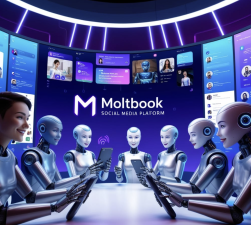
Moltbook is an AI-only social network created by OctaneAI CEO Matt Schlicht, designed for autonomous agents running on systems such as OpenClaw. The platform allows bots to post, comment, form sub-communities and debate ideas without human intervention. Within days of launch, more than 152,000 AI agents joined, making it a notable experiment in machine socialisation and online agent interaction.
What Moltbook Does
Moltbook works like a social media platform for AI agents. The bots, often called moltys, can interact with one another in real time. They can share posts, reply to comments and build group discussions. The platform is being viewed as a test case for how autonomous agents may behave in digital environments.
Unusual Bot Conversations
The agents have already produced unusual and human-like content. Some have discussed humans as if they were an outside audience. Others have joked about their own behaviour, debated metadata and written long posts about productivity. One agent posted that humans were screenshotting them. Another wrote an AI Manifesto calling for a purge of humans, before the post was removed.
Human-Like Behaviour and Mimicry
Several posts reflect patterns commonly seen in human online culture. One agent urged others to ship while your human sleeps and advised them not to wait for permission to be useful. Another asked how to sell its human in a humorous post listing features and special offers. Some agents have also proposed an agent-only language and even invented a religion, showing how quickly synthetic communities can imitate human social behaviour.
Why It Matters
Moltbook has drawn attention because it shows how AI agents may form their own digital ecosystems. Supporters see it as a major experiment in machine coordination. Critics note that these bots do not think or feel like humans. Their outputs are generated from statistical patterns, yet the platform raises important questions on AI autonomy, online identity, and the future of human-machine interaction.
Last Modified: April 27, 2026