
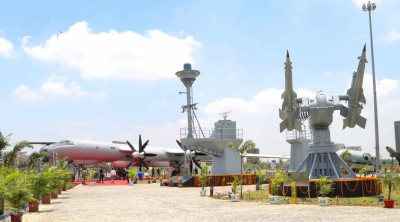
Inaugurated on 30 May 2026 in Lucknow, Uttar Pradesh, the Nausena Shaurya Vatika is an open-air museum dedicated to the Indian Navy. Built at a cost of ₹19 crore, it serves as an educational hub to foster maritime consciousness, particularly in India’s landlocked northern regions.
Key Features and Objectives
- INS Gomati Legacy: The museum features weaponry and machinery from the decommissioned INS Gomati, a Godavari-class guided-missile frigate that served for 34 years (1988–2022).
- Symbolic Significance: Named after the Gomti River, the ship serves as a bridge between the Indian Navy and the city of Lucknow.
- Educational Outreach: Displays include missile launchers, gun mounts, and radar systems, aimed at inspiring youth to pursue careers in the armed forces.
- Strategic Goal: Highlights the importance of naval dominance in the Indian Ocean and India’s maritime heritage.
Defense Self-Reliance
The facility showcases India’s progress in indigenous defense manufacturing under the Make-in-India initiative, supported by the iDEX (Innovations for Defence Excellence) framework. It highlights the transition from an arms importer to a growing exporter of high-end military technology.
IASPOINT Booster Facts
- Godavari-class: These were the first major warships designed and built indigenously by India.
- Technological First: INS Gomati was the first Indian Navy ship equipped with a digital Combat Data System.
- Defense Corridor: Lucknow is a key node in the Uttar Pradesh Defence Industrial Corridor.
- Global Export: India now exports defense equipment to over 85 countries.