
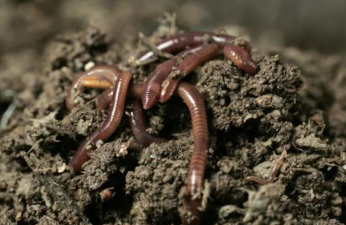
A new earthworm species has been identified from the Vazhani dam area in the Peechi-Vazhani Wildlife Sanctuary, Thrissur district, Kerala. The species has been named Drawida vazhania. It belongs to the genus Drawida and the family Moniligastridae. The discovery adds to India’s rich earthworm diversity and strengthens the significance of the Western Ghats as a biodiversity hotspot.
Discovery and Classification
The species was described in a peer-reviewed zoological journal. It is a small-bodied member of the Barwelli species group. With this addition, the Barwelli group now includes seven species. The finding was made by researchers from Christ College, Irinjalakuda, and Mahatma Gandhi University, Kottayam, along with other team members.
Distinctive Features
- The species has a grooved male genital field.
- It has a kidney-shaped or bean-shaped prostate.
- It shows a narrow tubular, C-shaped prostatic capsule.
- It has a distinct small sessile atrium on the body wall.
These features help distinguish it from other members of the same species group.
Earthworm Diversity in India
India is among the world’s most earthworm-diverse countries. A very large share of its genera and species are endemic to the country. The Western Ghats and the west coast plains account for a major portion of India’s known earthworm species. With this discovery, the number of Drawida species reported from India has risen to 83, while the Western Ghats now account for 55 species.
Kerala’s Biodiversity Significance
Kerala has the highest number of Drawida species among Western Ghats States. The State has 31 recorded species, including 16 endemic species. Researchers note that habitat destruction and land-use change remain major threats to earthworms in the Western Ghats. Midwestern and coastal lowland areas of Kerala have lost much of their forest cover, leaving limited protected habitat in the State.
Last Modified: April 29, 2026