
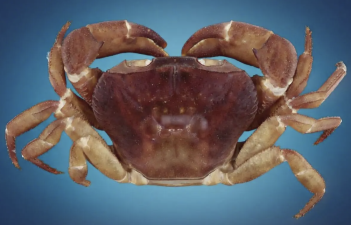
A rare freshwater crab with both male and female biological traits has been recorded from the forests of Silent Valley National Park in the Western Ghats. The species, Vela carli, is endemic to the Central Western Ghats and is found only in forest and stream habitats of the region. The finding marks the first documented case of gynandromorphy in this species and in the freshwater crab family Gecarcinucidae.
Discovery in Silent Valley
The crabs were found during biodiversity surveys in tree holes inside the forest. Among more than 120 crabs examined, only three showed the dual-sex condition. The specimens belonged to Vela carli, a freshwater crab known from the Western Ghats biodiversity hotspot.
What Is Gynandromorphy?
Gynandromorphy is a rare biological condition in which an individual shows both male and female characteristics on the same body. In these crabs, male reproductive structures were present in some parts, while other parts showed female features, including gonopores. This phenomenon is uncommon in crustaceans and had not been reported earlier in Gecarcinucidae.
Scientific Significance
The study suggests that the condition may arise from intrinsic developmental processes rather than pollution, as the habitat was not contaminated. Researchers also noted that such a trait may have survival value, since it could help reproduction when one sex is absent in a small population. The discovery adds to knowledge of crab biology and the hidden diversity of forest microhabitats.
Research and Conservation Value
The study was conducted by researchers from the Centre for Conservation Ecology, MES Mampad College, in collaboration with scientists from the Zoological Survey of India. It was published in the journal Crustaceana and supported by the Department of Science and Technology. The finding marks the ecological importance of tree holes and the need to study lesser-known species in the Western Ghats.
Last Modified: April 29, 2026