
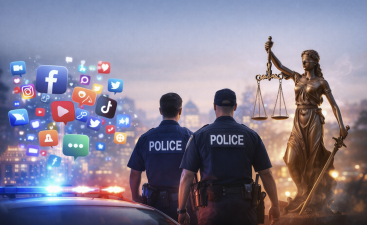
Recent developments in Maharashtra’s Nashik district have brought into light a troubling trend in policing. The local police have been publicly parading accused persons and making them chant slogans asserting law and order supremacy. This practice, resembling bulldozer justice, reflects deeper systemic failures in India’s criminal justice system. It also raises concerns about due process and the rule of law amid growing social media influence.
Context of Public Policing Spectacles
The Nashik police’s approach emerged as a response to criminal elements using social media to glorify unlawful acts. The police aim to counter this by showcasing the dominance of law enforcement through public humiliation of accused individuals. However, such spectacles risk undermining constitutional principles and invite judicial scrutiny. They offer a superficial solution to a complex problem of low conviction rates and delayed justice.
Challenges in India’s Criminal Justice System
India’s conviction rates remain distressingly low – around 38% for murder, 36% for causing hurt, and 17% for rioting (NCRB 2023). These figures embolden criminals and fuel sensational crime content online. The system struggles with vacancies exceeding 20% in police forces and rising cybercrime incidents, which increased by 39% in 2023. Fast trials, credible investigations and fair punishment are critical but currently inadequate.
Role of Social Media and Digital Policing
Social media plays a role similar to historical public discourse but cannot replace institutions. It often incentivises sensationalism, especially around crime. The police must adapt by using social media constructively—to raise awareness about cybercrime, promote professional policing and build community trust—rather than resorting to performative justice. Transparency measures like live streaming court proceedings at local levels could enhance public faith in the system.
Way Forward for Justice Delivery
Strengthening forensic science, better coordination between police and prosecutors, and improving judge-to-population ratios are vital. Visible patrolling remains an effective deterrent to street crime. The focus should be on institutional integrity and robust justice rather than viral spectacles. Upholding due process is essential to maintain a republic governed by law, not by public display.
Topics for Prelims:
Criminal Justice System in India
- Conviction rates – 37.7% (murder), 36.2% (hurt), 17.4% (rioting)
NCRB 2023 - Major challenges – slow trials, police vacancies, low conviction
- Forensic science and judicial infrastructure need strengthening
- Visible policing deters street crime effectively
- Cybercrime rose 39% in 2023
Social Media and Policing
- Social media as a platform for crime glorification and sensationalism
- Police using social media for public messaging and deterrence
- Risks of performative justice and public humiliation
- Transparency through live-streaming court proceedings
- Need for balanced digital engagement respecting due process
Rule of Law and Due Process
- Due process ensures fairness and constitutional rights
- Public spectacles risk undermining legal principles
- Judicial scrutiny of police actions is crucial
- Institutional vigour needed for effective justice delivery
- Law enforcement must resist shortcuts and uphold rights
Questions for Mains:
- Discuss the impact of social media on policing and justice delivery in India. Critically examine the challenges and opportunities it presents. [GS-III-Internal & External Security]
- Explain the reasons behind low conviction rates in India’s criminal justice system and suggest measures to improve them. With suitable examples, discuss the role of forensic science and judicial infrastructure in this context. [GS-II-Constitution of India & Polity]
- Comment on the phenomenon of bulldozer justice and public humiliation of accused persons. Discuss its implications on the rule of law and constitutional rights in India. [GS-II-Governance]
- Discuss the importance of due process in criminal justice. How can transparency measures such as live streaming of court proceedings enhance public trust in the judiciary? Critically examine with examples. [GS-II-Constitution of India & Polity]
Answer Hints:
1. Discuss the impact of social media on policing and justice delivery in India. Critically examine the challenges and opportunities it presents. [GS-III-Internal & External Security]
- Social media as a double-edged sword – platform for crime glorification vs. tool for awareness and policing
- Challenges – sensationalism, viral misinformation, pressure on police for instant justice, performative actions
- Opportunities – real-time communication, community engagement, cybercrime awareness, transparency enhancement
- Risks of undermining due process and rule of law through public spectacles (e.g., Nashik police reels)
- Need for balanced digital strategy respecting constitutional rights and promoting professional policing
- Examples – Use of live streaming courts, police social media campaigns, cybercrime reporting mechanisms
2. Explain the reasons behind low conviction rates in India’s criminal justice system and suggest measures to improve them. With suitable examples, discuss the role of forensic science and judicial infrastructure in this context. [GS-II-Constitution of India & Polity]
- Reasons – delayed trials, inadequate investigation, police vacancies (>20%), poor coordination between police and prosecutors
- Low conviction rates – 37.7% (murder), 36.2% (hurt), 17.4% (rioting) – NCRB 2023 data
- Judicial infrastructure issues – low judge-to-population ratio, backlog of cases, slow judicial processes
- Role of forensic science – strengthens evidence credibility, speeds up trials, reduces acquittals
- Improvement measures – fast-track courts, capacity building in forensic labs, better police-prosecutor coordination
- Examples – Successful handling of Naxalism/Maoism cases through institutional vigour and forensic support
3. Comment on the phenomenon of bulldozer justice and public humiliation of accused persons. Discuss its implications on the rule of law and constitutional rights in India. [GS-II-Governance]
- Bulldozer justice/public humiliation as ‘instant justice’ and spectacle-driven law enforcement
- Risks – undermines due process, presumption of innocence, right to fair trial, and dignity of accused
- Potential judicial scrutiny and legal challenges against such practices
- Short-term deterrence vs long-term erosion of rule of law and institutional trust
- Constitutional principles – equality before law, protection against cruel treatment, right to privacy
- Need for institutional integrity and robust criminal justice system rather than performative actions
4. Discuss the importance of due process in criminal justice. How can transparency measures such as live streaming of court proceedings enhance public trust in the judiciary? Critically examine with examples. [GS-II-Constitution of India & Polity]
- Due process ensures fairness, protects constitutional rights, and maintains rule of law
- Transparency builds accountability, reduces suspicion of arbitrariness and corruption
- Live streaming courts (Supreme Court, High Courts) increases public engagement and trust
- Challenges – privacy concerns, risk of sensationalism, technological readiness at local courts
- Local magistracy live streaming can make justice immediate, tangible, and accessible
- Examples – Recent Supreme Court live streaming during high-profile cases; potential extension to lower courts