
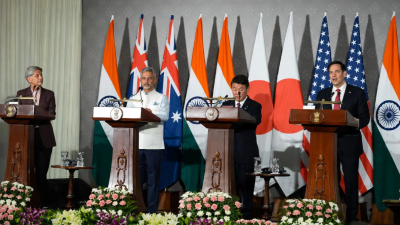
The Quad partners—India, Australia, Japan, and the United States—officially launched the Quad Critical Minerals Initiative Framework during the Quad Foreign Ministers’ Meeting in New Delhi in May 2026. This multilateral agreement establishes a targeted mechanism to counter global resource monopolies and build resilient industrial supply networks. The coalition committed to mobilizing up to USD 20 billion in public and private capital to finance exploration, refining, and recycling operations. This development comes as a direct response to escalating resource weaponization, including China’s recent export halts on rare earth magnets and heavy rare earth elements like dysprosium and terbium, which heavily disrupted global defense, green energy, and semiconductor industries.
Core Objectives and Strategic Mandate
The framework operates on a coordinated mechanism designed to bypass single points of failure in the global mining and processing landscape. It balances collective strategic requirements with individual domestic legislative priorities.
Resource De-risking and Security
The primary focus rests on decoupling high-tech manufacturing from politically sensitive supply lines. The member nations are deploying joint economic policy instruments to establish fair, competitive, and transparent mineral marketplaces that insulate their industrial bases from arbitrary export blocks.
Project Nexus Identification
The coalition targets specific ventures carrying a “Quad Nexus” for financial and technical backing. This criteria covers projects located within member countries, ventures operated by firms headquartered in Quad nations, or extraction facilities supplying Quad industrial markets.
Financial Architecture and Investment Capital
To bridge the massive capital expenditures required for mining and deep refining infrastructure, the alliance has integrated various public and private funding mechanisms.
Capital Mobilization Target
The initiative plans to pool up to USD 20 billion through public tools and private investment networks. These funds will target structural gaps in extraction, chemical processing, and metallurgical refining.
Credit and Financing Instruments
The framework coordinates state-backed financial bodies to derisk capital-intensive processing projects. The primary mechanisms deployed include:
- Export credit agencies (ECAs) providing long-term guarantees and trade insurance.
- Development finance institutions (DFIs) offering direct equity participation and low-interest infrastructure loans.
- State-backed industrial subsidies and long-term commercial offtake agreements to ensure market predictability for miners.
Regulatory Alignment and Operational Framework
Industrial bottlenecks often emerge from lengthy legal approvals rather than capital scarcity. The framework targets institutional synchronization across all four nations.
Streamlining Permissions
The partners have established a data-sharing channel to exchange technical practices regarding environmental clearances, permitting, and licensing protocols. This aims to shorten the gestation period for new mining leases without undermining domestic environmental laws.
National Security Oversight
The agreement calls for the development and reinforcement of domestic legal tools to inspect, review, and potentially block foreign corporate transactions involving critical mineral assets that pose an overt threat to the bloc’s collective security.
Processing, Recovery, and Urban Mining
With geological deposits concentrated in specific pockets, the framework emphasizes secondary recovery mechanisms to bolster resource self-reliance.
Urban Mining Infrastructure
The framework shifts focus toward electronic waste (e-waste) processing and industrial scrap metal recycling. This strategy aims to scale up the recovery of trapped materials like cobalt, lithium, and rare earths from dead batteries and discarded consumer electronics.
Technological Innovation and Trade Simplification
The alliance is co-funding R&D in clean chemical separation technologies. Furthermore, the countries are reviewing cross-border customs regulations to simplify and accelerate the import and export of scrap metals and raw electronic waste among the partner nations.
Geopolitical Context and Global Resource Race
The critical minerals landscape has transitioned into a key focus of economic statecraft, driving parallel bilateral and multilateral initiatives across the globe.
| Initiative / Policy | Lead Entity | Strategic Focus |
| Quad Critical Minerals Framework | India, US, Japan, Australia | USD 20 Billion pool for mining, processing, and urban e-waste recovery. |
| Mineral Security Partnership (MSP) | US-led (14 nations + EU) | Formed in 2022 to coordinate public-private financing; India joined in 2023. |
| National Critical Minerals Mission | India (Ministry of Mines) | Domestic ₹16,300 crore scheme running from FY25 to FY31 for self-reliance. |
| Critical Minerals Action Plan | G7 Nations | Intergovernmental strategy focused on supply chain shock defense. |
IASPOINT Booster Facts for UPSC
- China’s Supply Monopoly: China controls approximately 70% of global rare earth extraction and over 80% of global rare earth refining and magnet manufacturing capacity.
- The Magnet Crisis: In April 2025, China suspended the export of rare earth magnets, heavily impacting industries across India and the US. In response, India authorized a ₹7,280 crore incentive package to set up a 6,000 tonnes per annum domestic magnet manufacturing ecosystem.
- Heavy Rare Earth Bans: Chinese trade restrictions have restricted the export of seven critical heavy rare earths: samarium, gadolinium, terbium, dysprosium, lutetium, scandium, and yttrium.
- India-US Bilateral Synergy: Parallel to the Quad meeting in May 2026, India and the US signed a standalone framework agreement on “Securing of Supply in the Mining and Processing of Critical Minerals and Rare Earths” to deepen technological and mineral exchange.
- KABIL’s Foreign Footprint: Khanij Bidesh India Limited (KABIL), a joint venture under India’s Ministry of Mines, actively spearheads overseas asset acquisition, including lithium block exploration deals signed with Argentina.
- UNCTAD Warnings: The UN Conference on Trade and Development (UNCTAD) July 2025 report highlighted that transition metals—including copper, nickel, zinc, germanium, and tin—face the highest volume of export protectionism globally.