
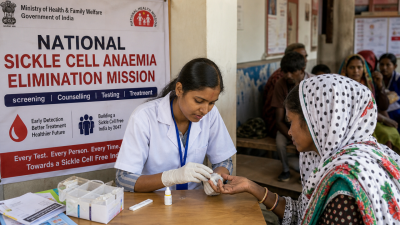
On 19 June 2026 President Droupadi Murmu said India is on track to eradicate sickle cell anaemia well before the target year of 2047, citing progress under the National Sickle Cell Anaemia Elimination Mission.
The Mission
- Launch and target: Launched 1 July 2023 from Shahdol, Madhya Pradesh; aim to eliminate as a public‑health problem by 2047.
- Implementing bodies: Operates under the Union Ministry of Health and Family Welfare with support from the Ministry of Tribal Affairs; active in 17 states.
Screening and burden
- Population screened: Over 7 crore (70 million) people aged 0–40 screened by June 2026.
- Detected burden: Approximately 2.5 lakh (250,000) persons with sickle cell disease and over 20 lakh (2 million) carriers identified.
- Endemic focus: Higher prevalence among tribal communities and selected endemic districts.
Key components
- Digital systems: Mobile application for frontline workers and a facility‑level treatment portal integrated with Ayushman Bharat Health Account.
- Programme elements: Large‑scale screening, confirmatory testing, patient registry, treatment linkage and surveillance.
Treatment and evidence
- Hydroxyurea: Continuous therapy is central to care; a decade‑long Ugandan study reports reduced mortality and complications in treated children.
- Clinical care package: Follow‑up, vaccination, infection prophylaxis, acute pain management and transfusion support.
IASPOINT Booster Facts
- Genetics: Sickle cell disease is an autosomal recessive haemoglobinopathy caused by a point mutation (glu6val) in the HBB gene producing HbS.
- Carrier status: Heterozygotes (sickle cell trait) are usually asymptomatic but transmit the allele to offspring.
- Global day: World Sickle Cell Day is observed on 19 June; 2026 theme: “Closing the Survival Gap: Equity in Sickle Cell Disease”.