
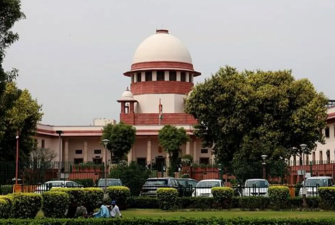
In February 2026, an unusual moment unfolded in India’s constitutional history when West Bengal Chief Minister Mamata Banerjee appeared before the Supreme Court during hearings on the Special Intensive Revision (SIR) of electoral rolls. The Court subsequently issued directions to ease procedural hardships but also stated that no impediment to the SIR would be permitted in any State. That observation has triggered a deeper debate: has the Court pre-judged the core constitutional challenge to the SIR even before deciding it?
Why the Special Intensive Revision Sparked Litigation
The SIR was first announced for Bihar in July 2025 and subsequently extended to multiple States. Petitioners questioned not merely the procedure but the very constitutionality of the exercise.
The Bihar election concluded in November 2025, effectively making the SIR in that State a fait accompli. Despite multiple hearings, the Court has yet to rule on the central constitutional question. Instead, it has passed interim directions on matters such as permissible identification documents, including Aadhaar.
The concern raised by critics is institutional: in a constitutional democracy, the Supreme Court’s primary role is constitutional adjudication, not administrative management of ongoing schemes. When constitutional challenges remain undecided while processes continue, any final judgment risks becoming retrospective validation rather than effective judicial review.
Scope of Power Under the Representation of the People Act
The SIR controversy hinges on statutory interpretation. The Representation of the People Act authorises the Election Commission of India (ECI) to undertake a special revision for “any constituency or any part of a constituency,” with reasons recorded.
The constitutional question is whether this targeted power can justify a State-wide or nationwide dragnet revision.
- The statutory language suggests a focused corrective mechanism.
- The present SIRs are broad exercises affecting entire populations.
- Existing electoral rolls are already in force, raising questions about the necessity of blanket verification.
At issue is whether a provision meant to address localised distortions can be expanded into a mass re-verification programme that effectively requires citizens to re-establish their voting eligibility.
From Targeted Suspicion to Mass Presumption
A critical constitutional principle concerns the burden of proof. In Lal Babu Hussein vs Electoral Registration Officer (1995), the Supreme Court held that removal of names from electoral rolls must follow specific notice to individuals and disclosure of reasons for suspecting non-citizenship.
The present SIR model appears to invert that logic:
- Instead of identifying specific individuals suspected of ineligibility,
- It requires the entire electorate to freshly demonstrate eligibility.
This shift raises a fundamental question: can the State operate on a generalised presumption of non-citizenship and require all individuals to prove their rights? Such inversion transforms the relationship between citizen and State, potentially weakening the presumption of inclusion that underpins democratic participation.
Form 7 and Risks of Arbitrary Deletions
The wholesale revision of voter rolls has activated Form 7 — a provision that allows any individual to object to another person’s inclusion in the electoral roll.
Reports from multiple States indicate that Form 7 has been used to file objections in large numbers. While objection mechanisms are legally permissible, their scale and pattern raise concerns about possible misuse leading to mass deletions.
The downstream effects include:
- Administrative burden on individuals to repeatedly furnish documents.
- Risk of wrongful exclusion close to election timelines.
- Potential chilling effect on voter participation.
If large-scale objections become tools for political or social targeting, the integrity of electoral rolls may be compromised rather than strengthened.
Documentation and the Equality Dimension
India’s constitutional jurisprudence recognises that formal equality is insufficient in a society marked by material disparities. Documentation requirements do not operate in a vacuum; they interact with inequalities of caste, gender, poverty, and regional marginalisation.
In contexts where:
- Access to documentation is uneven,
- Migration and informal labour are widespread,
- Women and marginalised communities often lack independent records,
a documentation-heavy verification process may disproportionately affect vulnerable populations.
From a constitutional perspective, a process that accentuates structural disadvantage risks violating the principles of equality under Article 14 and democratic participation implicit in the constitutional scheme.
Judicial Role: Adjudicator or Administrator?
The Court’s statement that no impediment to the SIR would be permitted has raised apprehensions that the judicial approach may be leaning towards administrative facilitation rather than constitutional scrutiny.
A similar pattern was seen in the Aadhaar litigation, where constitutional challenges were pending for years while the programme expanded in practice. The broader institutional question is whether delayed constitutional adjudication allows executive action to crystallise into irreversible facts on the ground.
For a constitutional court, timely adjudication is not merely procedural; it is integral to preserving the balance between State power and individual rights.
What to Note for Prelims?
- Special Intensive Revision (SIR) – purpose and legal basis under the Representation of the People Act.
- Role and powers of the Election Commission of India under Article 324.
- Form 7 under electoral rules – provision for objections to voter inclusion.
- Case: Lal Babu Hussein vs Electoral Registration Officer (1995).
- Constitutional principles of equality (Article 14) and democratic participation.
What to Note for Mains?
- Scope of ECI’s statutory power versus constitutional limitations.
- Burden of proof in citizenship and voter eligibility — targeted suspicion vs mass presumption.
- Judicial review and the risk of “fait accompli” in constitutional litigation.
- Equality jurisprudence and the asymmetric impact of documentation regimes.
- Balancing electoral integrity with protection against disenfranchisement.