
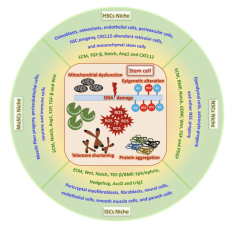
Age-related tissue decline may begin not in stem cells themselves, but in the support cells that surround them. A new study on fruit fly ovaries shows that these neighbouring niche cells are highly dependent on autophagy, the cell’s recycling system, for survival and for maintaining stem cell function. The findings offer fresh insight into how tissues lose regenerative capacity with age and may help shape future strategies for healthy ageing.
Key Finding
Researchers at the Agharkar Research Institute, Pune, studied germline stem cells in Drosophila melanogaster. They found that stem cells could tolerate very low autophagy levels. However, the surrounding cap cells were far more vulnerable. When autophagy-related genes such as Atg1, Atg5 and Atg9 were switched off in these support cells, the niche deteriorated and stem cells were eventually lost.
Role of Cap Cells
Cap cells form the stem cell niche in the ovary. They provide biochemical signals that preserve stem cell identity and support egg production. The study showed that when autophagy failed in cap cells, their structure broke down and their ability to send maintenance signals weakened. This directly affected Bone Morphogenetic Protein, or BMP, signalling, which is essential for stem cell upkeep.
Why It Matters
The research challenges the view that ageing is driven mainly by damage inside individual stem cells. Instead, it suggests that ageing can start in the microenvironment around them. A weak niche can trigger tissue decline even when stem cells remain intrinsically healthy. This community-level model of ageing may be relevant to other tissues such as the intestine, skin and muscle.
Broader Scientific Significance
The study marks autophagy as a key process in preserving niche integrity and regenerative capacity. Because autophagy and stem cell signalling pathways are conserved across species, the findings may inform future research on fertility, tissue repair and age-related degeneration in mammals, including humans.
Last Modified: April 26, 2026