
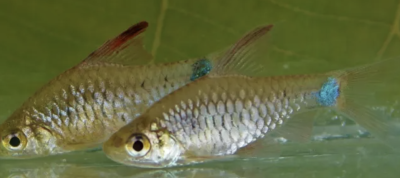
Freshwater biodiversity in Nagaland has received fresh scientific attention with the description of two new fish species from tributaries of the Brahmaputra basin. The species, Glyptothorax sentimereni and Oreichthys elianae, were identified during ichthyological surveys in Mokokchung district. The findings add to evidence that the river systems of Nagaland remain poorly explored but biologically rich.
Discovery and Publication
The two species were described by researchers from the Indian Council of Agricultural Research – Central Island Agricultural Research Institute and an independent researcher. The study was published in the international journal Zootaxa. The discoveries were made in freshwater streams and tributaries linked to the Brahmaputra River system.
Glyptothorax sentimereni
Glyptothorax sentimereni was found in the rocky Dikhu River. It belongs to a group of torrent-dwelling catfishes adapted to fast-flowing water.
- It has a rhomboidal thoracic adhesive apparatus with keratinised striae.
- This structure helps it cling to rocks in strong currents.
- It also shows serrations on the dorsal-fin spine.
- The species was recorded in shallow, clear, boulder-strewn water.
Oreichthys elianae and Regional Significance
Oreichthys elianae was discovered in a small tributary of the Tsurang River. It is a tiny cyprinid fish measuring just over 2.5 cm in standard length.
- It has bright red fins and a black blotch at the base of the tail.
- It has an incomplete lateral line with only five pored scales.
- It is distinct from related species found in India and South-East Asia.
- The species marks the hidden freshwater diversity of the region.
Scientific and Biodiversity Importance
Nagaland lies at the confluence of the Eastern Himalaya and Indo-Burma biodiversity hotspots. Its river systems have been shaped by complex geological history, including tectonic movements and river capture events. Although the state is known for orchids, amphibians, butterflies, and beetles, freshwater fish diversity has remained understudied. The discovery of these two species underlines the need for further biodiversity surveys in North-East India.
Last Modified: April 28, 2026