
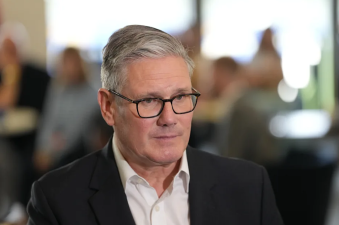
The United Kingdom government faced a severe political crisis on 12 May 2026 when Miatta Fahnbulleh, the Junior Devolution Minister in the Ministry of Housing, Communities and Local Government, resigned from her post. Fahnbulleh, who serves as the Member of Parliament for Peckham, became the first frontbench minister to step down publicly following catastrophic local election results for the ruling Labour Party across England, Wales, and Scotland. In her resignation letter to Prime Minister Keir Starmer, she stated that the administration lacked the necessary vision and pace to deliver its mandate. The development triggered a broader wave of internal dissent within the party.
Escalation of Internal Dissent and Structural Pressures
The political fallout expanded rapidly beyond the initial resignation, exposing deep ideological and strategic fractures within the parliamentary party.
Wave of Resignations and Backbench Rebellion
- Parliamentary Private Secretaries: Several Parliamentary Private Secretaries—who serve as the crucial first-rung bridge between ministers and backbench MPs—resigned from multiple departments in a coordinated display of internal protest.
- Demands for Leadership Transition: Over seventy Labour Members of Parliament issued coordinated public statements demanding either the immediate resignation of Prime Minister Keir Starmer or the swift publication of a formal timetable for an orderly leadership transition.
- Cabinet-Level Fractures: The crisis deepened in the subsequent days when senior Cabinet members, including Health Secretary Wes Streeting, also resigned to position themselves for an impending leadership contest.
- Executive Stance: Prime Minister Starmer rejected all calls for his departure, asserting his intention to remain in office, handle the domestic cost-of-living challenges, and resist any formal internal leadership challenge.
Constitutional and Procedural Mechanisms of Leadership Challenges
The crisis brings into focus the distinct statutory and conventional mechanisms that govern executive power and party leadership within the British Westminster model.
The Labour Party Leadership Challenge Framework
- The 20% Threshold Rule: Under current Labour Party rules, a formal leadership challenge against an incumbent leader can only be triggered if a minimum of 20% of sitting Labour Members of Parliament formally nominate an alternative challenger.
- Automatic Ballot Placement: If the internal party threshold is met and a challenge is successfully triggered, the incumbent leader automatically secures a place on the ballot paper without needing to gather fresh nominations.
- The Co-terminus Convention: Unlike presidential systems, the office of the Prime Minister is tied directly to the leadership of the majority governing party. A change in party leadership automatically results in a change of Prime Minister without requiring an immediate general election.
Collateral Political Controversies
The leadership crisis coincided with intense scrutiny over high-profile diplomatic appointments, adding to the governance challenges faced by Downing Street.
Scrutiny Over Diplomatic Vetting
- The Washington Appointment: The government faced sustained criticism regarding the institutional vetting process applied to the proposed appointment of senior Labour figure Peter Mandelson as the UK Ambassador to the United States.
- Public Scrutiny: Mandelson’s selection faced severe political pushback due to past personal and professional associations linked to Jeffrey Epstein, a convicted United States sex offender.
- Impact on Diplomatic Credibility: Critics argued that the controversy surrounding the vetting mechanism undermined the diplomatic credibility of the Foreign, Commonwealth & Development Office during a period of acute domestic instability.
| Political Position | Role and Institutional Function | Impact During May 2026 Crisis |
| Prime Minister | Head of Government; exercises executive power via the Crown prerogative | Face of the rebellion; vowed to resist leadership challenges |
| Junior Devolution Minister | Sub-cabinet executive rank handling local government and regional devolution | Position held by Miatta Fahnbulleh; served as the catalyst for frontbench resignations |
| Parliamentary Private Secretary (PPS) | Unpaid assistant to a Minister; acts as the eyes and ears of the executive on backbenches | Multiple personnel resigned, signaling a breakdown in party discipline |
| Backbench MP | Members of Parliament who do not hold ministerial or shadow ministerial office | Over 70 members publicly demanded a timetable for an orderly transition |
IASPOINT Booster Facts for UPSC
- Westminster Model Core Principle: The executive is drawn directly from the legislature and is constitutionally responsible to it. A Prime Minister must retain the confidence of the House of Commons to remain in power.
- Cabinet Collective Responsibility: A core constitutional convention in the UK dictating that all members of the government must publicly support executive decisions. If a minister wishes to openly criticize or dissent from the Prime Minister’s path, they are conventionally required to resign first.
- The Role of Parliamentary Private Secretaries (PPS): Although a PPS is not a formal minister and receives no additional salary, they are considered part of the broader “payroll vote.” They are bound by the rules of collective responsibility, making their resignation a vital indicator of government instability.
- Local Elections Realignment: Local council elections in the United Kingdom do not alter the composition of the central Westminster Parliament directly, but they serve as a critical nationwide indicator of voter sentiment, often precipitating internal party coups if results show severe declines.