
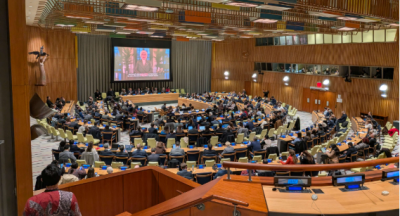
Ahead of the International Day of Zero Waste on 30 March, the United Nations has identified 20 cities as the inaugural 20 Cities Towards Zero Waste. The initiative is led by the UN Secretary-General’s Advisory Board on Zero Waste, with support from UN-Habitat and the United Nations Environment Programme (UNEP). It recognises cities that are adopting practical and innovative waste-reduction measures and circular economy solutions.
Purpose of the Initiative
The initiative aims to show city leadership in waste management and encourage wider adoption of zero-waste practices. It seeks to:
- Recognise urban innovation in waste reduction.
- Promote exchange of good practices and lessons learned.
- Inspire other cities to accelerate zero-waste transition.
- Support local circular economy approaches.
Selected Cities
The 20 selected cities are spread across Asia, Africa, Europe, North America and Latin America. They include:
- Accra, Bologna, Chefchaouen and Dar es Salaam.
- Dehiwala City, Florianópolis, Gaziantep and George Town.
- Hangzhou City, Iloilo City, Kisumu and Kuala Lumpur.
- Lilongwe, San Fernando, San Francisco and Sanya City.
- Suzhou City, Varkala, Yokohama and Zapopan.
Varkala is the Indian city included in the list.
Waste Solutions Highlighted
The selected cities are implementing a range of measures to reduce waste and improve resource use. These include:
- Food waste prevention and organic waste management.
- Reuse and refill systems.
- Inclusive recycling models that support informal workers.
- Policies to reduce single-use products.
- Community engagement to change behaviour.
Examples cited include strong producer responsibility models, refill systems, and the inclusion of waste pickers in local recycling systems.
Relevance for Sustainable Development
The initiative is linked to SDG 11 on sustainable cities, SDG 12 on responsible consumption and production, and SDG 13 on climate action. With more than 2.1 billion tonnes of municipal solid waste generated globally each year, cities are central to tackling pollution, protecting public health, and building resilient urban systems. The selected cities will be formally recognised around the International Day of Zero Waste and showcased as models for local action.
Last Modified: April 28, 2026