
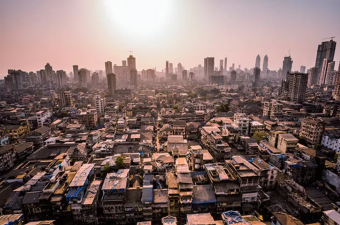
As the Union Budget 2026 was presented, familiar phrases—capital investment, growth momentum, and the vision of Viksit Bharat—once again framed the government’s narrative. Cities were described as engines of productivity and anchors of India’s future growth. Yet a closer look at the numbers reveals a quieter, more troubling reality: urban India is being fiscally compressed at a time when its challenges are intensifying. The Budget signals not expansion but retreat, with implications that go far beyond accounting.
When Rhetoric Meets Arithmetic
The most telling indicator lies in the aggregate figures. The total central outlay for urban development has fallen from ₹96,777 crore in the previous year to ₹85,522 crore in 2026–27—an absolute cut of ₹11,255 crore, or about 11.6%. Once inflation is accounted for, the real decline is even steeper. This effectively asks cities to shoulder growing demands—migration, infrastructure stress, climate shocks and job creation—with fewer public resources. The cut also suggests a deeper shift in fiscal priorities: while capital expenditure remains the government’s macroeconomic anchor, urban development no longer appears to be viewed as a growth-critical investment space.
The Metro Rail Bias in Urban Spending
Within a shrinking urban envelope, spending priorities remain sharply skewed. Metro rail and mass rapid transit projects continue to dominate allocations. Although funding for metros has declined from ₹31,239.28 crore to ₹28,740 crore—an 8% reduction—it still absorbs nearly one-third (around 33.6%) of total central urban spending.
This concentration is not merely technical; it reflects a particular urban imagination. Metro systems are capital-intensive, geographically limited and socially selective, serving dense corridors and largely formal commuters in big cities. They are important, but they cannot substitute for broader mobility needs. Bus-based public transport, suburban rail, non-motorised transport and last-mile connectivity—modes that actually carry the urban majority—remain underfunded. By privileging visibility over universality, urban mobility is treated as an engineering project rather than a social system.
Flagship Schemes Under Fiscal Strain
The contraction becomes sharper when one examines centrally sponsored urban schemes. Allocations have declined across the board, signalling a withdrawal from welfare- and service-oriented urban interventions.
Funding for Pradhan Mantri Awas Yojana (Urban) has fallen from ₹19,794 crore to ₹18,625 crore, a cut of nearly 6%. This comes despite persistent urban housing shortages, rising land and rental costs, and the continued expansion of informal settlements. Reduced housing support directly translates into prolonged informality and exclusion from basic services.
Even more striking is the treatment of sanitation. The allocation for Swachh Bharat Mission (Urban) has been halved from ₹5,000 crore to ₹2,500 crore. Sanitation, however, is not a one-time achievement but a continuous service requiring sustained investment in waste processing, sewage treatment and worker safety. A 50% cut represents not efficiency but rollback.
Similarly, funding for Atal Mission for Rejuvenation and Urban Transformation has declined from ₹10,000 crore to ₹8,000 crore. At a time of acute urban water stress—marked by groundwater depletion, ageing pipelines and climate variability—this 20% reduction weakens the backbone of urban sustainability.
Cities Without Fiscal Autonomy
These cuts are not compensated by new institutional arrangements or greater fiscal devolution. Urban local bodies remain structurally weak, heavily dependent on tied transfers and constrained in their capacity to plan long-term infrastructure or service delivery. This is especially consequential now, as cities absorb large-scale migration, face rising informalisation of work, and confront climate-induced risks such as heatwaves, floods and water scarcity. In such a context, reducing real urban spending is not fiscal prudence but strategic short-sightedness.
Why This Matters for ‘Viksit Bharat’
The contradiction at the heart of the Budget is stark. Cities are celebrated rhetorically as engines of growth, yet constrained fiscally in practice. No country has achieved high-income status without strong, inclusive and well-funded cities. Urban India generates the bulk of GDP, absorbs labour and anchors innovation ecosystems. Weakening its fiscal base undermines the very ambitions that the vision of Viksit Bharat claims to pursue.
What to Note for Prelims?
- Total central outlay for urban development in 2026–27: ₹85,522 crore (11.6% cut).
- Metro rail share in urban spending: about one-third of total allocation.
- Key scheme cuts: PMAY-U (~6%), SBM-U (50%), AMRUT (20%).
What to Note for Mains?
- Analyse the implications of declining urban investment on growth and inclusion.
- Critically examine metro-centric urban transport planning versus multimodal needs.
- Discuss the link between fiscal decentralisation, urban governance and service delivery.
- Evaluate the contradiction between the rhetoric of “Viksit Bharat” and urban budget priorities.