
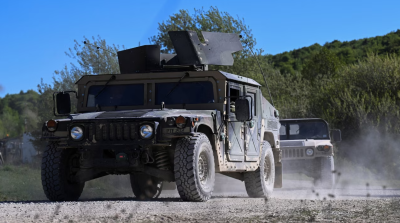
On 1 May 2026, the United States Department of Defense announced the withdrawal of approximately 5,000 military personnel from Germany, with the redeployment scheduled for completion within six to twelve months. The reduction includes an Army brigade combat team and a long-range fires battalion. This drawdown represents 14 percent of the 35,000 active-duty U.S. personnel stationed in Germany as of late 2025. Ordered by Defense Secretary Pete Hegseth, the decision follows a strategic review of U.S. European Command posture amid geopolitical friction between U.S. President Donald Trump and German Chancellor Friedrich Merz regarding Berlin’s policy toward the conflict in Iran.
Strategic Parameters of the Withdrawal
Force Composition and Scale
The force reduction alters the operational capability of United States Army Europe and Africa (USAREUR-AF). The withdrawal primarily targets two major combat and support components:
- Infantry/Armor Capability: An entire Army brigade combat team will depart, reducing ready-response ground forces.
- Artillery and Strike Capability: A long-range fires battalion, which provides deep-strike precision capabilities, will be deactivated or reassigned outside Germany.
This adjustment returns the total U.S. military footprint in Europe close to the baseline levels observed before the 2022 security reassessments.
Infrastructure and Basing Impacts
The United States maintains a complex network of military installations across Germany. The reduction affects personnel distribution across several key hubs, though the Pentagon has not finalized which specific installations will face closures or downsizings.
Historical Policy Shifts and Geopolitical Drivers
Political Timeline of U.S. Troop Presence in Germany
The size of the U.S. military presence in Germany has frequently shifted due to changing presidential administrations and security priorities:
| Timeline | Administration | Policy Action | Strategic Focus |
| 2020 | Trump Administration (First Term) | Ordered withdrawal of 12,000 troops | Dissatisfaction with German defense spending |
| 2021 | Biden Administration | Halted withdrawal; increased troop baseline | Recommitting to NATO and European collective defense |
| 2022–2025 | Biden Administration | Expanded force posture to 35,000–36,000 troops | Deterrence and regional stabilization |
| 2026 | Trump Administration (Second Term) | Ordered withdrawal of 5,000 troops | Friction over the Iran conflict and burden-sharing |
The Iran Conflict Catalyst
The immediate catalyst for the 2026 drawdown is a diplomatic disagreement between Washington and Berlin. Following the outbreak of a U.S.-led war in Iran in early 2026, German Chancellor Friedrich Merz expressed public reservations regarding Germany’s logistical and political involvement. The Trump administration responded by initiating a force posture review, leading Defense Secretary Pete Hegseth to issue the withdrawal mandate as a realignment of strategic assets toward the Middle East and Indo-Pacific theaters.
Institutional Framework of U.S. European Command
Command Structure and Key Bases
Germany serves as the logistical backbone for U.S. military operations across Europe, Africa, and the Middle East. The major installations supporting this network include:
- Stuttgart (Patch Barracks): The headquarters of United States European Command (EUCOM) and United States Africa Command (AFRICOM).
- Ramstein Air Base: The hub for U.S. Air Forces in Europe (USAFE) and a critical transit point for global medical evacuations and cargo deployment.
- Grafenwoehr and Hohenfels: Massive training areas providing live-fire and maneuver exercises for NATO allies.
- Landstuhl Regional Medical Center: The largest American military hospital outside the continental United States.
IASPOINT Booster Facts for UPSC
- The NATO Defense Investment Pledge: At the 2014 Wales Summit, NATO members agreed to spend at least 2% of their Gross Domestic Product (GDP) on defense by 2024. This metric remains a central point of contention in bilateral U.S.-Germany defense relations.
- Legal Status of Forces: The presence of U.S. troops in Germany is governed by the NATO Status of Forces Agreement (SOFA), originally signed in 1951, alongside the 1959 Supplementary Agreement which regulates foreign troop deployments on German soil.
- Post-World War II Context: The U.S. military presence in Germany began in 1945 as an occupation force following World War II. During the peak of the Cold War, the U.S. maintained over 250,000 troops in West Germany to counter Warsaw Pact forces.
- Baiterek and External Agreements: Unlike joint regional defense agreements that require consensus, unilateral troop withdrawals under EUCOM fall entirely within the executive authority of the U.S. President as Commander-in-Chief.