
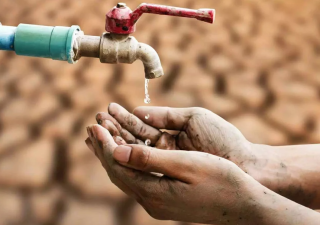
The Ministry of Jal Shakti has emphasized the institutionalization of water budgeting across rural India to tackle the critical challenges of depleting aquifers and uneven resource distribution. According to data from the Central Water Commission, India receives an average annual precipitation of 3,880 Billion Cubic Metres (BCM), leaving an average annual net water availability of 1,999.20 BCM after natural losses. Rapid population growth has consistently driven down per capita water availability, making decentralized, demand-side governance vital. Water budgeting serves as a systematic mechanism to evaluate local water assets against sector-wise demands, ensuring ecological balance and resource sustainability.
Core Concept and Scientific Framework
Definition and Scale of Application
Water budgeting is a decentralized accounting system that measures total water inputs against total water outputs within a specific geographical unit. It acts as a financial ledger for water, tracking resources at the village, Gram Panchayat, block, or watershed level. This allows local administrative units to transition from traditional supply-side expansion to data-driven, demand-focused management tailored to localized hydrogeological conditions.
Elements of the Water Equation
The hydrological balance is calculated using specific environmental inputs and consumption variables:
- Water Inputs: Measured through total seasonal rainfall, surface water inflows via canals or streams, and natural underground aquifer recharge.
- Water Outputs: Factored through natural evapotranspiration, surface runoff losses, soil moisture absorption, and active groundwater extraction.
- Anthropogenic Demand: Aggregated based on the cumulative requirements of human consumption, domestic household needs, livestock sustenance, and agricultural irrigation.
Demand Dynamics in Rural Ecosystems
High Agricultural Consumption
Agriculture remains the largest consumer of water in rural India, accounting for 80% to 90% of total regional usage. The National Commission on Integrated Water Resources Development projects that aggregate national irrigation demand will reach 807 BCM by 2050 under high-demand scenarios. Cultivating water-intensive crops like paddy and sugarcane in arid or semi-arid zones speeds up localized groundwater depletion.
Demographic and Livestock Pressures
India supports 17.5% of the global human population alongside 11.6% of the world’s total livestock population. This dual concentration creates intense pressure on drinking water assets. Water budgeting frameworks incorporate livestock requirements, calculating daily consumption needs per animal to secure domestic supply lines during peak summer shortages.
Institutional Framework and Government Initiatives
Atal Bhujal Yojana
The Ministry of Jal Shakti administers the Atal Bhujal Yojana (Atal Jal), a central sector scheme with a budget of ₹6,000 crore funded on a 50:50 sharing ratio between the Government of India and the World Bank. The scheme targets water-stressed regions across 8,203 Gram Panchayats in seven states: Gujarat, Haryana, Karnataka, Madhya Pradesh, Maharashtra, Rajasthan, and Uttar Pradesh. Atal Jal mandates the creation of community-led Water Security Plans (WSPs). It uses specialized equipment like Digital Water Level Recorders, water flow meters, and rain gauges to gather precise resource data. The program enforces structural inclusion, requiring at least 33% representation of women in local Water User Associations and modified Village Water and Sanitation Committees.
National Water Mission and State Programs
The National Water Mission drives the “Catch the Rain” campaign to promote localized rainwater harvesting and aquifer storage. State-level interventions complement these efforts through targeted programs:
- Jalyukt Shivar Abhiyan (Maharashtra): Focuses on making villages drought-free by deepening and widening streams, constructing percolation tanks, and removing silt from water bodies.
- Maru Bhoomi Dev Scheme (Rajasthan): Addresses desertification and water security through community-driven micro-watershed development.
Impact Analysis and Field Realities
Resource Outcomes and Crop Stabilization
Implementing community-verified water budgets has yielded measurable improvements across selected pilot zones. Data shows a general increase of approximately 4% in local groundwater tables. The practice prevents seasonal crop failures by aligning village sowing plans with remaining water storage. Micro-irrigation adoptions have enhanced soil moisture, protected topsoil from erosion, and expanded water access for 4.1 million people and 4.5 million livestock.
Ground-Level Success Models
Several community-led initiatives serve as structural templates for national duplication:
- Hiware Bazar (Maharashtra): A model village that banned water-guzzling crops like sugarcane, introduced mandatory water audits, and linked crop selection directly to annual rainfall measurements.
- Kurukshetra (Haryana): Under the Atal Bhujal Yojana framework, farmers here scaled up the Direct Seeded Rice (DSR) technique, cutting paddy water consumption by 35% compared to traditional transplanting methods.
- Mehsana (Gujarat): Local Water User Associations used artificial recharge structures and widespread sprinkler systems to stop severe aquifer depletion.
Comparative Framework of Resource Interventions
The matrix below analyzes how water budgeting differs from traditional supply-focused engineering methods.
| Operational Parameters | Community Water Budgeting | Traditional Infrastructure Approach |
| Primary Focus | Demand-side management and crop alignment | Supply-side infrastructure expansion |
| Data Source | Local hydrogeological mapping and rain gauges | Macro-level state irrigation data |
| Community Role | Direct ownership via Water User Associations | Passive beneficiaries of public assets |
| Resource Focus | Balanced aquifer budgeting and micro-irrigation | Large-scale extraction and canal delivery |
| Climate Resilience | High adaptability to annual rainfall variance | Vulnerable to prolonged drought and siltation |
IASPOINT Booster Facts for UPSC
- SDG Target 3.8 & 6.b: Water budgeting supports Sustainable Development Goal 6 (Clean Water and Sanitation) and specifically target 6.b, which emphasizes supporting and strengthening local community participation in water and sanitation management.
- Constitutional Entry: “Water, that is to say, water supplies, irrigation and canals, drainage and embankments, water storage and water power” is listed under Entry 17 of the State List (List II) of the Seventh Schedule. Entry 56 of the Union List empowers the central government to regulate interstate rivers.
- National Health Policy Target vs Water: The Jal Jeevan Mission, which provides 55 liters per capita per day of safe drinking water to rural homes, relies heavily on water budgeting to ensure source sustainability for its over 157 million tap connections.
- Central Ground Water Authority (CGWA): Constituted under the Environment (Protection) Act, 1986, to regulate and control groundwater development and management across the country.
- National Water Policy Goal: The National Water Policy advocates for treating water as an economic good after meeting basic human needs, endorsing water auditing and budgeting across all industrial and agricultural sectors.