

Structural transformation refers to the long-term shift in the fundamental structure of an economy, typically characterized by the movement of labor and resources from low-productivity sectors (Agriculture) to high-productivity sectors (Industry and Services). While the global standard follows a linear progression, India’s transformation has been “idiosyncratic” or “service-led,” skipping the intensive industrialization phase.
The Traditional vs. Indian Path of Transformation
The Lewis Model of economic development suggests that labor moves from the primary sector to the secondary sector, and eventually to the tertiary sector as the economy matures. India, however, has followed a unique trajectory.
- The Global Standard: Agriculture → Manufacturing → Services.
- The Indian Experience: Agriculture → Services (bypassing the Manufacturing peak).
- The “Missing Middle”: India transitioned directly from an agrarian economy to a service-oriented one without ever achieving a 25% share of manufacturing in GDP, a phenomenon often called “premature deindustrialization.”
Sectoral Trends in GVA and Employment
The mismatch between the value produced (GVA) and the labor employed (Occupational Structure) is the most defining feature of India’s structural transformation.
| Sector | GVA Share (1950-51) | GVA Share (2023-24) | Employment Share (1951) | Employment Share (2023) |
| Primary | ~54% | ~18-19% | 72% | ~45-46% |
| Secondary | ~15% | ~26-28% | 10% | ~24-25% |
| Tertiary | ~31% | ~53-55% | 18% | ~29-31% |
Characteristics of India’s Structural Shift
1. Persistence of the Primary Sector
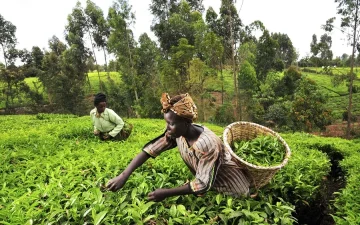
Despite the share of Agriculture in GDP falling from over 50% to under 20%, it remains the largest employer. This indicates a slow pace of labor mobility compared to the pace of output shift.
- Disguised Unemployment: High labor dependency with low marginal productivity.
- Resilience: During the COVID-19 pandemic, the primary sector was the only one to show positive growth, highlighting its role as a social safety net.
2. Stagnant Manufacturing Growth
The secondary sector’s share in GDP has remained stagnant around 25-28% for nearly three decades.
- Capital Intensity: Indian manufacturing evolved to be capital-intensive rather than labor-intensive, failing to absorb surplus rural labor.
- Policy Focus: Initiatives like Make in India and the Production Linked Incentive (PLI) Scheme aim to correct this by targeting a 25% GDP share for manufacturing alone.
3. Service-Led Growth
India is a global outlier where the service sector contributes more than half of the GDP while the country is still in a “developing” stage.
- Knowledge-Based Export: Growth is driven by high-end services like IT-BPM, Finance, and Professional services rather than low-end services.
- Jobless Growth: High GVA contribution but relatively low labor absorption compared to manufacturing.
Factors Driving Structural Transformation
- 1991 LPG Reforms: Liberalization and Privatization dismantled the “License Raj,” allowing the Service sector (Telecom, Banking, Aviation) to grow exponentially.
- Digitalization and India Stack: The formalization of the economy through UPI, GST, and Aadhaar has accelerated the shift toward a modern service economy.
- Infrastructure Push: Programs like PM Gati Shakti and the National Infrastructure Pipeline (NIP) are designed to lower logistics costs and facilitate a delayed industrial transition.
- Demographic Dividend: A large working-age population is driving the demand for services and providing a labor pool for construction and manufacturing.
Critical Issues in Transformation
- Productivity Gap: The output per worker in the Service sector is nearly 4 times higher than in the Agricultural sector, leading to massive income inequality between rural and urban areas.
- Informalization: While the economy is transforming, the majority of the workforce remains in the informal sector without social security, even within the formal “organized” industry.
- Skill Mismatch: The shift to a service-led economy requires high education and skill levels, leaving the low-skilled agricultural workforce stuck in low-productivity casual labor.
Trivia and Facts for Prelims
- Kuznets Curve: Theoretically relates economic growth to inequality; in India, the rapid shift to services has led to a widening “Kuznetsian” gap in income.
- Dutch Disease: A term sometimes used to describe India’s situation where the booming service sector (and software exports) kept the exchange rate high, making manufacturing exports less competitive.
- Sectoral Elasticity: The employment elasticity of the manufacturing sector has been declining, meaning every 1% of growth now produces fewer jobs than it did in the 1980s.
- Sunrise Sectors: New-age sectors like Green Hydrogen, Semiconductors, and Electric Vehicles (EVs) are the focus of the “next-gen” structural transformation in the secondary sector.