
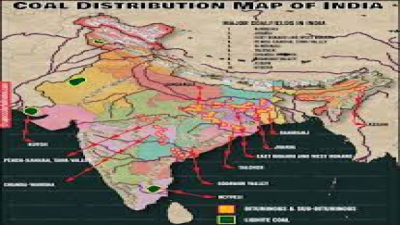
India’s rich coal reserves have played a pivotal role in shaping its energy landscape. The Tertiary Coalfields, part of India’s diverse coal reserves, have contributed significantly to the nation’s energy production.
Tertiary Coalfields: An Overview
Tertiary Coalfields, also known as tertiary-age coalfields, are an important geological formation containing coal deposits formed during the Tertiary period (65 to 2.6 million years ago). These coalfields are found in various regions of India and have been critical in supporting the energy needs of the nation. Let’s explore some of the significant Tertiary Coalfields and their associated mines.
Damodar Valley Coalfield
Damodar Valley Coalfield, located in eastern India, is one of the oldest and most important coalfields in the country. It spans across the states of West Bengal and Jharkhand. This coalfield is known for its high-quality coal and abundant reserves. Some of the notable mines in this coalfield include:
- Jharia Coalfield: Known as the “Storehouse of Indian Coal,” Jharia is home to numerous coal mines, including the Jharia, Sudamdih, and Katras mines.
- Raniganj Coalfield: This coalfield houses the Raniganj, Mugma, and Sonepur Bazari mines.
The Damodar Valley Coalfield has been a significant contributor to India’s energy production, powering industries and households for decades.
Singareni Collieries Coalfield
Located in the southern part of India, Singareni Collieries Coalfield is situated primarily in the state of Telangana. This coalfield holds immense importance due to its contribution to the energy needs of the region. Noteworthy mines in this coalfield are:
- Kothagudem Collieries: Comprising various underground mines, these collieries are crucial for the energy requirements of southern India.
- Godavari Valley Coalfield: This area hosts several mines, including the Manuguru and Yellandu mines.
Kameng Coalfield
Kameng Coalfield is situated in the northeastern state of Arunachal Pradesh. While relatively smaller in scale compared to other coalfields, it plays a vital role in catering to the energy demands of the region. One of the key mines in this coalfield is the Namchik-Namphuk coal mine.
Ib Valley Coalfield
Ib Valley Coalfield, located in the state of Odisha, is known for its vast coal reserves and significant contribution to India’s coal production. The Jharsuguda and Talcher coalfields are part of this coalfield and are home to numerous mines, such as the Ib Valley, Basundhara, and Balram mines.
Karewa (Kashmir) Coalfield
Karewa Coalfield, situated in the northernmost region of India, specifically in Jammu and Kashmir, is relatively lesser-known but has contributed to the local energy needs. The coal mines in this region are located in areas like Kalakot and Uri.
Key Data on Tertiary Coalfields and Their Mines
| Coalfield | States | Notable Mines | Estimated Reserves (Million Tonnes) | Annual Production (Million Tonnes) |
| Damodar Valley Coalfield | West Bengal, Jharkhand | Jharia, Raniganj, Sudamdih, Katras | Over 18,000 | Approximately 170 |
| Singareni Collieries Coalfield | Telangana | Kothagudem, Godavari Valley | Over 8,000 | Approximately 60 |
| Kameng Coalfield | Arunachal Pradesh | Namchik-Namphuk | Not available | Not available |
| Ib Valley Coalfield | Odisha | Jharsuguda, Talcher, Ib Valley | Over 22,000 | Approximately 50 |
| Karewa Coalfield | Jammu and Kashmir | Kalakot, Uri | Not available | Not available |
India’s Tertiary Coalfields have played a crucial role in meeting the nation’s energy demands. These coalfields, scattered across various regions, have supported industries, households, and infrastructure development. The coal mines within these fields have not only provided energy but have also contributed to the economic growth of the regions they are situated in.
Last Modified: February 22, 2024