
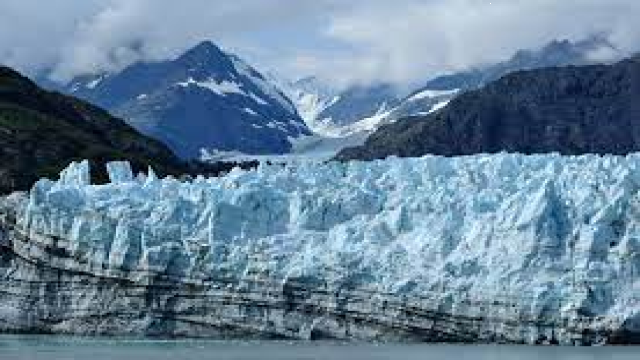
The landmass of India exhibits immense geological and topographical variety. Structurally, it is divided into distinct macro-regions based on tectonic history, stratigraphy, and geomorphological features. The country features a blend of ancient stable landmasses and dynamic, young mountain systems.
The Six Major Physiographic Divisions
India is broadly classified into six distinct physiographic divisions:
- The Northern and Northeastern Mountains (The Himalayas)
- The Northern Plains (Indo-Gangetic-Brahmaputra Plains)
- The Peninsular Plateau
- The Indian Desert (Thar Desert)
- The Coastal Plains
- The Islands
The Northern and Northeastern Mountains
The Himalayas are tectonically active, young fold mountains stretching from the Indus River in the west to the Brahmaputra River in the east. They form an arc over a length of about 2,400 km, with a width varying from 400 km in Kashmir to 150 km in Arunachal Pradesh.
Longitudinal Divisions of the Himalayas
The Trans-Himalayas
This region lies immediately north of the Great Himalayan Range and includes the Karakoram, Ladakh, Zaskar, and Kailash ranges. The highest peak in this region is K2 (Godwin-Austen), the second-highest peak in the world. This zone contains major glaciers like the Siachen and Baltoro.
The Greater Himalayas (Himadri)
This is the most continuous, northernmost, and loftiest range, with an average elevation of over 6,000 meters. It is composed of asymmetrical folds and contains core crystalline rocks like granite and gneiss. Prominent peaks include Mount Everest (8,848.86 m), Kanchenjunga (8,586 m), Makalu, and Nanga Parbat.
The Lesser Himalayas (Himachal)
Running parallel to the Himadri, this range has an elevation varying between 3,700 and 4,500 meters. It is highly compressed and altered. Prominent ranges include the Pir Panjal (the longest range), Dhauladhar, and Mahabharat ranges. Famous hill stations like Shimla, Mussoorie, and Nainital are located here.
The Outer Himalayas (Shiwaliks)
The southernmost range of the Himalayas, with an altitude varying between 900 and 1,100 meters. These ranges are composed of unconsolidated sediments brought down by rivers from the main Himalayan ranges. Longitudinal valleys lying between the Lesser Himalayas and the Shiwaliks are known as ‘Duns’ (e.g., Dehra Dun, Kotli Dun).
Regional Divisions of the Himalayas (West to East)
Punjab / Kashmir Himalayas
Located between the Indus and Satluj rivers. Key features include the Karewa formations, which are highly useful for the cultivation of Zafran (a local variety of saffron).
Kumaon Himalayas
Stretching between the Satluj and Kali rivers. It contains major peaks like Nanda Devi and Kamet, and is the source of the Ganga and Yamuna rivers.
Nepal Himalayas
Situated between the Kali and Teesta rivers. This is the tallest section of the Himalayas, housing Mount Everest and Kanchenjunga.
Assam and Northeastern Himalayas (Purvanchal)
Lying between the Teesta and Brahmaputra rivers, extending into the northeastern states. The Purvanchal hills run along the eastern border of India and comprise the Patkai Bum, Naga Hills, Manipur Hills, and Mizo Hills. They are characterized by strong sandstone formations and dense forest cover.
The Northern Plains
Formed by the interplay of three major river systems—the Indus, the Ganga, and the Brahmaputra—along with their tributaries. This alluvial plain stretches across 7 lakh sq. km, measuring about 2,400 km in length and 240 to 320 km in width.
Geomorphological Zones of the Northern Plains
Bhabar
A narrow belt of 8 to 10 km width running parallel to the Shiwalik foothills. It is composed of pebbles and rock debris. Due to high porosity, streams disappear underground in this zone.
Terai
Located south of the Bhabar belt, this is a marshy, damp, and thickly forested region where the disappeared streams re-emerge. Much of this land has been cleared for agricultural purposes and human settlement.
Bhangar
The older alluvium of the plains, forming terraces above the floodplains. It contains calcareous deposits locally known as ‘Kankar’. It is less fertile compared to newer deposits.
Khadar
The newer, younger alluvium deposited by floodwaters annually. It is highly fertile, fine-grained, and ideal for intensive agriculture.
| Physiographic Feature | Soil Type | Porosity / Water Table | Agricultural Value |
| Bhabar | Pebble-heavy, Coarse | Highly porous; streams disappear | Low |
| Terai | Silt and Clay | Swampy; high water table | High (Rice, Sugarcane) |
| Bhangar | Clayey to Loamy with Kankar | Well-drained; older terrace | Moderate |
| Khadar | Fine Silt and Alluvium | Subject to annual renewal | Very High |
The Peninsular Plateau
The Peninsular Plateau is an ancient, stable triangular landmass composed of old crystalline, igneous, and metamorphic rocks. It was formed due to the breaking and drifting of the Gondwana landmass.
Major Structural Subdivisions
The Central Highlands
Lying north of the Narmada River, covering a major part of the Malwa Plateau. It is bounded by the Aravalli Range to the northwest and the Vindhyan Range to the south. The eastward extensions are known as Bundelkhand and Baghelkhand, terminating at the mineral-rich Chotanagpur Plateau.
The Deccan Plateau
A triangular landmass lying south of the Narmada River. It is higher in the west and slopes gently eastward. The Satpura range bounds its broad base in the north, while the Mahadev, Kaimur, and Maikal ranges form its eastern extensions. Its northeastern extension includes the Meghalaya (Shillong) Plateau and Karbi Anglong Plateau, separated from the Chotanagpur plateau by the Malda Fault.
The Western Ghats (Sahyadris)
A continuous wall of mountains running parallel to the western coast. They are higher than the Eastern Ghats, with an average elevation of 900 to 1,600 meters. They cause orographic rainfall. Key passes include Thal Ghat, Bhor Ghat, and Pal Ghat. The highest peak is Anamudi (2,695 m) in the Anaimalai Hills.
The Eastern Ghats
A discontinuous and dissected mountain range eroded by east-flowing rivers discharging into the Bay of Bengal. They stretch from the Mahanadi Valley to the Nilgiris in the south, where they merge with the Western Ghats. The highest peak is Jindhagada Peak (1,690 m).
The Indian Desert (Thar Desert)
Lying northwest of the Aravalli hills, the Thar Desert is an undulating sandy plain covered with sand dunes.
Salient Characteristics
- Climate and Vegetation: It receives very low rainfall (below 150 mm per year), resulting in an arid climate with low vegetation cover.
- Drainage: Streams appear mostly during the monsoon season and disappear into the sand due to a lack of water velocity to reach the sea. The Luni is the only significant river in this region.
- Dune Formations: Shifting sand dunes called ‘Dhrian’ are common. Crescent-shaped sand dunes called ‘Barchans’ dominate large areas, while longitudinal dunes are prominent near the Indo-Pakistan border.
The Coastal Plains
The Peninsular Plateau is flanked by stretch of coastal plains along the Arabian Sea on the west and the Bay of Bengal on the east.
Western Coastal Plain
A narrow, submerged coastal plain sandwiched between the Western Ghats and the Arabian Sea. It is divided into three distinct sectors:
- Konkan Coast: Northern segment stretching from Daman to Goa.
- Kannad Coast: Central stretch covering coastal Karnataka.
- Malabar Coast: Southern stretch in Kerala, characterized by lagoons and backwaters locally called ‘Kayals’ (e.g., Vembanad Lake).
Eastern Coastal Plain
A broad, emergent coastal plain located between the Eastern Ghats and the Bay of Bengal. It is characterized by well-developed deltas formed by the Mahanadi, Godavari, Krishna, and Kaveri rivers.
- Northern Circars: The northern part between the Mahanadi and Krishna rivers.
- Coromandel Coast: The southern part stretching along coastal Andhra Pradesh and Tamil Nadu.
- Key Lagoons: Chilika Lake (Odisha)—the largest saltwater lake in India—and Pulicat Lake (Andhra Pradesh/Tamil Nadu border) are vital ecological features.
The Islands
India possesses two major island groups, which differ significantly in geological origin and topography.
The Andaman and Nicobar Islands
Located in the Bay of Bengal, this archipelago consists of around 572 islands. They are elevated portions of submarine mountains, representing an extension of the Arakan Yoma range of Myanmar.
- Key Features: Divided into the Andaman group (North) and Nicobar group (South) by the Ten Degree Channel.
- Volcanism: Contains India’s only active volcano on Barren Island, as well as an extinct volcano on Narcondam Island.
- Climate: Equatorial climate with dense forest cover.
The Lakshadweep Islands
Located in the Arabian Sea off the coast of Kerala, this group comprises 36 islands.
- Geological Origin: They are entirely of coral origin (atolls) built on the Laccadive-Chagos ridge.
- Key Features: Formerly known as Laccadive, Minicoy, and Amindivi islands until renamed in 1973. The Nine Degree Channel separates Minicoy from the main Lakshadweep archipelago, while the Eight Degree Channel separates Minicoy from the Maldives. The uninhabited Pitti Island serves as a designated bird sanctuary.
Summary of Key Tectonic and Latitudinal Intersections
- Highest Peak of Peninsular India: Anamudi (2,695 m)
- Highest Peak of the Himalayas in India: Kanchenjunga (8,586 m)
- Highest Peak of the Andaman & Nicobar Archipelago: Saddle Peak (732 m)
- Boundary Faults: The Himalayan Frontal Fault (HFF) separates the Shiwaliks from the Northern Plains, while the Main Boundary Thrust (MBT) separates the Lesser Himalayas from the Shiwaliks.