
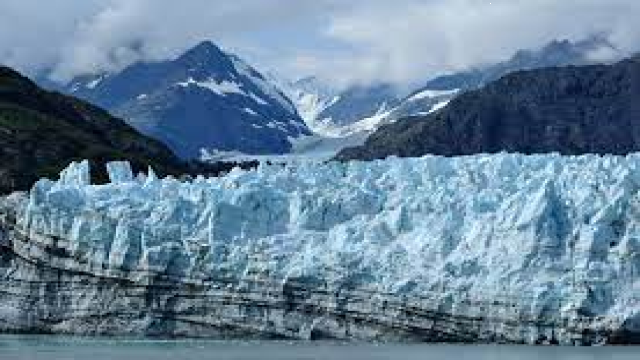
The Trans-Himalayas, also known as the Tibet-Himalayan Region, constitute an ancient and strategically vital physiographic division of India located immediately north of the Great Himalayas. Geologically, this region is not a part of the Himalayas proper; it represents the southern edge of the Eurasian Plate (Tibetan Block) that existed prior to the Indo-Eurasian continental collision. Spanning an approximate length of 1,600 km in an east-west direction and an average width ranging from 40 km at the eastern and western extremities to 225 km in the central portion, this high-altitude cold desert system covers the union territories of Ladakh and Jammu and Kashmir, along with parts of northern Himachal Pradesh and Uttarakhand.
| Characteristic Parameter | Technical Details and Specifications |
| Geological Origin | Late Cretaceous to Early Tertiary period; formed by sedimentary deposits of the Tethys Sea floor combined with granitic intrusions along the Eurasian plate margin. |
| Structural Boundary | Separated from the Great Himalayas to the south by the Indus-Tsangpo Suture Zone (ITSZ), a highly deformed tectonic zone. |
| Average Elevation | Ranging systematically between 3,000 meters and 6,000 meters above mean sea level. |
| Climatic Profile | Extreme alpine cold desert; lies completely within the rain-shadow zone of the Greater Himalayas, blocking the Southwest Monsoon. |
| Major River Systems | Drained by the Indus River and its critical tributaries (Shyok, Gilgit, Zanskar) along with the upper courses of the Satluj and Brahmaputra. |
Tectonic Boundary: The Indus-Tsangpo Suture Zone (ITSZ)
The Indus-Tsangpo Suture Zone represents the paleographic collision boundary where the Indian Plate joined with the Eurasian Plate. It runs parallel to the Indus Valley, functioning as a structural lineament that demarcates the northernmost limit of the Himalayan orogen from the Trans-Himalayan ranges. The zone is characterized by ophiolites, which are fragments of ancient oceanic crust and underlying upper mantle rocks upthrust onto continental crust, providing crucial evidence of the closure of the ancient Tethys Ocean.
Major Mountain Ranges of the Trans-Himalayas
The Trans-Himalayan region in India is composed of four major parallel mountain ranges arranged successively from north to south.
Karakoram Range
- Geographic Profile: Known as the “Backbone of High Asia,” it forms the northernmost frontier of India, bordering Pakistan, China, and Tajikistan.
- Key Peaks: Houses Mount K2 (Godwin-Austen), the second highest peak in the world (8,611 m), located in the Gilgit-Baltistan region. Other significant peaks include Gasherbrum I (8,080 m), Broad Peak (8,051 m), and Gasherbrum II (8,035 m).
- Glaciological Features: Contains some of the largest non-polar glaciers globally, including the Siachen Glacier (76 km long), Saltoro Glacier, Biafo Glacier, Hispar Glacier, and Baltoro Glacier.
Ladakh Range
- Geographic Profile: Situated south of the Karakoram Range and running parallel to it, this range forms a structural bridge between the Indus valley and the northern plains of Ladakh.
- Key Peaks and Elevation: The average elevation is about 6,000 meters. Its highest point within Indian territory is Mount Stok Kangri (6,153 m).
- Geomorphic Extensions: The northern extension of this range passes into China as the Kailash Range, while its southern flanks form the steep gorges of the Indus River.
Zanskar Range
- Geographic Profile: Runs parallel to the Great Himalayan Range to its south and the Ladakh Range to its north, acting as a climatic barrier for the Zanskar Valley.
- Key Peaks: The highest peak of this range is Mount Kamet (7,756 m), located near the intersection of the Uttarakhand border. Other prominent peaks include Nun (7,135 m) and Kun (7,077 m).
- Hydrographic Features: Cut through by the deep, antecedent gorge of the Zanskar River, which joins the Indus River at Nimo.
Kailash Range
- Geographic Profile: A structural offshoot and continuation of the Ladakh Range extending primarily into western Tibet (China).
- Key Peaks: Mount Kailash (6,638 m) is the highest peak, functioning as a major hydrological hub and a sacred geographical site.
- Hydrological Significance: The northern and southern slopes of this range serve as the primary basin origins for three perennial rivers of the Indian subcontinent: the Indus, the Satluj, and the Brahmaputra (Yarlung Tsangpo).
High-Altitude Passes and Strategic Communication Corridors
The rugged topography of the Trans-Himalayas is accessible through a series of high-altitude passes that are critical for national security, trade, and regional connectivity.
- Karakoram Pass: Located at an altitude of 5,540 m in the Karakoram Range, it historically connected Leh with Yarkand in the Tarim Basin of Xinjiang, China.
- Khardung La: Situated at an altitude of 5,359 m in the Ladakh Range, it serves as the vital gateway connecting the Indus Valley at Leh to the strategically sensitive Nubra and Shyok Valleys, leading to the Siachen Glacier.
- Chang La: Standing at 5,360 m in the Ladakh Range, it connects Leh with the Changthang plateau and the Pangong Tso region.
- Aghil Pass: Located north of Mount K2 in the Karakoram Range, it bridges the Ladakh territory with the Shaksgam Valley.
- Fotula and Namika La: Situated on the Srinagar-Leh National Highway (NH-1) across the Zanskar Range, providing year-round connectivity within the Ladakh union territory.
Drainage Network and Hydrology
The drainage pattern of the Trans-Himalayan region is predominantly antecedent, meaning the major rivers carved their valleys before the mountains underwent upliftment.
- The Indus River: The lifeblood of the region, it originates from the Bokhar Chu glacier near Mount Kailash, enters India at Demchok, and flows northwestward in a longitudinal valley between the Ladakh and Zanskar ranges.
- Shyok River: Known as the “River of Death,” it originates from the Rimo Glacier and flows parallel to the Karakoram range before making a sharp U-turn around the Ladakh range to join the Indus.
- Nubra River: A major tributary of the Shyok River, originating from the snout of the Siachen Glacier and forming the fertile alpine Nubra Valley.
- Galwan River: Originates in the disputed Aksai Chin plateau and flows westward to join the Shyok River, acting as a prominent flashpoint along the Line of Actual Control (LAC).
Lacustrine Systems and High-Altitude Wetlands
Due to the endorheic nature of several internal basins in the cold desert, the Trans-Himalayas host unique brackish and freshwater closed-drainage lakes.
- Pangong Tso: A long, narrow, endorheic brackish water lake situated at an altitude of 4,225 m. Approximately one-third of the lake lies within India, while the remaining two-thirds are controlled by China.
- Tso Moriri: A high-altitude oligotrophic brackish lake located in the Changthang plateau of Ladakh, designated as a Ramsar Wetland of International Importance.
- Tso Kar: A fluctuating salt lake complex famous for the extraction of low-grade common salt, designated as India’s 42nd Ramsar site.
Soil, Vegetation, and Ecological Adaptation
The ecological landscape is dictated by aridity and sub-zero temperatures, leading to unique biochemical and physiological adaptations in flora and fauna.
Soil Profile
The soils are categorized as skeletal, calcareous, and desert soils. They lack organic humus matter due to low microbial activity, exhibit poor water-retention capacity, and are highly prone to wind erosion and mechanical weathering.
Floral Assemblies
Vegetation is sparse, confined largely to river valleys and damp alpine meadows. It consists of stunted shrubs such as Seabuckthorn (Hippophae rhamnoides), wild rose, and willow, alongside xerophytic grasses and medicinal plants like Ephedra.
Faunal Diversity
The region is a sanctuary for specialized high-altitude wildlife protected under the Wildlife Protection Act, 1972. Notable species include the Snow Leopard (Panthera uncia), Tibetan Argali (giant wild sheep), Bharal (blue sheep), Asiatic Ibex, Kiang (Tibetan wild ass), and the critically endangered Tibetan Antelope (Chiru), harvested for its ultra-fine Shahtoosh wool.
Civilizational Trivia and Strategic Security Matrix
Cold Desert Cultural Landscape
The unique geomorphic isolation of the Trans-Himalayan tracts in Ladakh has preserved an indigenous socio-religious landscape deeply rooted in Vajrayana Buddhism, often referred to as “Little Tibet.” This ecosystem is represented by historic fortified monasteries (Gompas) such as Hemis, Thiksey, and Diskit.
Mineral and Energy Infrastructure
- Geothermal Potential: The Puga Valley in eastern Ladakh represents India’s most promising geothermal energy field, located at the intersection of tectonic plates where boiling mud pools and hot springs occur.
- Borax and Sulfur Deposits: The cold desert lakes and valley beds show high concentrations of borax, elemental sulfur, and evaporite minerals.
- Solar Energy Footprint: The high altitude combined with cloudless desert skies ensures a high solar irradiance index, making the region a focal point for massive grid-scale solar power development.
Strategic Defense Outposts
- Siachen Glacier (Operation Meghdoot): Launched by the Indian Armed Forces in 1984, this military operation secured control over the Siachen Glacier and its adjoining passes (Bilafond La, Sia La), creating the highest militarized battlefield on Earth.
- Daulat Beg Oldie (DBO): The northernmost military outpost of India, situated on an ancient trade route at an altitude of 5,065 m on the Karakoram plains, featuring the world’s highest operational Advanced Landing Ground (ALG) airstrip.