
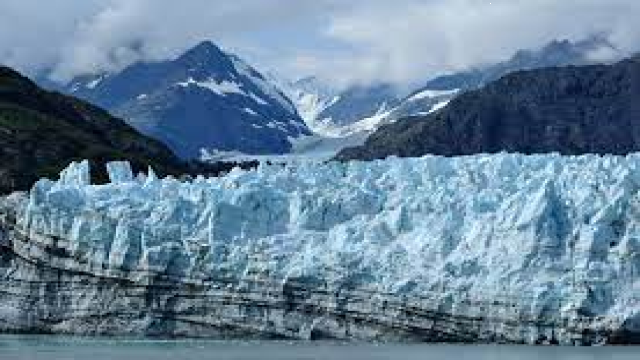
The Lesser Himalayas, also designated as the Middle Himalayas or the Himachal Range, constitute a highly complex, rugged, and deeply dissected mountain tract situated between the Greater Himalayas to the north and the Outer Himalayas (Shiwaliks) to the south. Geologically, this zone represents the most deformed, compressed, and fractured segment of the entire Himalayan orogenic belt, bearing the maximum structural impact of the continent-continent collision between the Indian and Eurasian plates.
Geospatial Dimensions and Tectonic Delineation
Physical Dimensions and Extent
- Average Elevation: The altitude of this zone varies from 3,700 m to 4,500 m above mean sea level, presenting a stark contrast to the loftier Himadri peaks.
- Spatial Width: It maintains a relatively uniform regional width ranging between 60 km and 80 km.
- Linear Alignment: The range runs parallel to the main longitudinal axis of the Himalayas for approximately 2,400 km, extending from the Indus River bend in Jammu and Kashmir to the Brahmaputra gorge in Arunachal Pradesh.
Geotectonic Boundaries
- Northern Boundary: The Lesser Himalayas are separated from the Greater Himalayas by the Main Central Thrust (MCT). Along this deep-seated fault line, older crystalline rocks from the Himadri core have been pushed southward over the younger formations of the Middle Himalayas.
- Southern Boundary: This range is separated from the Outer Himalayas (Shiwaliks) by the Main Boundary Thrust (MBT), a highly active seismic zone characterized by massive reverse faulting.
Lithological and Geological Composition
Stratigraphic Features
- Rock Assemblage: The Himachal range is primarily composed of unfossiliferous metamorphosed sedimentary rocks, signaling that these strata were deeply buried and altered during successive tectonic upheavals. The dominant lithologies include slates, quartzites, limestones, schists, and shales.
- Stratigraphic Reversals: Due to intense compressive forces and the formation of massive overthrust folds (nappes), older geological formations frequently lie directly on top of younger sedimentary rocks, creating complex structural anomalies.
- Intrusive Blocks: The metamorphic sequences are occasionally interspersed with ancient granitic intrusions and basic volcanic rocks, particularly along major shear zones.
Major Structural Ranges of the Himachal Zone
The Lesser Himalayan zone does not form a single continuous wall but splits into several distinct, high-relief sub-ranges separated by deep river valleys or structural basins.
Pir Panjal Range
- Geographical Domain: Located primarily in Jammu and Kashmir and extending into parts of Himachal Pradesh, this is the longest, widest, and most prominent range of the Lesser Himalayas.
- Hydrological Separation: It extends from the Jhelum River eastwards to the Upper Beas River, separating the Kashmir Valley from the outer hills.
- Strategic Passes: It is traversed by vital mountain passes including the Banihal Pass (housing the Jawahar Tunnel and the Qazigund-Banihal railway link), the Pir Panjal Pass (historical trade route), and the Rohtang Pass (connecting the Kullu Valley with Lahaul and Spiti).
Dhauladhar Range
- Geographical Domain: Situated predominantly in Himachal Pradesh.
- Topographic Relief: It rises sharply above the fertile Kangra Valley. The famous hill stations of Dharamshala and Dalhousie are nestled on the southern slopes of this granite-spurred range.
- Structural Termination: Eastward, it converges toward the Great Himalayan wall near the town of Shimla.
Mussoorie and Nag Tibba Ranges
- Geographical Domain: Located within the Garhwal region of Uttarakhand.
- Morphological Features: These ranges present a highly continuous profile with a mean elevation of 2,000 m to 2,500 m, forming the watershed between the Yamuna and Ganga river systems.
Mahabharat Lekh
- Geographical Domain: The structural continuation of the Lesser Himalayan zone eastward into the territory of Nepal.
- Geomorphic Profile: A steep, narrow, and deeply dissected range that acts as a major orographic barrier to the monsoon winds coming from the south.
| Lesser Himalayan Sub-Range | Regional State / Country | Major Mountain Passes | Associated Valleys and Hill Stations |
| Pir Panjal Range | Jammu & Kashmir, Himachal Pradesh | Banihal Pass, Pir Panjal Pass, Rohtang Pass | Kashmir Valley, Kishtwar, Gulmarg |
| Dhauladhar Range | Himachal Pradesh | Indrahar Pass, Thamsar Pass | Kangra Valley, Chamba, Dharamshala |
| Mussoorie Range | Uttarakhand | N/A (Highly motorable internal ridges) | Mussoorie, Landour, Chakrata |
| Nag Tibba Range | Uttarakhand | N/A (Local pastoral passes) | Tons Valley, Dhanaulti |
| Mahabharat Lekh | Nepal | Kathmandu valley gap routes | Kathmandu Valley, Pokhara Valley |
Intermontane Structural Valleys and Longitudinal Basins
The tectonic depressions lying between the Greater Himalayas and the Lesser Himalayas form some of the most fertile and densely populated intermontane basins in Asia.
The Valley of Kashmir
- Structural Origin: A synclinal longitudinal basin enclosed between the Pir Panjal Range to the south-west and the Zaskar Range (Greater Himalayas) to the north-east.
- Karewa Formations: The valley is filled with thick lacustrine (lake-deposited) sediments known as Karewas. These terraces are rich in clay, sand, and organic matter, making them unique for the cultivation of premium Saffron (Zafran) and almonds.
The Kathmandu Valley
- Structural Origin: Similar to the Kashmir Valley, this is an ancient lacustrine basin filled with thick fluvio-lacustrine deposits trapped between the Mahabharat Lekh and the Higher Himalayas.
The Fluvial Valleys of Himachal Pradesh
- Kullu Valley: A transverse valley carved out by the Beas River, famous for its structural terraces.
- Kangra Valley: A strike valley formed at the foothills of the Dhauladhar range, characterized by extensive alluvial fans.
Biogeographical and Socio-Economic Significance
The Hill Station Belt
- Climatic Refuge: Because the average altitude hovers around a pleasant 1,500 m to 2,500 m, the southern slopes of the Lesser Himalayas host the majority of India’s colonial-era hill stations, including Shimla, Manali, Mussoorie, Nainital, Almora, and Darjeeling.
Montane Ecosystems and Meadows
- Sub-Alpine Pastures: The gentle upper slopes of the Himachal range feature extensive alpine meadows known locally as Marg in Jammu and Kashmir (e.g., Gulmarg, Sonamarg) and Bugyal or Payar in Uttarakhand. These pastures form the seasonal grazing grounds for nomadic pastoralists like the Gujjars and Bakarwals.
- Forest Stratification: The region supports a dense canopy of temperate forests dominated by Deodar (Cedrus deodara), Blue Pine, Oak, Magnolia, and Rhododendron.
UPSC Prelims-Specific Trivia and Key Concepts
The Concept of Nappes and Klippen
- Tectonic Overthrusting: Due to the extreme lateral pressure exerted by the northward-drifting Indian Plate, large blocks of sedimentary sheets from the Greater Himalayan margin were severed from their roots, folded over, and pushed tens of kilometers southward over the younger rocks of the Lesser Himalayas. These detached, displaced rock sheets are termed Nappes. When erosion leaves an isolated remnant of the nappe sitting on younger rocks, it is called a Klippe.
Longitudinal vs. Transverse Valleys
- Structural Dissection: The valleys in the Lesser Himalayas are categorized into longitudinal valleys (running parallel to the ranges, like the Kashmir Valley) and transverse valleys (cut perpendicularly across the ranges by antecedent streams, such as the Satluj and Kosi gorges).
Asymmetrical Slopes and Vegetation Cover
- Micro-Climatic Variations: The southern slopes of the Lesser Himalayas are steep, rocky, and bare because they bear the direct brunt of solar radiation and intense monsoon rain washes. Conversely, the northern slopes are gentler and densely forested because they retain moisture and experience less evaporation, illustrating a distinct ecological contrast within the same geographic unit.