
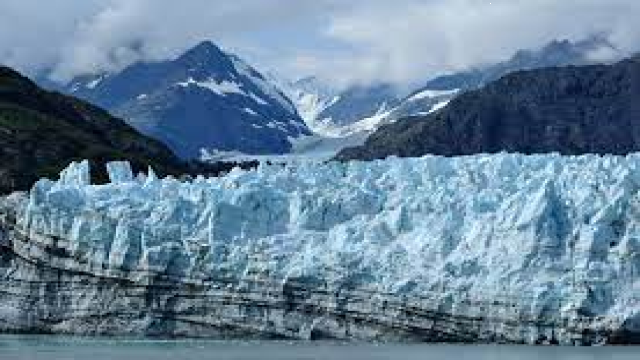
The Trans-Himalayas, also designated as the Tibetan Himalayan Region, lie immediately north of the Great Himalayan Range. Unlike the main Himalayan folds, this zone represents an infrastructural extension of the southern fringe of the Eurasian Plate (Tibetan Plateau) rather than the deformed edge of the Indian continental shield.
Morphological and Geological Characteristics
Tectonic Boundaries
The Trans-Himalayas are separated from the Great Himalayas to the south by the Indus-Tsangpo Suture Zone (ITSZ). This suture zone represents the deep-seated line of collision where the Indian Plate subducted beneath the Eurasian Plate.
Lithological Composition
- The region is primarily composed of marine sedimentary rocks belonging to the ancient Tethys Sea sequence.
- These sedimentary layers are deeply interspersed with flysch deposits, granitic intrusions, and ophiolites (fragments of ancient oceanic crust obducted onto land during continental collision).
- Unlike the core of the Great Himalayas, which is dominated by deep metamorphic crystallines, the Trans-Himalayas retain a vast repository of fossiliferous marine limestone and shale.
Climatic and Physical Conditions
- Situated in the extreme rain-shadow zone of the Greater Himalayas, the Trans-Himalayas receive virtually no monsoon precipitation.
- The region exhibits a cold desert ecosystem characterized by extreme aridity, sparse stunted vegetation, wide structural valleys, and extensive scree slopes formed by mechanical weathering.
The Core Mountain Ranges of the Trans-Himalayas
The Trans-Himalayan zone comprises four major parallel structural ranges running from northwest to southeast.
1. The Karakoram Range
The northernmost range of the Trans-Himalayas, the Karakoram forms India’s strategic frontier with Central Asia and China. It is historically referred to as the Krishnagiri range.
- Glacial Density: Outside the polar regions, the Karakoram boasts the highest concentration of continental glaciers in the world. Key glaciers include the Siachen Glacier (the longest in the Karakoram at 76 km), Baltoro, Biafo, and Hispar.
- Highest Peaks: It hosts K2 (Mount Godwin-Austen), which at 8,611 m is the second-highest peak on Earth and the highest peak in the Indian Union. Other prominent massifs include Gasherbrum I (8,080 m) and Broad Peak (8,051 m).
2. The Ladakh Range
Positioned south of the Karakoram, this range runs parallel to it for about 350 km within Indian territory.
- Topography: The range features a relatively flat, high-altitude plateau landscape. It forms the core of the high-altitude cold desert of the Ladakh Union Territory.
- The Khardung La Pass: Located north of Leh, Khardung La is an important high-altitude motorable pass traversing this range, linking the Indus Valley to the Nubra and Shyok Valleys.
3. The Zaskar Range
The southernmost range of the Trans-Himalayan system, running parallel to the Great Himalayan wall.
- River Gorges: The Zaskar Range is deeply dissected by the Indus River and its tributaries. The river cuts a profound, near-vertical gorge through this range near Bunji in Jammu and Kashmir.
- Key Peaks and Passes: The range peaks at Kamet (7,756 m) near the border zone. Key passes cutting across the Zaskar include the Lipu Lekh Pass (connecting Uttarakhand with Tibet) and Shipki La (connecting Himachal Pradesh with Tibet).
4. The Kailas Range
An offshoot and eastern continuation of the Ladakh Range, located entirely within the Tibet Autonomous Region of China.
- Hydrological Pivot: The Kailas Range acts as a major drainage divide of Asia. The northern and southern slopes of Mount Kailas (6,638 m) give rise to three of the subcontinent’s largest perennial river systems: the Indus, the Satluj, and the Brahmaputra (Yarlung Tsangpo).
Drainage Dynamics of the Trans-Himalayan Zone
The structural layout of these ranges dictates a highly unique, antecedent drainage network.
The Indus River Trench
The Indus River flows through a prominent structural trench trending northwest between the Ladakh Range to its north and the Zaskar Range to its south.
Parallel Tributary Networks
- Shyok River: Flows in a structural trough located between the Karakoram Range and the Ladakh Range before taking a sharp turn to join the Indus.
- Nubra River: A major tributary of the Shyok, fed by the meltwaters of the Siachen Glacier, carving out a glaciated U-shaped valley between the Karakoram walls.
| Trans-Himalayan Range | Major Peak / Max Elevation | Key Glaciers | Critical Structural Passes |
| Karakoram | K2 (Godwin-Austen) (8,611 m) | Siachen, Baltoro, Biafo, Hispar | Karakoram Pass, Aghil Pass |
| Ladakh | Mount Stok Kangri (6,153 m) | Minimal alpine glaciers | Khardung La, Chang La |
| Zaskar | Mount Kamet (7,756 m) | Localized cirque glaciers | Shipki La, Lipu Lekh, Mana Pass |
| Kailas | Mount Kailas (6,638 m) | Small valley glaciers | N/A (Within Tibet) |
Prelims-Specific Trivia and Key Facts
Antecedent Drainage
Many rivers of this zone are older than the mountains themselves. The Indus and Satluj cut across these high Trans-Himalayan structural barriers through deep antecedent gorges, proving that the vertical incisions made by the rivers kept pace with the tectonic uplift of the landmass.
Cold Desert Plains
Between the Karakoram and Ladakh ranges lie high-altitude structural plains like the Aksai Chin, Depsang Plains, and Soda Plains. These are interior drainage basins characterized by salt lakes and dry lacustrine flats.
The Suture Line Ophiolites
The presence of the Drass Volcanics and ophiolite suites along the Indus Suture Zone provides clear lithological proof that an ancient oceanic floor (the Tethys oceanic plate) was crushed, deformed, and pushed upward between the converging Indian and Eurasian continental blocks.
Last Modified: June 4, 2026