
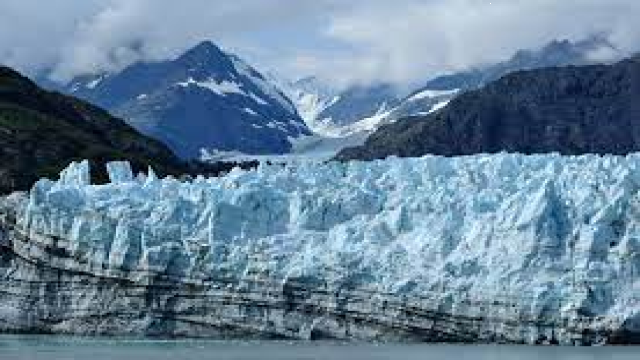
The Greater Himalayas, classically designated as the Himadri or Inner Himalayas, constitute the loftiest, most continuous, and northernmost crustal wall of the main Himalayan mountain system. This range forms the architectural spine of the entire orogenic belt, acting as a permanent physical and climatic barrier between the Indian subcontinent and the high-altitude Tibetan Plateau.
Tectonic Boundaries and Geospatial Dimensions
Latitudinal and Longitudinal Extent
- Geographical Span: The range extends over a linear distance of approximately 2,400 km, stretching from the Indus River bend at Nanga Parbat (8,126 m) in the west to the Brahmaputra River loop at Namcha Barwa (7,782 m) in the east.
- Spatial Width: It possesses an average width varying between 15 km and 30 km, representing a highly compressed and structurally dense tectonic zone.
- Mean Elevation: The range maintains an exceptional average altitude of over 6,100 m above sea level, housing almost all the prominent peaks of global prominence.
Geotectonic Delineation
- Northern Limit: The Himadri is structurally separated from the Trans-Himalayan ranges (such as the Zaskar Range) by the Indus-Tsangpo Suture Zone (ITSZ), which marks the line of collision between the Indian and Eurasian plates.
- Southern Limit: It is separated from the Lesser or Middle Himalayas to the south by the deep-seated Main Central Thrust (MCT), a major low-angle fault zone along which the crystalline rocks of the Higher Himalayas were thrust over sedimentary and metamorphic rocks of the lower ranges.
Lithological and Lithostratigraphic Composition
Archaean Crystalline Core
- Core Rock Suite: The structural core of the Greater Himalayas is entirely composed of ancient Archaean crystalline rocks, predominantly central granites, gneisses, and highly altered mica schists.
- Flanking Formations: This crystalline core is flanked on either side by highly metamorphosed sedimentary strata of Paleozoic to Mesozoic origin, which represent the squeezed and uplifted floor of the ancient Tethys Geosyncline.
Structural Asymmetry
- Tectonic Vergence: The Himadri exhibits a highly pronounced structural asymmetry due to north-to-south directional compression. The southern slopes facing the Indian plains are exceptionally steep and rugged, creating precipitous drops, whereas the northern slopes degrade gently toward the structural basins of Tibet.
Global Peaks and Orographic Massifs
The Greater Himalayan Range stands as the most elevated mountain chain on Earth, containing a dense concentration of Eight-Thousanders (peaks exceeding 8,000 meters in altitude).
| Peak Name | Absolute Elevation (m) | Location / Regional State | Geological / Strategic Significance |
| Mount Everest (Sagarmatha / Chomolungma) | 8,848.86 | Nepal-Tibet Border | Highest peak on Earth; recently re-measured jointly by Nepal and China. |
| Kanchenjunga | 8,586 | Sikkim (India) – Nepal Border | Highest peak located within the administrative territory of India; third highest globally. |
| Makalu | 8,481 | Nepal-Tibet Border | An isolated four-sided pyramidal peak characterized by intense granite composition. |
| Dhaulagiri | 8,167 | Central Nepal | Bounds the deepest gorge in the world (Kali Gandaki Gorge) to the west. |
| Nanga Parbat (Diamir) | 8,126 | Jammu and Kashmir (POK) | Anchors the western syntaxial bend; known for its massive, sheer vertical relief. |
| Annapurna I | 8,091 | North-Central Nepal | The first 8,000-meter peak to be scaled by a human expedition (1950). |
| Nanda Devi | 7,816 | Uttarakhand (India) | Highest peak located entirely within Indian mainland territory. |
| Kamet | 7,756 | Uttarakhand (India) | Located near the Tibetan border; second highest peak in the Garhwal region. |
| Namcha Barwa | 7,782 | Arunachal Pradesh-Tibet Border | Anchors the eastern syntaxial bend where the Brahmaputra makes its U-turn. |
Glaciology and Perennial Hydrology
Snowfield Density and Equilibrium Line
- Perpetual Cryosphere: Due to its immense altitude, the Himadri sits permanently above the regional snowline. The snowline varies from 4,500 m on the humid southern slopes to 6,000 m on the drier northern Tibetan face.
- Glacial Systems: The range serves as the largest repository of freshwater ice outside the polar circles. Prominent valley glaciers include the Gangotri Glacier (source of the Bhagirathi/Ganga), Yamunotri Glacier (source of the Yamuna), Satopanth Glacier, and Milam Glacier.
Antecedent and Consequent Drainage
- Antecedent Gorges: The Greater Himalayas are cut across by deep, near-vertical gorges carved out by pre-existing trans-Himalayan rivers like the Indus, Satluj, and Brahmaputra. These rivers maintained their original courses by matching the rate of tectonic uplift with vertical fluvial incision.
- Consequent Rivers: The southern slopes give rise to numerous consequent stream networks that feed into the Indo-Gangetic system, characterized by massive seasonal discharge variations driven by glacial meltwaters and monsoon runoff.
Strategic Mountain Passes (La)
The continuous wall of the Himadri is navigable only through a few highly elevated, tattered structural gaps or passes that have historically facilitated trade, migration, and strategic movement.
Western Sector (Jammu & Kashmir, Ladakh, Himachal Pradesh)
- Burzil Pass: Connects the Kashmir Valley with the Deosai Plains of Ladakh and Gilgit.
- Zoji La: A vital structural pass cutting through the Himadri wall to connect Srinagar with Kargil and Leh; historically known for military tank operations in 1948.
- Bara Lacha La: Located in Himachal Pradesh, serving as a high-altitude link on the Manali-Leh Highway across the active tectonic zone.
- Shipki La: Located in the Kinnaur district of Himachal Pradesh, through which the antecedent Satluj River enters India from Tibet.
Central Sector (Uttarakhand)
- Thaga La, Mana Pass, and Niti Pass: High-altitude passes in the Garhwal Himalayas that historically connected Uttarakhand with the Tibetan trade markets before 1962.
- Lipu Lekh Pass: Situated at the tri-junction of India (Uttarakhand), Nepal, and China. It serves as an active route for the annual Kailash-Mansarovar Pilgrimage.
Eastern Sector (Sikkim and Arunachal Pradesh)
- Nathu La: Located in Sikkim, this pass constitutes a crucial offshoot of the ancient Silk Route and serves as an official Border Personnel Meeting point between India and China.
- Jelep La: Traverses the Chumbi Valley in Sikkim, providing an alternative route connecting India with Lhasa.
- Bomdi La: Located in western Arunachal Pradesh, leading into the Tawang Valley and onwards to the Tibetan frontier.
UPSC Prelims-Specific Trivia and Key Concepts
The Phenomenon of Syntaxial Bends
- Hairpin Tectonic Bends: At both its terminal points, the Greater Himalayan wall terminates abruptly and takes sharp, near-vertical southward turns. The western syntaxial bend occurs near Nanga Parbat, while the eastern syntaxial bend centers around Namcha Barwa.
- Geodynamic Cause: These bends are structural responses to the unequal northward push exerted by the rigid, irregular promontories of the Indian Peninsular Shield (the Aravali axis in the west and the Shillong plateau axis in the east) anchoring deep into the softer rocks of the Eurasian margin.
Central Crystalline Zone and Economic Minerals
- Metallogeny: Due to the dominance of deep-seated Archaean granites and metamorphic gneisses, the core of the Himadri contains localized deposits of high-value minerals including sapphire (notably the blue sapphires of Paddar, Jammu & Kashmir), beryl, tourmaline, and high-grade muscovite mica, though commercial extraction remains unfeasible due to extreme topography and environmental regulations.
Morphological Variations in the Eastern Wing
- Compression and Cloudbursts: In the eastern sector (Sikkim and Arunachal Pradesh), the distance between the plains of India and the Higher Himalayas narrows down drastically. This compression subjects the eastern Himadri to direct, high-velocity impact from the Bay of Bengal monsoon branch, resulting in intense orographic precipitation, high rates of chemical weathering, and frequent landslide hazards compared to the broader, more gradual western wing.