
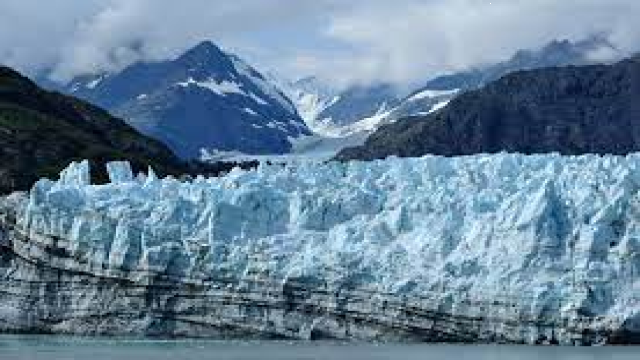
The Vindhyan Rock System represents the premier Meso-to-Neoproterozoic sedimentary formation of India, spanning a chronological timeline from approximately 1,300 to 600 million years ago. Superposed structurally upon the eroded foundations of the Archaean basement or the Cuddapah sequences, it marks the second major phase of the Purana Group of Indian stratigraphy.
Basin Architecture and Geosynclinal Deposition
The system developed within a vast, continuous, crescent-shaped structural sag known as the Vindhyan Basin. This basin is a grand intracratonic sag flanked by the Bundelkhand Craton to the east and the Aravalli Orogenic Belt to the west. The sedimentation occurred under shallow marine to estuarine and deltaic conditions, characterized by rhythmic subsidence that allowed for the accumulation of an enormous sedimentary thickness exceeding 4,000 meters.
Tectonic Stability and Structural Framework
Unlike the highly deformed Dharwar or eastern Cuddapah belts, the Vindhyan strata have remained remarkably undisturbed, flat, and horizontal across the vast majority of their extent. Tectonic folding and faulting are restricted strictly to the western margins, where the basin terminates abruptly against the Great Boundary Fault (GBF) in Rajasthan. The structural boundary separating the Vindhyan rocks from the older formations is marked by a clear stratigraphic unconformity, representing a prolonged period of crustal beveling.
Biological and Paleontological Status
The Vindhyan system is largely un-fossiliferous due to its antiquity. However, it holds global geological significance for preserving some of the earliest micro-faunal and primitive plant signatures on Earth:
- Stromatolites: Massive calcareous structures formed by cyanobacteria are abundant within the limestone zones, notably in the Bhagwanpura and Tirohan formations.
- Chuaria circularis: Distinct, small, disc-like carbonaceous mega-fossils representing primitive multicellular algae are discovered within the Suket Shales of Suket, Rajasthan.
- Trace Fossils: Fossilized tracks and burrows made by primitive triploblastic worm-like organisms occur in the upper sandstone bedding planes, marking the dawn of complex life.
Geographical Distribution and Boundary Dynamics
The Vindhyan system forms a continuous geological wall across Central India, acting as a structural and hydrographic divide between North and South India.
Core Peninsular Distribution
The primary continuous exposure stretches from Sasaram and Rohtas in Bihar in the east, passes through the Vindhyan Range of Madhya Pradesh, and extends up to Chittorgarh and Jhalawar in Rajasthan in the west. A separate, massive northern tongue extends into the Son River Valley, forming the specialized Son Valley Vindhyan tract.
Sub-surface Extensions and Hidden Ridges
Geophysical surveys indicate that the Vindhyan Basin does not end at its northern surface boundaries. It extends deep north beneath the thick Quaternary alluvium of the Indo-Gangetic Foredeep, resting as a structural basement that slopes gently toward the Himalayan foothills.
Structural Boundaries and Fault Lines
The westernmost limits of the Vindhyan formations are sharply demarcated by the Great Boundary Fault (GBF), a major tectonic lineament running for over 400 kilometers through Rajasthan. Along this fault, the older Proterozoic Aravalli and Delhi fold belts have been thrust eastward over the younger, horizontal Vindhyan sedimentary sheets.
Stratigraphic Classification and Lithological Subdivisions
The Vindhyan Rock System is structurally divided into two mega-divisions: the Lower Vindhyan System and the Upper Vindhyan System. These divisions are separated by a well-defined structural unconformity that marks a temporary regression of the Proterozoic sea.
Lower Vindhyan System (Semri Series)
The Lower Vindhyan is predominantly marine in character and is dominated by calcareous (limestone-rich) and argillaceous (clay-rich) sediments, showing that the basin was deeply submerged during this initial phase.
- Semri Series: The definitive stratigraphic representative of the Lower Vindhyan. It is exposed extensively along the Son River Valley and the Chittorgarh region. It comprises basal conglomerates, Porcellanite beds (silicified volcanic ash), Tirohan Limestones, and Suket Shales.
Upper Vindhyan System
The Upper Vindhyan is predominantly continental, fluviatile, and estuarine in origin. It is dominated by massive arenaceous (sandstone-rich) depositions, indicating a shallower basin setting influenced by seasonal river systems. It is further divided into three distinct chronological series:
- Kaimur Series: The oldest unit of the Upper Vindhyan, forming the rugged Kaimur Escarpment. It is composed of massive, fine-grained, red and grey sandstones and quartzites, totally devoid of limestones.
- Rewa Series: Overlies the Kaimur series and is composed of alternating bands of shales and coarse sandstones, including the diamond-bearing Jhiri Shales.
- Bhander Series: The youngest, uppermost stratigraphic unit of the entire Vindhyan system. It features vast sheets of red sandstones, shales, and pure dolomitic limestones, reflecting the final siltation phase of the Vindhyan Basin.
| Stratigraphic Division | Rock Series | Predominant Lithology | Depositional Environment |
| Upper Vindhyan | Bhander Series | Red spotted sandstones, Shales, Dolomitic limestones | Shallow Estuarine to Lacustrine |
| Upper Vindhyan | Rewa Series | Coarse sandstones, Flagstones, Jhiri Shales | Fluviatile and Deltaic |
| Upper Vindhyan | Kaimur Series | Massive quartzites, Fine-grained red sandstones | Continental Torrential/Eolian |
| Lower Vindhyan | Semri Series | Porcellanites, Tirohan limestones, Suket shales | Deep to Shallow Marine |
Economic Mineral Wealth and Industrial Significance
The Vindhyan Rock System is of immense economic value to India. While it lacks heavy metallic ores like iron or manganese, it is India’s premier repository for non-metallic industrial minerals, premium structural materials, and precious gemstones.
Precious Gemstones and Diamond Placers
The system is famous for hosting India’s most prolific primary and secondary diamond fields.
- Panna Diamond Belt (Madhya Pradesh): Diamonds are extracted directly from the conglomerate beds situated at the structural junction of the Kaimur and Rewa series, as well as from primary volcanic kimberlite pipes at Majhgawan.
- Golconda Mines (Telangana/Andhra Pradesh): The legendary diamonds of Golconda were historically washed from the gravels of the Krishna River basin, derived entirely from the denudation of the lower Vindhyan equivalent strata.
Cement and Metallurgical Flux Raw Materials
The limestone formations of the Semri and Bhander series are exceptionally pure and low in magnesia, making them highly valuable for heavy industries:
- Cement Industry: Extensively quarried at Rohtas (Bihar), Satna, Maihar, Katni (Madhya Pradesh), and Nimbahera (Rajasthan) to feed India’s largest cluster of cement manufacturing plants.
- Iron and Steel Flux: Used as an essential basic flux in blast furnaces to remove silica impurities during steel smelting.
Premium Building Stones and Architectural Legacy
The Upper Vindhyan sandstones are unmatched in structural durability, uniform texture, and ease of dressing. They have formed the architectural backbone of Indian civilization across centuries:
- Historical Monuments: The red and cream-colored sandstones quarried from Chunar (Uttar Pradesh) and Bhander (Madhya Pradesh) were used exclusively to construct the Ashokan Pillars, the Sanchi Stupa, the Red Fort of Delhi, Agra Fort, Fatehpur Sikri, and Humayun’s Tomb.
- Modern Institutions: The Parliament House complex, the Rashtrapati Bhavan, and the Supreme Court of India are constructed using premium Vindhyan sandstones sourced from Bharatpur and Dholpur in Rajasthan.
Industrial Glass Sands and Refractories
The pure, white, friable quartzites of the Kaimur series break down into high-silica sands (SiO2 > 99%). These sands are extensively mined in the Shankargarh region of Prayagraj (Uttar Pradesh) to supply the domestic optical glass and container glass manufacturing industries.
Geotectonic Facts and Trivia for UPSC Civil Services Examination
The Great Boundary Fault (GBF) Displacement
The Great Boundary Fault is a major structural feature where the older, highly deformed Proterozoic Aravalli rocks have been thrust directly against and over the younger, horizontal Vindhyan sandstones. The vertical throw or displacement along this fault line is estimated by geologists to be over 1,500 meters, showing the intense compression that occurred during the final stages of the Purana basin closures.
The Chunar Ashokan Pillar Specularity
The monolithic Ashokan Pillars, including the famous Lion Capital at Sarnath, were all quarried from a single structural layer of the Kaimur Sandstone at Chunar near Varanasi. The specific micro-crystalline quartz structure of this Vindhyan sandstone allowed ancient Mauryan artisans to apply a brilliant, glassy polish that has resisted weathering and remained lustrous for over 2,200 years.
Hydrocarbon Prospects in the Vindhyan Foredeep
Recent deep-drilling explorations conducted by the Oil and Natural Gas Corporation (ONGC) have identified the Vindhyan strata beneath the Indo-Gangetic Plain as a potential frontier for unconventional shale gas and hydrocarbons. The organic-rich Suket Shales and the structural traps created by the overlaying Kaimur sandstones form a highly viable deep-seated petroleum system.
Last Modified: June 3, 2026