
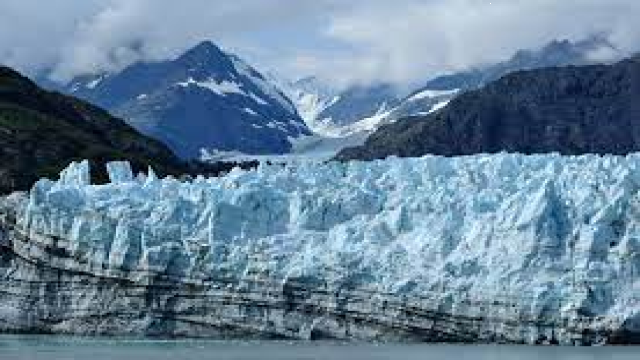
The Kashmir Himalayas constitute the westernmost segment of the Himalayan arc in India, situated primarily within the Union Territories of Jammu & Kashmir and Ladakh. This region displays a complex grid of structural ranges, high-altitude plateaus, deep gorges, and intermontane valleys. It exhibits a unique structural transition where the general northwest-to-southeast alignment of the central Himalayas takes a sharp hairpin turn at the western syntaxial bend near Nanga Parbat.
Morphotectonic Ranges and Topographical Hierarchy
The physiography of the Kashmir Himalayas is characterized by a series of parallel to sub-parallel mountain systems arranged from southwest to northeast.
Outer Plains and Jammu Hills
- Structural Position: This is the southernmost tier, transitioning directly from the Indo-Gangetic plains into the sub-Himalayan zone.
- Geomorphic Features: The Jammu Hills represent the local manifestation of the Shiwalik Range, composed of loosely consolidated Neogene sediments. It is highly dissected by seasonal torrents called choas, creating a rugged badland topography.
Pir Panjal Range
- Tectonic Identity: It forms the outermost wall of the Lesser Himalayas in this sector, stretching continuously from the Jhelum River to the Upper Beas River.
- Orographic Barrier: The range acts as a major climatic divide, blocking the southwest monsoon from entering the inner Kashmir Valley and creating a rain-shadow effect on its northern slopes.
The Great Himalayan Range (Himadri)
- Structural Wall: Forming the northern boundary of the Kashmir Valley floor, this range contains massive crystalline rocks such as granites and gneisses.
- Key Peaks: It features prominent, heavily glaciated massifs including Nun (7,135 m) and Kun (7,077 m).
Trans-Himalayan Systems (Zaskar, Ladakh, and Karakoram)
- Zaskar Range: Runs parallel to the Great Himalayas and contains vital high-altitude passes.
- Ladakh Range: Positioned north of the Zaskar Range, it forms the structural backbone of the cold desert plateau.
- Karakoram Range: The northernmost frontier block, hosting K2 (Mount Godwin-Austen, 8,611 m) and the highest density of alpine glaciers outside the polar circles.
| Range Profile | Spatial Boundary / Fault Line | Dominant Geomorphic Features | Major Mountain Passes |
| Jammu Hills (Shiwaliks) | Bounded by Himalayan Frontal Fault (HFF) to the south | Low-lying anticlinal ridges, highly eroded sandstones | N/A |
| Pir Panjal Range | Separated by Main Boundary Thrust (MBT) | Folded metamorphics, steep southern glint slopes | Banihal Pass, Pir Panjal Pass, Rohtang Pass |
| Great Himalayas | Delineated by Main Central Thrust (MCT) | Central crystalline core, sharp pyramidal peaks | Zoji La, Burzil Pass, Amarnath Pass |
| Zaskar & Ladakh Ranges | Separated from Great Himalayas by Indus-Tsangpo Suture Zone (ITSZ) | High-altitude arid plateaus, deep antecedent gorges | Photu La (Zaskar), Khardung La (Ladakh), Chang La |
| Karakoram Range | Northernmost structural block | Polar-type valley glaciers, massive structural block faults | Karakoram Pass, Aghil Pass |
The Structural Evolution of the Kashmir Valley
The Valley of Kashmir is a unique geomorphic unit nestled as a structural synclinal basin between the Pir Panjal Range to the southwest and the Great Himalayan Range to the northeast.
Tectonic Origin and Lacustrine History
- The Primordial Lake: During the Pleistocene Epoch, tectonic upliftment of the Pir Panjal Range obstructed the natural drainage of the ancestral Jhelum River system. This impounded the water, forming a massive prehistoric lake known as Lake Karewa, which covered the entire synclinal trough.
- Drainage Excavation: Subsequent tectonic activity fractured the outer barriers, allowing the Jhelum River to cut a deep, narrow gorge through the Baramulla-Khadanyar axis. This carved out an exit channel, draining the lake and exposing the thick sedimentary floor of the basin.
Karewa Formations (Vudus)
- Lithological Matrix: The drained lake bed left behind extensive flat-topped terraced plateaus known locally as Karewas or Vudus. These deposits consist of uncemented lacustrine sediments, including thick beds of fine silt, clay, sand, glacio-fluvial gravel, and lignite layers.
- Socio-Economic Value: The soils of these Karewa terraces are exceptionally rich in organic matter and retain moisture effectively. They are globally renowned for the cultivation of Zafran (Saffron), particularly in the Pampore region, along with high-value horticultural crops like almonds, walnuts, and apples.
Fluvial Geomorphology and Hydrological Networks
The drainage layout of the Kashmir Himalayas is an ideal study of both antecedent networks and highly matured meandering streams operating within a youthful mountain terrain.
The Jhelum River System
- Source Basin: The Jhelum originates from a perennial karst spring at Verinag, situated at the southern extremity of the Pir Panjal foothills.
- The Valley Floor Meanders: Uncharacteristically for a mountain river, the Jhelum meanders extensively across the flat structural floor of the Kashmir Valley. This low-gradient meandering occurs because the river flows through a filled lacustrine basin, dropping its sediment load and developing wide loops before entering its youthful gorge phase beyond Baramulla.
- Oxbow Formations and Lakes: Wular Lake, one of the largest freshwater lakes in Asia, lies directly in the path of the Jhelum. It is a tectonic lake formed due to localized subsidence of the earth’s crust, fed directly by the Jhelum’s floodwaters. Dal Lake, an urban lacustrine ecosystem in Srinagar, represents an oxbow remnant of the river’s ancient paths combined with natural wetland depressions.
The Indus River Trench
- Structural Corridor: The Indus River enters Indian territory near Demchok and flows northwestward through a deep structural trench bounded precisely by the Ladakh Range to its north and the Zaskar Range to its south.
- Antecedent Incision: Near Bunji, north of Nanga Parbat, the Indus cuts a near-vertical, 5,200 m deep transverse gorge across the mountain structure, forming the deepest gorge on the Indian subcontinent.
- Major Tributaries: The Indus receives high-energy glacial tributaries within this sector, including the Shyok River (flowing between Karakoram and Ladakh ranges), the Nubra River (originating from the Siachen Glacier), and the Zaskar River.
Glaciology and Cold Desert Morphotectonics
The northeastern flank of the Kashmir Himalayas exhibits a morphoclimatic shift into the high-altitude cold desert of Ladakh.
The Siachen Glacier and The Saltoro Axis
- Glacial Scale: Located in the eastern Karakoram range, the Siachen Glacier stretches for approximately 76 km, making it the longest glacier in the Karakoram and the second-longest in the world’s non-polar regions.
- Strategic Topography: It is flanked to the west by the Saltoro Ridge, which acts as a watershed and a strategic military line. Other major structural glaciers in this vicinity include Baltoro, Biafo, and Hispar.
High-Altitude Arid Plains
- Interior Drainage Basins: North of the Indus Valley lie vast, high-altitude structural plains that experience hyper-aridity due to the double rain-shadow effect of the Greater Himalayas and the Ladakh Range.
- The Plains of Ladakh: These include the Depsang Plains, Aksai Chin, Soda Plains, and Lingzi Thang Plains. They are characterized by interior drainage basins containing high-salinity lacustrine remnants, such as Pangong Tso and Tso Moriri, which are deep saltwater lakes formed due to the structural trapping of meltwaters.
Strategic Mountain Passes (La)
The continuous high walls of the Kashmir and Trans-Himalayan ranges are navigable only through critical structural notches that have historically served as arteries for trade, military movement, and cultural exchanges.
Pir Panjal Passes
- Banihal Pass (2,832 m): Connects the Jammu plains (Outer Hills) with the Valley of Kashmir. It houses the Jawahar Tunnel and the high-altitude railway transport network.
- Pir Panjal Pass (3,490 m): Historically known as the Peer Ki Gali, it links Rajouri and Poonch directly to the valley floor via the Mughal Road.
Great Himalayan and Zaskar Passes
- Zoji La (3,528 m): A vital pass cutting through the Great Himalayan wall, creating a structural gateway that connects Srinagar with the cold desert districts of Kargil and Leh.
- Burzil Pass (4,100 m): An ancient trade pass connecting the Kashmir Valley with the Deosai Plains of Gilgit-Baltistan.
- Pensi La (4,400 m): Acts as the gateway to the remote Zanskar Valley from the Kargil district.
Trans-Himalayan Passes
- Khardung La (5,359 m): Located on the Ladakh Range just north of Leh, it serves as a critical motorable pass providing logistics access to the strategic Shyok and Nubra Valleys.
- Karakoram Pass (5,540 m): An ancient, non-motorable structural saddle between India and China, marking the historic Silk Route alignment.
UPSC Prelims-Specific Trivia and Key Concepts
The Western Syntaxial Bend
At the point of Nanga Parbat, the entire structural alignment of the Himalayas bends sharply southward from its northwest trend. This hairpin bend is a tectonic reaction to the northward thrusting of the hidden Indian peninsular shield apex against the softer sediments of the Eurasian boundary, causing the rock strata to loop around the rigid promptontory.
Karewa Palynology and Paleoclimate
The thick sedimentary layers of the Karewa formations contain highly preserved fossilized pollen grains, diatoms, and mammalian bones. Geologists use these strata to reconstruct the climatic shifts of the Indian subcontinent during the Quaternary period, proving that the Kashmir Valley shifted from a warm temperate lacustrine phase to cold glacial conditions.
The Indus Furrow and Ophiolites
Along the Indus-Tsangpo Suture Zone (ITSZ) in Ladakh, fragments of ancient oceanic crust and deep-sea volcanic rocks, known as Ophiolites, are exposed on the surface. These rocks provide clear physical evidence that the deep Tethys Ocean floor was compressed and pushed upward during the initial impact zone of the Indian and Eurasian plates.
Last Modified: June 4, 2026