
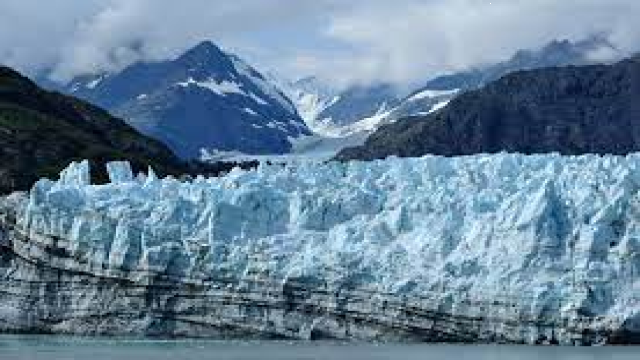
Himalayan lakes are key features of India’s surface water geography. They are situated across the trans-Himalayan, Greater, Lesser, and Outer Himalayan ranges. These water bodies are classified by their origin into tectonic, glacial, landslide-dammed, and structural endorheic lakes. They are vital for regulating river flows, maintaining local microclimates, and supporting biodiversity. As major fresh and brackish water sources, they sustain downstream river systems including the Indus, Ganga, and Brahmaputra basins.
Classification by Origin and Hydro-Geomorphic Features
Tectonic Lakes
Tectonic lakes are formed by the fracturing, faulting, and folding of the Earth’s crust caused by the collision of the Indian and Eurasian tectonic plates.
- Wular Lake (Jammu & Kashmir): This is India’s largest freshwater lake. It occupies a structural depression formed by tectonic activity and is fed directly by the Jhelum River, a major tributary of the Indus. It plays a critical role in flood regulation for the Kashmir Valley.
- Naini Lake (Uttarakhand): Located in the Kumaon Lesser Himalayas, this kidney-shaped freshwater lake is situated along a major tectonic fault line, the Main Boundary Thrust (MBT), and is drained by the Balia Nala.
Glacial Lakes and Tarns
Glacial lakes are formed by glacial erosion, scooping out circular depressions (cirques) or valleys that fill with meltwater as glaciers retreat.
- Tsomgo Lake / Changu (Sikkim): An oval-shaped glacial lake located at an altitude of 3,753 meters in East Sikkim. It is fed by melting snow from the surrounding peaks and remains frozen during the winter months.
- Roopkund Lake (Uttarakhand): Known as a high-altitude glacial tarn, it is located in the Chamoli district at an elevation of 5,029 meters. It is surrounded by rock-strewn glaciers and is fed by seasonal avalanche meltwater.
- Gurudongmar Lake (Sikkim): Situated at an altitude of 5,430 meters, it is one of the highest lakes in India and the world. It is fed by the Gurudongmar Glacier and serves as a primary source for the Teesta River.
Structural Endorheic (Closed-Basin) Lakes
These lakes are located in the high-altitude trans-Himalayan rain-shadow zones. They lack an outlet to the open sea, causing dissolved minerals to accumulate over time.
- Pangong Tso (Ladakh): A transboundary endorheic lake shared between India and China, situated at an altitude of 4,225 meters. It is the highest saltwater lake in the world. Despite being saline, it freezes completely during winter due to low temperatures.
- Tso Moriri (Ladakh): A high-altitude brackish lake located in the Changthang plateau at an elevation of 4,522 meters. It is fed by springs and snowmelt from adjacent mountains but has no natural outlet.
Landslide-Dammed Lakes (Barrier Lakes)
These lakes are formed when landslides, rockfalls, or glacial moraines block river channels, creating natural structural barriers.
- Gohna Lake (Uttarakhand): Formed historically in the Garhwal region when a massive rockfall blocked the Birahi Ganga River, a tributary of the Alaknanda.
- Chandra Taal (Himachal Pradesh): Located in the Spiti valley, this crescent-shaped lake is bounded by a natural barrier of glacial moraines and scree slopes, serving as a primary water source for the Chandra River.
Comprehensive Compendium of Major Himalayan Lakes
| Lake Name | Location (State/UT) | Geomorphic Zone | Water Chemistry | Salient Hydrological and Ecological Facts |
| Wular Lake | Jammu & Kashmir | Lesser Himalaya | Freshwater | Connected to the Jhelum River; includes the artificial island Zaina Lank; listed as a Ramsar site. |
| Pangong Tso | Ladakh | Trans-Himalaya | Saline / Brackish | Lacks any aquatic fauna or vegetation; changes color from turquoise to deep blue. |
| Tso Moriri | Ladakh | Trans-Himalaya | Brackish | Important breeding ground for the Black-necked Crane and Bar-headed Goose; Ramsar site. |
| Tso Kar | Ladakh | Trans-Himalaya | Hyper-saline | Known as the “White Lake” due to white salt crusts on its margins; part of a complex wetland system. |
| Dal Lake | Jammu & Kashmir | Lesser Himalaya | Freshwater | Open lake with urban island ecosystems; famous for radh (floating gardens) and houseboats. |
| Mansarovar Lake | Tibet (Autonomous Region) | Trans-Himalaya | Freshwater | Near the source of the Indus, Satluj, and Brahmaputra (Yarlung Tsangpo) rivers. |
| Rakshastal | Tibet (Autonomous Region) | Trans-Himalaya | Saline | Endorheic lake connected to Mansarovar via the Ganga Chhu channel; source of the Satluj River. |
| Chandra Taal | Himachal Pradesh | Greater Himalaya | Freshwater | Crescent-shaped lake; designated Ramsar site; main source of the Chandra River. |
| Suraj Taal | Himachal Pradesh | Greater Himalaya | Freshwater | Located just below the Bhaga Pass (Baralacha La); primary source of the Bhaga River. |
| Renuka Lake | Himachal Pradesh | Outer Himalaya (Siwalik) | Freshwater | Largest natural lake in Himachal Pradesh; shaped like a reclining woman; Ramsar site. |
| Bhimtal | Uttarakhand | Lesser Himalaya | Freshwater | Largest lake in the Kumaon region; features a central structural island. |
| Gurudongmar Lake | Sikkim | Greater Himalaya | Freshwater | Sacred to Buddhists and Sikhs; source of the Lachen Chhu, which joins Lachung Chhu to form the Teesta. |
| Khecheopalri Lake | Sikkim | Lesser Himalaya | Freshwater | Part of the Buddhist religious landscape; surrounded by dense forest that keeps the surface clear of leaves. |
Special Ecological and Environmental Phenomena
High-Altitude Wetlands (HAWs)
Himalayan lakes located above 3,000 meters are classified as High-Altitude Wetlands. These ecosystems face extreme conditions, including intense solar radiation, low oxygen levels, and sub-zero temperatures. They serve as critical staging and breeding sites for migratory birds along the Central Asian Flyway.
Glacial Lake Outburst Floods (GLOFs)
Due to rising temperatures and accelerated glacier retreat, many Himalayan glaciers are melting rapidly. This process creates meltwater lakes bounded by unstable moraine dams. When these natural dams breach due to internal hydrostatic pressure, avalanches, or earthquakes, they trigger Glacial Lake Outburst Floods. These sudden torrents release millions of cubic meters of water, causing severe damage downstream in valleys like the Teesta and Mandakini.
Endorheic Salinity Dynamics
Lakes such as Pangong Tso and Tso Kar exhibit high salt concentrations despite being fed by freshwater snowmelt. High evaporation rates in cold desert microclimates, combined with the lack of surface outlets, concentrate sodium chloride, magnesium sulfate, and carbonate minerals within these closed basins.
Conservation, Treaties, and Environmental Threats
Ramsar Convention and Montreux Record
Several Himalayan lakes are designated as Wetlands of International Importance under the Ramsar Convention.
- Tso Moriri, Tso Kar, and Chandra Taal: These sites are protected under Ramsar mandates to preserve their fragile alpine biodiversity and prevent degradation from uncontrolled tourism.
- Threat Factors: Himalayan lakes face ecological pressures, including siltation from hillslope erosion, pollution from high-altitude army camps and tourism waste, and eutrophication from agricultural runoff in lower-altitude valley lakes like Dal and Bhimtal.
UPSC Prelims Fact-File and Trivia
The Skeletal Riddle of Roopkund
Roopkund Lake is known as “Skeleton Lake” or “Mystery Lake.” Hundreds of ancient human skeletons dating back to the 9th century AD are scattered along its shores and become visible when the ice melts in summer. DNA and anthropological research suggest they died simultaneously due to a severe hailstorm.
The Artificial Island of Wular
Sultan Zain-ul-Abidin of Kashmir constructed an artificial island named Zaina Lank in Wular Lake during the 15th century. It was engineered using stone masonry to provide a safe harbor for boats during sudden monsoonal storms on the open lake.
The Baralacha La Hydro-Divide
The Baralacha La pass in Himachal Pradesh serves as a major hydrological divide. It features Suraj Taal, which feeds the Bhaga River, and is located near Chandra Taal, which feeds the Chandra River. These two streams flow downstream to merge at Tandi, forming the Chandrabhaga or Chenab River.
The Tso Kar Salt Harvesting
Tso Kar means “White Lake” in the local language. The hyper-saline nature of this lake causes a thick white crust of sodium sulfate to deposit along its banks. Historically, this salt was harvested by local nomadic Changpa tribes for trade across the Tibetan plateau.
Last Modified: June 6, 2026