
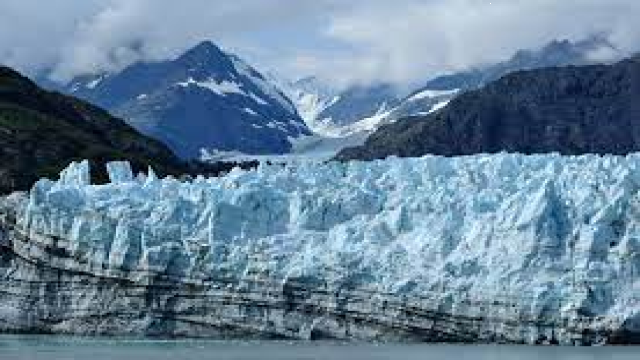
The Himalayan Region of India hosts the largest concentration of freshwater ice and alpine glaciers outside the polar circles, earning it the designation of the Third Pole. These glaciers act as high-altitude cryospheric water towers that sustain the perennial river networks of Northern and Eastern India, including the Indus, Ganga, and Brahmaputra basins. Formed through millions of years of snow accumulation and compaction within high-relief structural basins, these glaciers are highly sensitive indicators of global climate variability and tectonic activity.
Geomorphological and Tectonic Zonation of Himalayan Glaciers
Himalayan glaciers are distributed across distinct latitudinal and regional morphotectonic zones. Their characteristics vary based on altitude, orientation, debris cover, and moisture sources.
Karakoram and Trans-Himalayan Glaciers
- Climatic Regime: Primarily fed by winter precipitation brought by Western Disturbances originating over the Mediterranean Sea.
- Characteristics: These are the longest and most continuous valley glaciers in the sub-continent, located in a hyper-arid, cold desert environment. They exhibit a high thermal inertia due to thick supraglacial debris cover.
- The Karakoram Anomaly: Unlike glaciers in the Central and Eastern Himalayas that are experiencing rapid retreat, several glaciers in the Karakoram range have shown stability or marginal advance, a phenomenon geomorphologically termed the Karakoram Anomaly.
Greater Himalayan (Himadri) Glaciers
- Climatic Regime: Nourished predominantly by the summer monsoon winds from the Bay of Bengal branch.
- Characteristics: These glaciers occupy steep structural slopes and cirques directly flanking the highest crystalline massifs. They feature rapid flow velocities, high ablation (melting) rates, and extensive development of proglacial and moraine-dammed lakes.
Comprehensive Inventory of Major Himalayan Glaciers in India
The following matrix details the primary glacial systems located within the territorial and administrative limits of India, categorized by their respective river basins.
| Glacier Name | Length (approx.) | Mountain Range Sector | State / Union Territory | Hydrological Source & Strategic Facts |
| Siachen Glacier | 76 km | East Karakoram Range | Ladakh Union Territory | Longest glacier in India and second-longest in non-polar regions. Feeds the Nubra River (a tributary of the Shyok/Indus system). Anchors the strategically vital Actual Ground Position Line (AGPL). |
| Baltoro Glacier | 63 km | Karakoram Range | Ladakh (POK) | Located at the base of the K2 massif; feeds the Shigar River, which joins the Indus River near Skardu. |
| Biafo Glacier | 67 km | Karakoram Range | Ladakh (POK) | Meets the Hispar Glacier at the Hispar La pass to form the world’s longest continuous non-polar glacial corridor outside ice sheets. |
| Gangotri Glacier | 30 km | Greater Himalayas | Uttarakhand (Uttarkashi) | Largest glacier system in the Garhwal Himalayas. The subglacial snout at Gaumukh releases the Bhagirathi River (the principal source stream of the Ganga). |
| Zemu Glacier | 26 km | Greater Himalayas | Sikkim (Kanchenjunga) | Largest and most important valley glacier in the Eastern Himalayas, serving as the primary hydrological source for the Teesta River. |
| Bara Shigri | 28 km | Chandra Valley (Zaskar Axis) | Himachal Pradesh (Lahaul) | Largest glacier in the state of Himachal Pradesh. Its meltwaters feed the Bhaga and Chandra rivers, which merge to form the Chenab River. |
| Milam Glacier | 16 km | Kumaon Himalayas | Uttarakhand (Pithoragarh) | Located on the shaded northern slopes of the Trishuli massif. Feeds the Goriganga River, a major tributary of the Sharda (Kali) system. |
| Pindari Glacier | 9 km | Kumaon Himalayas | Uttarakhand (Bageshwar) | A prominent, easily accessible cirque glacier located between Nanda Devi and Nanda Kot peaks. Gives rise to the Pindar River, which joins the Alaknanda at Karnaprayag. |
| Chorabari Glacier | 7 km | Greater Himalayas | Uttarakhand (Kedarnath) | Located immediately upstream of the Kedarnath shrine. Feeds the Mandakini River; the source of the 2013 Kedarnath flash floods due to a lateral moraine breach. |
| Chhota Shigri | 9 km | Pir Panjal Range | Himachal Pradesh | A well-studied, highly monitored bench glacier used by glaciologists as a representative reference for mass balance in the Western Himalayas. |
| Satopanth Glacier | 13 km | Greater Himalayas | Uttarakhand (Chamoli) | Located on the slopes of the Chaukhamba massif; feeds the Alaknanda River via the Satopanth Tal proglacial lake corridor. |
| Rathong Glacier | 11 km | Greater Himalayas | Sikkim | Located in West Sikkim; feeds the Rangit River system, a major high-discharge tributary of the Teesta River. |
Types of Himalayan Glacial Landforms
The immense erosional and depositional work of moving ice sheets has carved out a distinct youthful glacial topography along the higher ranges.
Erosional Landforms
- Cirques and Tarns: Armchair-shaped steep depressions carved into mountain walls by plucking and abrasion. When the ice melts, these depressions fill with water to form high-altitude alpine lakes known as tarns (e.g., Chandra Tal in Himachal Pradesh).
- Horns and Arêtes: Sharp, pyramidal peaks formed when multiple cirques cut back into a single mountain massif (e.g., Siniolchu in Sikkim). The narrow, jagged rock ridges separating these cirques are called arêtes.
- U-Shaped Valleys and Hanging Valleys: Glaciers widen and deepen pre-existing river valleys into flat-bottomed troughs. Tributary glaciers with less erosional power leave behind shallow hanging valleys that create waterfalls upon entering the main trough.
Depositional Landforms
- Moraines: Accumulations of unstratified glacial debris, gravel, and boulders. These are classified into Lateral Moraines (deposited along the sides of the glacial trough), Medial Moraines (formed when two tributary glaciers merge), and Terminal Moraines (ridgelike accumulations marking the furthest advance of the snout).
- Outwash Plains: Flat alluvial plains formed beyond the terminal moraine where meltwater streams deposit sorted sand, silt, and fine gravel sheets.
Climate Change, Deglaciation, and Associated Hazards
Himalayan glaciers are experiencing widespread mass loss due to rising regional temperatures, altering the hydrology and safety of downstream river plains.
Glacial Retreat and Snout Recession
Periodic satellite measurements indicate that the majority of Indian Himalayan glaciers are undergoing accelerated retreat. For example, the Gangotri Glacier snout has been receding at an average rate of 15 to 30 meters per year, accompanied by significant structural thinning of the ice body.
Glacial Lake Outburst Floods (GLOFs)
As glaciers retreat, they leave behind loose moraine dams that trap meltwater, forming expanding proglacial lakes. These moraine dams are structurally unstable and can breach catastrophically due to cloudbursts, ice avalanches, or seismic activity.
- The South Lhonak GLOF: The sudden breach of the moraine-dammed South Lhonak Lake in North Sikkim caused severe downstream flash floods along the Teesta River corridor, highlighting the high vulnerability of the Eastern Himalayan drainage zone.
Black Carbon and Albedo Reduction
The deposition of Black Carbon (particulate matter from biomass burning, forest fires, and vehicular emissions) on pristine snow surfaces reduces the surface albedo (reflectivity). This increases the absorption of solar radiation, accelerating the melting rate of glaciers even at hyper-high altitudes.
Prelims-Specific Trivia and Core Concepts
The Concept of Equilibrium Line Altitude (ELA)
The ELA marks the boundary on a glacier where annual snow accumulation equals annual ablation (melting). A persistent upward shift in the ELA over successive years indicates a negative mass balance, providing clear evidence of structural glacial volume loss.
Surge Glaciers of the Karakoram
Certain valley glaciers in the Karakoram range exhibit a periodic geomorphic behavior known as surging, where the glacier advances rapidly downstream by several kilometers over a brief span of months, independent of immediate climate variations. This movement is driven by basal water pressure dynamics.
Glacial Flour and River Coloration
Streams emerging from the snouts of major glaciers carry heavy suspensions of fine-grained, mechanically pulverized rock particles known as glacial flour or rock flour. This suspension scatters light waves, giving proglacial rivers and high-altitude lakes a distinct turquoise or milky-white color during peak summer melting cycles.
Last Modified: June 4, 2026