
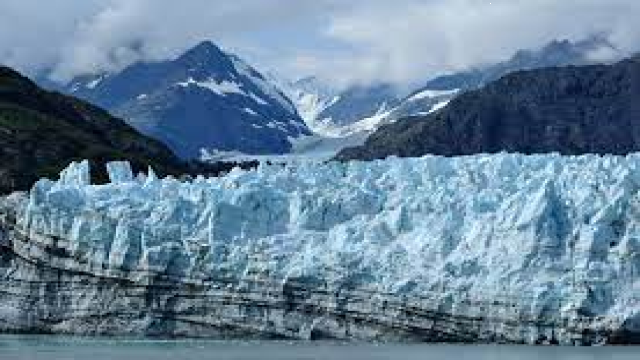
The Himalayas are not a single continuous chain of mountains but a complex system of parallel and converging ranges stretching over 2,400 kilometers from the Indus bend in the west to the Brahmaputra bend in the east. Physically, the system can be divided into four distinct latitudinal physiographic structures that vary in age, altitude, rock composition, and structural features.
1. The Trans-Himalayas (Tibetan Himalayas)
Situated immediately north of the Great Himalayan Range, this zone is heavily influenced by the Tethyan sedimentary domain and is often considered an extension of the Tibetan plateau.
Key Structural Features
- Geological Origin: It is older than the Great Himalayas and consists mostly of Tethys sediments, including marine fossil-bearing sedimentary rocks.
- Width and Extent: It stretches for about 1,000 km in an east-west direction with an average width of 40 km to 225 km.
- Major Ranges: ” Karakoram Range: Known as the ‘Backbone of High Asia’. It hosts K2 (Godwin Austen), the second-highest peak in the world (8,611 m), and the massive Siachen Glacier.
- Ladakh Range: Lies south of the Karakoram. It terminates at the eastern edge in the Chang Chenmo range. The cold desert of Ladakh is nestled here.
- Zaskar Range: Runs parallel to the Ladakh range. The Indus River flows through a structural trench between the Ladakh and Zaskar ranges.
- Kailas Range: An offshoot of the Ladakh range located entirely within Tibet.
2. The Greater Himalayas (Inner Himalayas / Himadri)
This is the most continuous, loftiest, and northernmost crustal wall of the main Himalayan mountain system.
Key Structural Features
- Physical Dimensions: It boasts an average elevation of over 6,000 m above sea level and a width ranging between 15 km and 30 km.
- Core Rock Composition: The structural core is composed of Archaean crystalline rocks such as granites, gneisses, and schists, flanked by metamorphosed sedimentary strata.
- Asymmetrical Topography: The range exhibits structural asymmetry, featuring steep slopes toward the southern plains of India and gentle slopes toward the northern Tibetan side.
- Prominent Peaks: Mount Everest (8,848.86 m), Kanchenjunga (8,586 m), Makalu (8,481 m), Dhaulagiri (8,167 m), and Nanga Parbat (8,126 m).
- Glacial Systems: Being perpetually snow-bound, it feeds major perennial rivers via massive glaciers like Gangotri and Yamunotri.
3. The Lesser Himalayas (Middle Himalayas / Himachal)
Located south of the Himadri, this region represents a highly compressed, altered, and fractured mountain tract characterized by immense structural distortions.
Key Structural Features
- Physical Dimensions: The average altitude ranges between 3,700 m and 4,500 m, with a width varying from 60 km to 80 km.
- Lithological Composition: Mainly composed of unfossiliferous metamorphosed sediments, including slate, limestone, quartzite, and shale.
- Main Ranges:
- Pir Panjal Range: The longest and most important range of this zone, extending from the Jhelum River to the Upper Beas River.
- Dhauladhar Range: Prominent in Himachal Pradesh, overlooking the Kangra Valley.
- Mussoorie and Nag Tibba Ranges: Located in Uttarakhand.
- Mahabharat Lekh: The continuation of the Middle Himalayas into Nepal.
- Intermontane Valleys: Famous structural longitudinal valleys lie between the Greater and Lesser Himalayas, such as the Kashmir Valley (bounded by the Pir Panjal and Zaskar ranges) and the Kathmandu Valley.
4. The Outer Himalayas (Shiwalik Range)
The southernmost and youngest component of the Himalayan system, running almost parallel to the Lesser Himalayas.
Key Structural Features
- Physical Dimensions: It has a modest average elevation of 900 m to 1,100 m and a width ranging from 10 km to 50 km. It becomes virtually indistinct in the eastern parts of India beyond the Kosi River due to narrow compression.
- Lithological Composition: Composed of unconsolidated sediments, gravel, silt, sand, and conglomerates brought down by rivers originating in the higher ranges.
- The Phenomenon of Duns: ” The rising Shiwalik hills temporarily blocked the paths of northward-flowing rivers, forming ephemeral lakes.
- These lakes deposited thick layers of sediments. When the rivers eventually cut through the Shiwalik barriers, the lakes drained out, leaving behind flat-bottomed structural valleys known as Duns in the west (e.g., Dehradun, Kotli Dun, Patli Dun) and Duars in the east.
Morphotectonic Longitudinal Divisions and Boundaries
The entire longitudinal profile of the Himalayas is delineated by profound, deep-seated tectonic faults or lineaments that mark distinct structural transitions.
| Morphic Zone Boundary | Abbreviation | Southern Structural Unit | Northern Structural Unit |
| Indus-Tsangpo Suture Zone | ITSZ | Greater Himalayas | Trans-Himalayas (Tibetan Block) |
| Main Central Thrust | MCT | Lesser Himalayas | Greater Himalayas |
| Main Boundary Thrust | MBT | Outer Himalayas (Shiwaliks) | Lesser Himalayas |
| Himalayan Frontal Fault | HFF / MFT | Indo-Gangetic Alluvial Plains | Outer Himalayas (Shiwaliks) |
Regional Morphological Anomalies: Longitudinal vs. Regional Profiles
While the latitudinal structure divides the Himalayas into four zones, Sir Sidney Burrard classified the system into four major regional geographic segments based on river valleys.
Punjab Himalayas (West Himalayas)
- Extent: Between the Indus and Satluj rivers (approx. 560 km).
- Features: Gradually climbs in height; incorporates the major parts of Kashmir and Himachal ranges. It is known for its wide valleys and open structural basins.
Kumaon Himalayas
- Extent: Between the Satluj and Kali rivers (approx. 320 km).
- Features: Features prominent peaks like Nanda Devi, Kamet, and Trisul. Contains numerous glacial lakes and structural talas (e.g., Nainital, Bhimtal).
Nepal Himalayas
- Extent: Between the Kali and Teesta rivers (approx. 800 km).
- Features: The loftiest and most compressed part of the mountain chain, where the Great Himalayan wall attains its maximum altitude and the Shiwalik range is highly narrowed down.
Assam Himalayas (East Himalayas)
- Extent: Between the Teesta and Dihang (Brahmaputra) rivers (approx. 720 km).
- Features: Characterized by narrower mountain folds, high rainfall, intense fluvial erosion, and a rapid drop into the plains. The foothills are covered with dense vegetation and show less distinct Shiwalik topography compared to the western wing.