
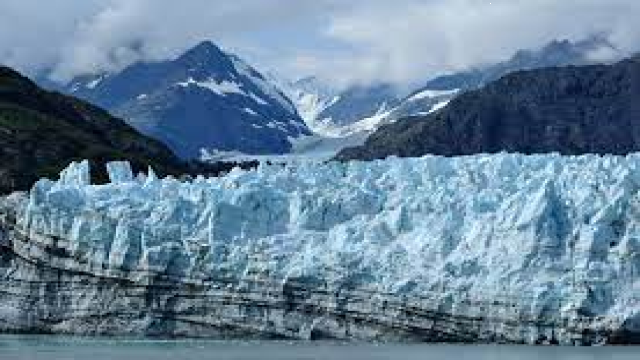
The Kumaon-Garhwal Himalayas, also known as the Uttarakhand Himalayas or the Central-Western Himalayas, constitute a vital section of the Himalayan arc in northern India. This regional segment is geographically defined by river valleys, stretching for approximately 320 kilometers between the Satluj River in the west and the Kali River (which marks the international boundary with Nepal) in the east. This region exhibits a classic, highly compressed structural transition from the outer plains to the highest crystalline mountain walls.
Morphotectonic Divisions and Fault Delineations
The structural architecture of the Kumaon-Garhwal region is divided into four distinct latitudinal physiographic belts separated by deep-seated tectonic lineaments.
The sub-Himalayan Foot hills (Outer Himalayas or Shiwaliks)
- Tectonic Limits: This southernmost tier rises abruptly from the Indo-Gangetic Alluvial Plains along the Himalayan Frontal Fault (HFF). It is bounded to the north by the Main Boundary Thrust (MBT).
- Geomorphic Features: Composed of loosely consolidated Cenozoic sandstones, conglomerates, and silt. It features a youthfully deformed, low-relief topography with altitudes hovering between 900 meters and 1,100 meters.
The Lesser Himalayas (Himachal Range)
- Tectonic Identity: Trapped between the MBT to the south and the Main Central Thrust (MCT) to the north, this zone undergoes extreme structural deformation, fracturing, and folding.
- Main Ranges: The Mussoorie Range and the Nag Tibba Range dominate this sector, maintaining average elevations between 2,000 meters and 3,000 meters.
The Greater Himalayas (Himadri)
- The High Crystalline Wall: Positioned immediately north of the MCT, this zone represents the deep-seated metamorphic core of the orogenic belt. It features precipitous southern slopes and a continuous wall of peaks exceeding 7,000 meters.
- Lithological Matrix: Dominated by Archaean gneisses, granites, and highly altered mica schists.
The Tethys Himalayas
- The Marine Sedimentary Domain: Situated north of the Greater Himalayan axis and extending up to the international border, this zone consists of highly folded, marine fossil-bearing sedimentary strata representing the original floor of the Tethys Ocean.
| Morphotectonic Zone | Average Elevation (m) | Key Lithological Variants | Delineating Tectonic Faults |
| Shiwalik foothills | 900 to 1,100 | Conglomerates, clays, loose sandstones | Southern: HFF | Northern: MBT |
| Lesser Himalayas | 1,500 to 3,000 | Slates, quartzites, unfossiliferous limestones | Southern: MBT | Northern: MCT |
| Greater Himalayas | Above 6,000 | Central granites, metamorphic gneisses, schists | Southern: MCT | Northern: ITSZ/Vaikrita Thrust |
| Tethys Himalayas | 3,000 to 5,000 | Fossiliferous limestones, shales, sandstones | Southern: South Tibetan Detachment System (STDS) |
Prominent Mountain Massifs and Glacial Systems
The Kumaon-Garhwal sector houses some of the highest and most sacred mountain peaks in the Indian Union, acting as a massive orographic accumulator of snow and ice.
High-Altitude Peaks
- Nanda Devi (7,816 m): The highest mountain peak located entirely within the undisputed mainland territory of India. It is a dual-peak massif (Nanda Devi Main and Nanda Devi East) enclosed within a high-altitude ring of peaks known as the Nanda Devi Sanctuary.
- Kamet (7,756 m): Located near the Tibetan border block, it is the second-highest peak in the region.
- Other Major Massifs: Badrinath (7,138 m), Chaukhamba (7,138 m), Trisul (7,120 m), Satopanth (7,075 m), Kedarnath (6,940 m), and Panchachuli (6,904 m).
Major Glacial Reservoirs
- Gangotri Glacier: A massive valley glacier stretching over 30 kilometers in length, acting as the primary source of the Bhagirathi River (the principal source stream of the Ganga). The subglacial snout is located at Gaumukh.
- Yamunotri Glacier: Situated on the southwestern slopes of the Bandarpunch massif, feeding the Yamuna River system.
- Khatling Glacier: The source of the Bhilangna River, which joins the Bhagirathi at Old Tehri.
- Pindari, Milam, and Dokriani Glaciers: Crucial alpine valley glaciers feeding the trans-basin networks of the Alaknanda and Sharda (Kali) rivers.
Fluvial Geomorphology and Hydro-Structural Valleys
The drainage architecture of the Kumaon-Garhwal Himalayas is dominated by the antecedent and structural evolution of the Ganga and Yamuna river systems.
The Panch Prayag System
The Alaknanda River cuts through deep structural gorges in the Greater Himalayas and meets five distinct tributaries at specific tectonic junctions known as the Panch Prayag, arranged sequentially from upstream to downstream:
- Vishnuprayag: Where the Alaknanda River meets the Dhauliganga River.
- Nandaprayag: The confluence of the Alaknanda and the Nandakini River.
- Karnaprayag: The confluence of the Alaknanda and the Pindar River (which originates from the Pindari Glacier).
- Rudraprayag: Where the Alaknanda meets the high-energy Mandakini River (flowing from the Kedarnath glacial zone).
- Devprayag: The final confluence where the Alaknanda merges with the Bhagirathi River, officially forming the Ganga River before it de-bouches into the plains at Rishikesh and Haridwar.
The Dun Topography
The synclinal structural troughs lying between the Lesser Himalayas and the rising Shiwalik ridges form extensive, flat-bottomed valleys known as Duns.
- Dehradun: The largest longitudinal valley in the sub-Himalayan arc, spanning 75 kilometers in length. It acts as a major hydrological divide between the Yamuna drainage network to the west and the Ganga drainage network to the east.
- Other Notable Duns: Patli Dun and Kotli Dun, both nestled within the Ramganga river basin sector.
The Kumaon Lakes (Tal Complex)
Unlike the western segments of the Himalayas, the Kumaon region is uniquely characterized by a dense cluster of tectonic and landslide-dammed freshwater lakes located in the Nainital district. Key lakes include Nainital, Bhimtal (the largest in the region), Sattal (a group of seven interconnected lakes), and Naukuchiatal (the nine-cornered lake).
Micro-Climatic Zones, Pastures, and Vegetation
Bugyals and Payars
The upper timberline of the Garhwal and Kumaon Himalayas, situated between altitudes of 3,300 meters and 4,000 meters, is characterized by extensive, rolling alpine meadows known locally as Bugyals (e.g., Bedni Bugyal, Dayara Bugyal, and Gidara Bugyal). These seasonal grasslands serve as vital pastoral grounds for indigenous transhumant communities like the Bhotiyas and Gujjars during the summer months.
Forest Stratification
- Subtropical Pine Forests: Dominated by Chir Pine (Pinus roxburghii), thriving on the lower, drier slopes of the Shiwaliks and Lesser Himalayas.
- Temperate Montane Forests: Characterized by dense stands of Deodar (Cedrus deodara), Oak (Quercus species), Blue Pine, and the striking Rhododendron forests, which exhibit vibrant blooms in early spring.
Strategic Mountain Passes (La)
The high-altitude frontier of the Kumaon-Garhwal sector contains vital structural gaps and glacial passes that have historically connected India with the Tibetan Plateau.
- Lipu Lekh Pass: Situated at the strategic tri-junction of India (Uttarakhand), Nepal, and China. It is an active border trade point and serves as the primary route for the official Kailash-Mansarovar Pilgrimage.
- Mana Pass (5,545 m): Located at the head of the Saraswati River valley north of Badrinath, it is one of the highest motorable structural passes in the world.
- Niti Pass: A historic high-altitude pass linking the Garhwal region directly with the trade centers of southwestern Tibet.
- Thaga La and Muling La: High-altitude mountain passes located within the cold, arid Tethyan sedimentary zone of Uttarkashi district.
UPSC Prelims-Specific Trivia and Key Concepts
The Central Crystalline Zone and Tectonic Creep
The Main Central Thrust (MCT) in Uttarakhand is a highly active tectonic zone where the crystalline sheets of the Higher Himalayas are active-sliding over the Lesser Himalayan formations. This structural weakness renders the Garhwal region exceptionally vulnerable to slope instability, cloudburst-triggered flash floods, and land subsidence (as observed in the Joshimath geological displacement zone).
The Valley of Flowers
Situated in the upper reaches of the Bhyundar Ganga valley in Chamoli, Garhwal, this unique glaciated valley is a UNESCO World Heritage site. It represents a specialized high-altitude transition zone between the Zaskar Range and the Greater Himalayas, globally renowned for its endemic alpine flora, including the rare Blue Poppy (Meconopsis) and Brahmakamal (Saussurea obvallata).
Malpa Landslide Phenomenon
The steep, near-vertical structural slope profile of the Kumaon Himalayas along the Kali river valley makes it a classic zone for catastrophic rockfalls. The Malpa Landslide of 1998 remains a seminal case study in Indian geomorphology, demonstrating how intense monsoon rainfall triggers massive rock avalanches along structurally compromised fault planes.
Last Modified: June 4, 2026