
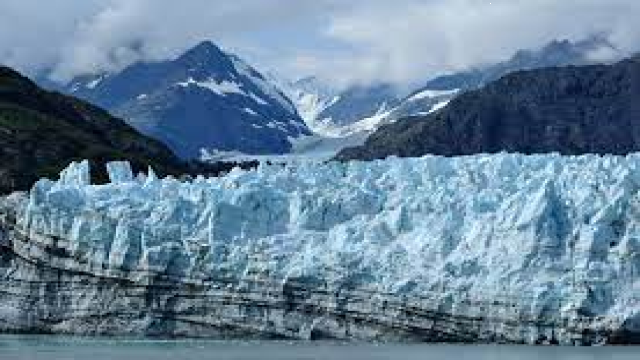
India shares its land borders with seven sovereign nations, spanning a total length of approximately 15,200 kilometers. This border architecture runs through varied terrains, including the glaciated peaks of the Himalayas, the fertile plains of the Punjab, the marshes of the Rann of Kutch, the desert of Rajasthan, and the dense tropical rainforests of the northeast. Managing these frontiers involves diverse paramilitary and military forces operating under the mandate of “One Border, One Force.”
Comprehensive Border Matrix
The following index details India’s land boundaries, ordered by length from longest to shortest, along with their geographical characteristics, guarding forces, and strategic focus points.
| Neighboring Country | Border Length (km) | Share (%) | Bordering Indian States / UTs | Guarding Force | Strategic Agreements / Key Conflicts |
| Bangladesh | 4,096.7 | 26.95% | West Bengal, Assam, Meghalaya, Tripura, Mizoram | Border Security Force (BSF) | Land Boundary Agreement (LBA) 2015, Radcliffe Line, Teen Bigha Corridor, cross-border infiltration, trans-boundary river management (Teesta). |
| China | 3,488 | 22.95% | Ladakh, Himachal Pradesh, Uttarakhand, Sikkim, Arunachal Pradesh | Indo-Tibetan Border Police (ITBP) | Line of Actual Control (LAC), McMahon Line, Western Sector (Aksai Chin), Middle Sector, Eastern Sector (Tawang, Doklam tri-junction). |
| Pakistan | 3,323 | 21.86% | Jammu & Kashmir, Ladakh, Punjab, Rajasthan, Gujarat | Border Security Force (BSF) | Radcliffe Line, Line of Control (LoC), Actual Ground Position Line (AGPL) at Siachen, Sir Creek marshland dispute. |
| Nepal | 1,751 | 11.52% | Uttarakhand, Uttar Pradesh, Bihar, West Bengal, Sikkim | Sashastra Seema Bal (SSB) | Treaty of Sugauli (1816), Kalapani-Limpiyadhura-Lipulekh dispute, Susta territorial dispute, open-border regime. |
| Myanmar | 1,643 | 10.81% | Arunachal Pradesh, Nagaland, Manipur, Mizoram | Assam Rifles (under Army operational control) | Free Movement Regime (FMR) suspension, Indo-Myanmar Border fencing, Golden Triangle drug-trafficking conduit. |
| Bhutan | 699 | 4.60% | Sikkim, West Bengal, Assam, Arunachal Pradesh | Sashastra Seema Bal (SSB) | 1949 Treaty of Friendship (revised 2007), strategic buffer management, Doklam plateau access security. |
| Afghanistan | 106 | 0.70% | Ladakh (Gilgit-Baltistan region under PoK) | Border Security Force (BSF) | Durand Line, Wakhan Corridor tri-junction (provides theoretical land bridge to Central Asia). |
Sector-wise Analysis of Major Borders
The Indo-Bangladesh Frontier
- Geographical Nature: Highly porous, riverine, and anthropogeographic, cutting across standard geographical features like deltaic plains, swamps, and agricultural fields.
- The Enclave Resolution: The 100th Constitutional Amendment Act (2015) operationalized the Land Boundary Agreement, leading to the exchange of 111 Indian enclaves to Bangladesh and 51 Bangladeshi enclaves to India, rectifying complex territorial anomalies.
- Security Redlines: Border fencing faces challenges from riverine stretches (such as the Ichamati and Brahmaputra rivers). Strategic efforts focus on curbing cattle smuggling, counterfeit currency networks, and illegal immigration.
The Indo-China Frontier (Line of Actual Control)
- Western Sector (Ladakh): Extends from the Karakoram Pass to Demchok. It features the Aksai Chin plateau (occupied by China) and has been the site of active standoffs in the Galwan Valley, Pangong Tso, and Depsang Plains.
- Middle Sector (Himachal Pradesh & Uttarakhand): The least disputed sector, running along watershed lines from Demchok to the Nepal tri-junction.
- Eastern Sector (Sikkim & Arunachal Pradesh): Runs along the McMahon Line, which was formulated during the 1914 Simla Convention. China rejects this alignment, claiming Arunachal Pradesh as “South Tibet.” The Doklam plateau at the India-China-Bhutan tri-junction remains a key flashpoint due to its proximity to India’s Siliguri Corridor.
The Indo-Pakistan Frontier
- The International Border (IB): Extends from the Rann of Kutch in Gujarat, through the Thar Desert of Rajasthan, up to Jammu. It is a mutually recognized, highly fortified, and floodlit boundary.
- Line of Control (LoC): A de facto military boundary resulting from the 1948 ceasefire line, formalized via the 1972 Shimla Agreement. It features rugged, mountainous terrain prone to heavy winter snows.
- Actual Ground Position Line (AGPL): Divides Indian and Pakistani positions on the Siachen Glacier, extending from map reference NJ9842 to the Indira Col. It secures India’s high-altitude advantage overlooking the Karakoram highway.
- Sir Creek Dispute: A 96-km tidal estuary in the Rann of Kutch marshlands. The dispute turns on whether the boundary lies in the mid-channel (Thalweg principle claimed by India) or the eastern bank (claimed by Pakistan), impacting the delineation of maritime Exclusive Economic Zones (EEZ).
Strategic Corridors and Geopolitical Vulnerabilities
The Siliguri Corridor
- Topographical Vulnerability: Often referred to as the “Chicken’s Neck,” this corridor is a narrow strip of land in West Bengal, measuring roughly 20 to 22 kilometers at its narrowest point.
- Geostrategic Implication: It connects mainland India to the eight northeastern states. The corridor is flanked by Nepal to the west, Bhutan to the north, and Bangladesh to the south. Its proximity to China’s Chumbi Valley makes it a primary focus for defensive military positioning.
The Tri-Junction Points
India’s borders are pinned by critical tri-junction points where three international boundaries converge.
- Indira Col Tri-Junction: Where the borders of India (Ladakh), Pakistan-occupied Kashmir, and China (Xinjiang) meet near the Karakoram range.
- Lipulekh Tri-Junction: The intersection of India (Uttarakhand), Nepal, and China (Tibet), controlling access to the historical trade and pilgrimage routes of the passes.
- Doklam Tri-Junction: The meeting point of Sikkim (India), Bhutan, and Tibet (China), which directly overlooks the Chumbi valley plains.
- Diphu Pass Tri-Junction: Positioned at the intersection of Arunachal Pradesh (India), China, and Myanmar, serving as a historic commercial link.