
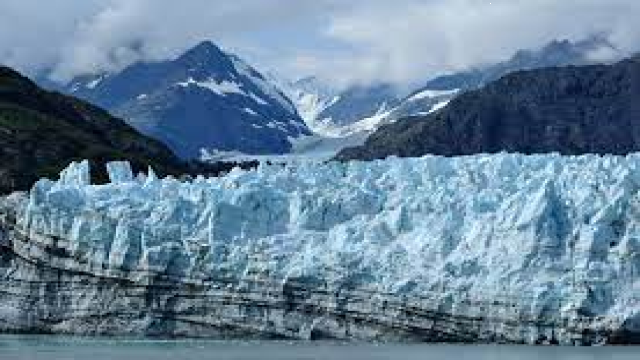
The Indian Himalayan Region (IHR) is one of the most disaster-prone landscapes globally. Its vulnerability stems from a combination of active tectonics, steep terrain, fragile geological formations, high-intensity rainfall, and accelerating climate change. The region regularly witnesses earthquakes, landslides, avalanches, flash floods, Cloudbursts, and Glacial Lake Outburst Floods (GLOFs), impacting life, infrastructure, and downstream river basins.
Seismic Hazards and Tectonics
Plate Tectonics and Fault Zones
The entire Himalayan mountain belt is seismically active due to the ongoing continent-continent collision between the Indian Plate and the Eurasian Plate. The Indian Plate continues to move northward at a rate of approximately 4 to 5 centimeters per year, underthrusting the Eurasian Plate. This movement accumulates strain along major regional fault lines, which is periodically released as earthquakes.
- Main Central Thrust (MCT): A major fault zone where the Higher Himalayas are thrust over the Lesser Himalayas. It is characterized by high strain accumulation and frequent micro-seismicity.
- Main Boundary Thrust (MBT): Separates the Lesser Himalayas from the Outer Himalayas (Siwaliks). It has been the source of several moderate to major historical earthquakes.
- Himalayan Frontal Thrust (HFT): The southernmost fault zone where the Siwaliks meet the Indo-Gangetic plains, representing the most active deformation front.
Seismic Zonation of the Indian Himalayas
According to the Bureau of Indian Standards (BIS) seismic zoning map of India, the Himalayan region falls almost entirely into the highest damage risk zones.
- Zone V (Very High Damage Risk): Includes the entire northeastern states, Jammu & Kashmir, Ladakh, Himachal Pradesh (Kullu, Kangra, Chamba regions), and parts of Uttarakhand (Kumaon and Garhwal divisions).
- Zone IV (High Damage Risk): Covers the remaining parts of Jammu & Kashmir, Himachal Pradesh, Uttarakhand, and the sub-Himalayan tracts of West Bengal and Bihar.
Historical Mega-Earthquakes in the IHR
| Earthquake Event | Year | Magnitude (Mw) | Epicenter / Affected Region | Key Geological Impact |
|---|---|---|---|---|
| Shillong Earthquake | 1897 | 8.1 | Shillong Plateau, Meghalaya | Widespread destruction, completely flattened structures on the plateau. |
| Kangra Earthquake | 1905 | 7.8 | Kangra, Himachal Pradesh | Killed over 20,000 people; severely damaged historical monuments. |
| Bihar-Nepal Earthquake | 1934 | 8.0 | Indo-Nepal Border / Bihar | Extensive liquefaction in the northern plains of Bihar. |
| Assam Earthquake | 1950 | 8.6 | Rima, Tibet / Arunachal-Assam Border | Altered the course of the Brahmaputra River; caused massive landslides blocking rivers. |
| Uttarkashi Earthquake | 1991 | 6.8 | Uttarkashi, Uttarakhand | Severe damage along the Bhagirathi valley; triggered extensive landslides. |
| Kashmir Earthquake | 2005 | 7.6 | Muzaffarabad (Pakistan-administered Kashmir) | Heavy damage in Kupwara and Baramulla districts of Jammu & Kashmir. |
Landslides and Slope Instability
Triggering Factors in the Himalayas
Landslides in the Himalayas are classified into structural and dynamic hazards. The inherent fragility of the rock formations (such as sheared schists, shales, and phyllites) makes them susceptible to failure.
- Monsoonal Rain-Induced: High-intensity, prolonged rainfall during the Southwest Monsoon saturates the soil pore-water pressure, reducing the shear strength of the slope material and causing debris flows and rockfalls.
- Seismically-Induced: Earthquakes shake the unstable slopes, inducing immediate or delayed rock avalanches.
- Anthropogenic Triggers: Unscientific road cutting, toe-cutting for infrastructure, heavy blasting for tunneling, deforestation, and unplanned urban expansion (e.g., in Shimla and Joshimath) destabilize steep slopes.
Major Landslide Hotspots and Historical Events
- Malpa Landslide (1998): Occurred in Pithoragarh district, Uttarakhand. A massive rockfall wiped out the entire village of Malpa along the Kali River, killing 221 people, including Hindu pilgrims on the Kailash Mansarovar Yatra.
- Varunavat Parvat Landslide (2003): Affected Uttarkashi town. Continuous sliding for days damaged urban infrastructure due to the structural failure of the Varunavat mountain slope.
- Joshimath Land Subsidence (2023): Ground subsidence driven by the intersection of natural subterranean water channels, weak crystalline rocks of the MCT, and excessive structural load beyond the carrying capacity of the town.
Hydro-Meteorological Hazards
Cloudbursts
A cloudburst is a localized hydrological phenomenon featuring highly intense rainfall, typically exceeding 100 millimeters per hour over a geographical area of approximately 20 to 30 square kilometers. In the Himalayas, these are common in the vertical valleys of the Lesser and Higher Himalayas, where moist monsoon winds are forced upward rapidly (orographic lifting), leading to cumulonimbus cloud formation.
- Leh Cloudburst (2010): Occurred in Ladakh, a cold desert region unaccustomed to heavy rainfall. It triggered massive debris flows consisting of mud, boulders, and water, devastating Leh and adjacent villages.
- Kedarnath Disaster (2013): Triggered by multi-day torrential rainfall and a suspected cloudburst over the Chorabari Glacier area, causing the Mandakini River to overflow and destroy Kedarnath town.
Flash Floods
Flash floods are rapid-onset hydrological events with little to no lead time, often caused by cloudbursts, sudden glacial melt, or the bursting of temporary landslide-dammed lakes (Landslide Lake Outburst Floods – LLOFs).
Glacial Lake Outburst Floods (GLOFs)
As Himalayan glaciers retreat due to global warming, they leave behind loose debris and ice, forming moraine-dammed glacial lakes. These natural dams are structurally weak. When a lake breaches its moraine dam due to an avalanche, rockfall, or heavy rainfall, it releases millions of cubic meters of water instantly.
- South Lhonak Lake GLOF (2023): Located in North Sikkim, a dynamic breach of this lake triggered a massive flood wave down the Teesta River basin. The surge washed away the Chungthang Dam (Teesta III hydroproject) and caused catastrophic damage downstream in Sikkim and West Bengal.
Cryospheric and Alpine Hazards
Snow Avalanches
Avalanches involve the rapid downslope movement of large masses of snow, ice, and rock. They are concentrated above the tree line (typically higher than 3,500 meters) in Jammu & Kashmir, Ladakh, Himachal Pradesh, and Uttarakhand.
- Structural Classification: Avalanches are categorized into loose snow avalanches (originating from a single point in powdery snow) and slab avalanches (where a cohesive block of snow breaks away along a fracture line).
- High-Risk Zones: The pir Panjal Range, Shamsabari Range, and the Higher Himalayan slopes along the National Highway 44 (Srinagar-Jammu) and National Highway 3 (Leh-Manali) are active avalanche corridors.
Permafrost Degradation
Permafrost refers to ground that remains frozen at or below 0°C for at least two consecutive years. In the Trans-Himalayan regions of Ladakh and Spiti, climate change is thawing this permafrost. The loss of ground ice reduces the mechanical cohesion of alpine slopes, leading to accelerated rockfalls, terrain deformation, and the instability of high-altitude roads and strategic military infrastructure.
Vulnerability and Risk Mitigation Framework
Hazard vs. Risk Profile
The conversion of natural hazards into disasters in the IHR is driven by increasing vulnerability. The rapid growth of hydropower projects, mountain tourism, and linear infrastructure (like the Char Dham Highway project and railway lines) without rigorous environmental impact assessments increases the risk profile of the region.
Institutional Framework for Mitigation
National Disaster Management Authority (NDMA) Guidelines
The NDMA has issued specific guidelines for Management of Landslides, Management of Earthquakes, and Management of Glacial Lake Outburst Floods (GLOFs). These focus on shifting the strategy from reactive relief to proactive mitigation, hazard mapping, and community resilience.
Early Warning Systems (EWS)
- Seismic EWS: Instrumentation networks deployed by the Indian Institute of Technology (IIT) Roorkee and the Ministry of Earth Sciences provide real-time alerts for incoming seismic waves in Uttarakhand.
- GLOF Monitoring: The Central Water Commission (CWC) and the National Remote Sensing Centre (NRSC) utilize satellite telemetry to monitor high-risk glacial lakes like South Lhonak and Chonaju in Sikkim to deploy automated water-level sensors.
Structural and Non-Structural Measures
- Bio-Engineering: Utilizing native vegetation species like Seabuckthorn (Hippophae) and deep-rooted grasses to stabilize slopes mechanically.
- Micro-Zonation: Detailed mapping of urban centers (e.g., Gangtok, Shimla) at a 1:10,000 scale to regulate building codes, enforce zone-specific construction heights, and prevent construction on active fault strands or paleochannels.