
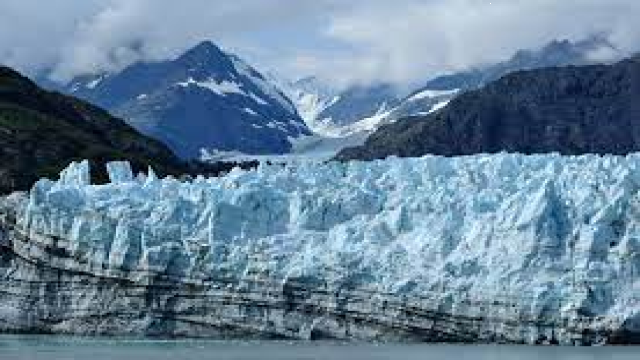
The Brahmaputra River is a prominent trans-boundary, antecedent river that originates at an altitude of approximately 5,150 meters from the Chemayungdung Glacier located on the southern slopes of the Kailash Range, south of Lake Manasarovar in the Tibet Autonomous Region of China. In its upper Tibetan course, the river flows eastward for about 1,700 kilometers parallel to the main axis of the Great Himalayas. Throughout this northern tract, it is known as the Yarlung Tsangpo, which translates to “The Purifier.” The river maintains a stable, low-gradient path across the high-altitude Tibetan Plateau, receiving major tributaries like the Raka Zangbo, Lhasa River (Kyi Chu), and Nyang Chu.
The Great Bend and Entry into India
At the easternmost extremity of the Himalayas, near the syntaxial bend of the mountain chain, the Yarlung Tsangpo undergoes a dramatic geomorphic shift.
- The Namcha Barwa Gorge: The river wraps around the towering peak of Namcha Barwa (7,782 meters) in a sharp, hairpin turn known as the Great Bend.
- The Yarlung Tsangpo Grand Canyon: It carves out the deepest and longest canyon in the world, cutting across the Greater Himalayan structures.
- Entry via Arunachal Pradesh: The river debouches into the Upper Assam valley near Gelling in the Upper Siang district of Arunachal Pradesh. In this steep, high-velocity mountainous course within India, it is called the Siang River or Dihang River.
Formation of the Brahmaputra Main Stem
The river flows southward through the outer Himalayan hills of Arunachal Pradesh and enters the plains near Sadiya in the Tinsukia district of Assam. At this point, the Dihang River is joined simultaneously by two major trans-Himalayan rivers from the east: the Dibang River (Sikang) and the Lohit River. The combined hydrological volume of these three distinct alpine rivers forms the main stem of the river, which officially takes the name Brahmaputra (meaning “Son of Brahma”) from this confluence onward.
Hydrological and Basin Parameters
Basin Dimensions and Trans-Boundary Distribution
The Brahmaputra is one of the largest rivers in the world by discharge and sediment yield. The overall river system spans an approximate length of 2,880 kilometers, out of which 916 kilometers flows within the territorial boundaries of India. The multi-national distribution of its total catchment area is distributed as follows:
| Country Riparian Zone | Catchment Area (Square Kilometers) | Percentage Share |
| China (Tibet) | 293,000 | Approximately 50.5% |
| India | 194,413 | Approximately 33.6% |
| Bangladesh | 47,000 | Approximately 8.1% |
| Bhutan | 45,000 | Approximately 7.8% |
Topographical Features of the Assam Valley
Within India, the Brahmaputra flows through a remarkably narrow and flat structural trough known as the Assam Valley, which is bounded by the Eastern Himalayas to the north, the Patkai hills to the east, and the Shillong Plateau (Meghalaya Hills) and Mikir Hills to the south. The valley has an extremely gentle gradient, dropping only about 120 meters over its 700-kilometer stretch from Sadiya to Dhubri, which leads to chronic drainage congestion, intense channel braiding, and extensive bank erosion.
Right-Bank Tributaries of the Brahmaputra
Subansiri River
The Subansiri is the largest and most voluminous tributary of the Brahmaputra River. It is an antecedent trans-boundary river that originates in the Tibetan Himalayas, cuts through the Mirihills, and joins the Brahmaputra in the Lakhimpur district of Assam. It contributes massive quantities of coarse sandy sediment to the main channel.
Kameng River
Originating from the glacial lakes below the snow-capped Gori Chen mountain range on the Indo-Tibet border, the Kameng flows through the Tawang and West Kameng districts of Arunachal Pradesh (where it is known as the Bhareli) and joins the Brahmaputra at Tezpur.
Manas River
The Manas is a major trans-boundary left-bank alpine river shared between Bhutan and India. It cuts through the Bhutanese Himalayas and enters the plains of Assam at Jogighopa in Bongaigaon district. The river basin supports rich biodiversity, running directly through the Manas National Park.
Sankosh River
The Sankosh originates in Bhutan, where it is known as the Mo Chhu. It flows southward, forms the geopolitical boundary between the states of Assam and West Bengal for a short distance, and discharges into the Brahmaputra near Dhubri.
Teesta River
The Teesta is a highly dynamic trans-boundary river that historically served as a tributary to the Ganga but shifted its course eastward following a catastrophic flood in 1787.
- Origin: It rises from the Tso Lhamo Lake (Cho Lhamo) and the Pauhunri glacier in North Sikkim at an elevation of over 5,280 meters.
- Course: It flows through Sikkim and West Bengal, carving the deep Teesta Gorge, before entering Bangladesh to join the Brahmaputra (Jamuna) at Kamarjani.
Left-Bank Tributaries of the Brahmaputra
Burhi Dihing River
The Burhi Dihing (or Dihing) is a major left-bank tributary that originates from the Patkai Bum hills in Arunachal Pradesh. It flows through the industrial and petroleum-rich belt of upper Assam (Digboi, Duliajan, and Dibrugarh) and joins the Brahmaputra at Dihingmukh.
Dhansiri River
The Dhansiri rises from the Laisang peak in Nagaland. It flows northward through the Dimapur district of Nagaland and the Golaghat district of Assam, acting as a natural geographic separator between the Mikir Hills and the Naga Hills before its confluence with the Brahmaputra.
Kopili River
The Kopili originates in the Jaintia Hills of Meghalaya and drains the limestone karst topography of the Central Assam hills (Karbi Anglong). It passes through the fertile Kampur plains and joins the Brahmaputra near Dharamtul.
Dibang and Lohit Rivers
As the primary headwater catalysts, these two rivers enter the main stem at the apex of the Assam valley. The Lohit River is famous for its rocky, red-soiled alpine catchment, which earns it the local title of the “River of Blood.”
Geomorphic Anomalies, Islands, and the Lower Course
Majuli Island Ecosystem
The Brahmaputra features intense channel braiding due to its high sediment-to-discharge ratio. In upper Assam, between the Lakhimpur and Shivasagar districts, the river bifurcates into two channels: the northern Kherkutia Suti and the southern main stem. These channels reunite downstream, creating Majuli Island.
- Status: Majuli is the world’s largest mid-river deltaic island and was declared the first river island district of India in 2016.
- Cultural Significance: It serves as the nerve center of Assamese Neo-Vaishnavite culture, hosting historic institutional monasteries known as Sattras.
- Environmental Crisis: The island faces severe annual landmass shrinking due to catastrophic bank erosion during monsoonal floods.
Terminal Course and Bifurcation in Bangladesh
The Brahmaputra turns sharply southward around the western edge of the Garo Hills near Dhubri and enters the plains of Bangladesh.
- The Jamuna River: Upon entering Bangladesh, the main channel takes the name Jamuna River. It flows due south for about 240 kilometers.
- The Old Brahmaputra: A smaller, lower-volume historical distributary branches off to the southeast past Mymensingh.
- Confluence with Ganga and Meghna: The Jamuna merges with the Padma River (the main branch of the Ganga) at Goalundo. Further downstream, the combined flow merges with the Meghna River at Chandpur, discharging into the Bay of Bengal through the vast mouth of the Sundarbans Delta.
Major Hydraulic Projects and Infrastructure
The National Waterway 2 (NW-2)
The stretch of the Brahmaputra River between the international border near Sadiya and Dhubri (a distance of 891 kilometers) is designated as National Waterway 2 of India, serving as a critical commercial shipping route connecting the Northeast with Kolkata ports via the Indo-Bangladesh Protocol Route.
Major Strategic Bridges
- Bhupen Hazarika Setu (Dhola-Sadiya Bridge): A beam bridge spanning the Lohit River (tributary of Brahmaputra) connecting Assam and Arunachal Pradesh. It is the longest water bridge in India over a river stem, extending 9.15 kilometers, and is designed to handle heavy military tank movements.
- Bogibeel Bridge: India’s longest rail-cum-road bridge, spanning 4.94 kilometers across the main stem of the Brahmaputra between Dibrugarh and Dhemaji districts in Assam, providing all-weather connectivity to eastern Arunachal Pradesh.
- Saraighat Bridge: The first rail-cum-road bridge built over the Brahmaputra at Guwahati, famous historically as the site of the 1671 Battle of Saraighat.
- Naranarayan Setu: A 2.28-kilometer long multi-modal bridge connecting Jogighopa and Pancharatna in lower Assam.
Hydroelectric Potential and Current Projects
The Brahmaputra basin holds nearly 40% of India’s total hydropower potential, though much of it remains under-developed due to environmental, geological, and geopolitical challenges.
- Subansiri Lower Hydroelectric Project: A major under-construction 2,000 MW run-of-the-river project located on the Assam-Arunachal Pradesh border, which represents the largest hydro facility currently being built in India.
- Ranganadi Hydroelectric Project: An operational 405 MW project located on the Ranganadi River (a tributary of the Subansiri) in Arunachal Pradesh.
- Kopili Hydroelectric Project: A 275 MW capacity power station operated by NEEPCO on the Kopili River in the Dima Hasao district of Assam.
Geopolitical Context and Trans-Boundary Vulnerabilities
Chinese Hydrological Interventions
China has constructed a series of cascade run-of-the-river dams on the upper reaches of the Yarlung Tsangpo in Tibet, including the operational Zangmu Dam (510 MW) and planned projects at Dagu, Jiexu, and Jiacha. India maintains strategic concerns regarding these structures:
- Flow Disruption: Potential manipulation of lean-season water flows entering the Indian plains.
- Silt Retainment: The retention of fertile silt layers essential for maintaining the agricultural productivity of the Assam plains.
- Mega-Dam at the Great Bend: China has proposed a massive mega-project near Metog close to the Line of Actual Control (LAC), designed to generate up to 60,000 MW of power, raising structural safety concerns regarding induced seismicity in a high-risk tectonic zone.
Water Sharing Mechanisms and Data Exchange
There is no formal bilateral water-sharing treaty between India and China regarding the Brahmaputra River. The two nations rely on an institutional Memorandum of Understanding (MoU) under which China provides hydrological data (water levels and discharge volumes) during the monsoon season (May to October) from stations like Nugesha, Yangcun, and Nuxia to assist India in downstream flood forecasting.
Ecological Profile and Wildlife Strongholds
The Floodplain Ecosystem
The annual flooding of the Brahmaputra is a vital ecological process that rejuvenates the alluvial soils and refills the hundreds of floodplain wetlands, locally known as beels or oxbow lakes, which act as natural breeding grounds for freshwater fish.
Key National Parks along the Basin
- Kaziranga National Park: Located on the southern floodplains of the Brahmaputra in central Assam, this park relies entirely on the river’s annual silt deposition to sustain its tall elephant grass habitats, which support the world’s largest population of the Great Indian One-Horned Rhinoceros.
- Dibru-Saikhowa National Park: An island-bound national park situated at the confluence of the Dihang, Dibang, and Lohit rivers in upper Assam, famous for its semi-evergreen forests and wild feral horses.
- Orang National Park and Pobitora Wildlife Sanctuary: Located on the northern and southern banks of the river respectively, these reserves hold dense populations of rhinos and migratory waterfowl.
Endangered Flagship Aquatic Species
- Ganges River Dolphin (Platanista gangetica gangetica): Nationally protected populations inhabit the deep pools of the Brahmaputra main stem, though they face threats from gillnet entanglement and noise pollution from shipping traffic.
- Black Softshell Turtle (Nilssonia nigricans): A freshwater turtle species traditionally found in the temple ponds and wetlands connected to the Brahmaputra basin.
High-Yield Trivia for Prelims Focus
The Battle of Saraighat (1671)
The narrowest point of the Brahmaputra River at Guwahati served as the naval battleground where the Ahom General Lachit Borphukan defeated the invading Mughal forces led by Raja Ram Singh, effectively securing the geopolitical independence of the Assam valley.
Fluvial Seismicity Linkage
The Brahmaputra basin lies in Zone V (the highest seismic hazard zone) of India. The catastrophic 1950 Assam-Tibet Earthquake (magnitude 8.6) severely altered the geomorphology of the river, lifting the riverbed by several meters due to landslide debris blocks, which significantly increased the frequency and severity of post-1950 flash floods.
The “Red River” Phenomenon
The Brahmaputra is often referred to as the “Red River” due to the high concentration of iron-rich weathering products and red clay soils derived from the sub-Himalayan formations of Arunachal Pradesh, which turn the water a distinct ochre-red during the peak monsoon discharge.
Last Modified: June 5, 2026