
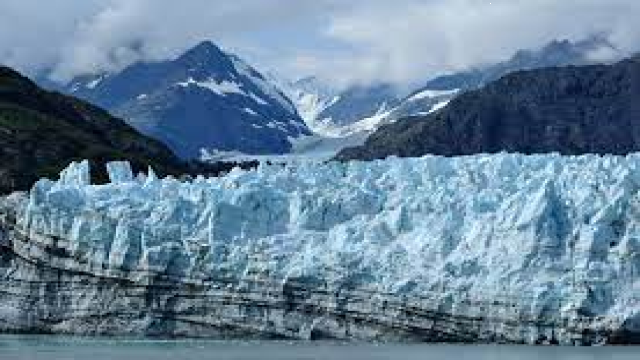
The Indian Himalayan Region (IHR) stretches over 2,500 km along India’s northern periphery, acting as a formidable physiographic barrier that historically protected the Indian subcontinent from continental invasions. In modern geopolitics, it serves as the frontline of national defense, dictating India’s territorial integrity and security posture against trans-Himalayan neighbors.
Critical Border Disputes and Strategic Sectors
The Himalayan frontier is divided into three main operational sectors, each marked by distinct cartographic disputes and strategic vulnerabilities:
- Western Sector (Ladakh): Features the Line of Actual Control (LAC), where India faces territorial assertions in the Aksai Chin plateau. Key strategic nodes include the Daulat Beg Oldie (DBO) sector—the northernmost military outpost containing the world’s highest advanced landing ground—the Galwan Valley, Pangong Tso, and the Depsang Plains.
- Central Sector (Himachal Pradesh & Uttarakhand): A relatively stable stretch of the boundary, though it contains disputed pockets like Barahoti in Uttarakhand. It acts as a gateway to the high-altitude passes leading into Tibet.
- Eastern Sector (Sikkim & Arunachal Pradesh): Centered around the McMahon Line. Arunachal Pradesh is a major theater of strategic friction, with Tawang serving as a crucial religious and military stronghold. The Siliguri Corridor, a narrow strip of land in West Bengal connecting Northeast India to the rest of the country, is highly vulnerable to Chinese military maneuvers in the adjacent Chumbi Valley and Doklam Plateau.
Mountain Passes of Supreme Military Value
Control over the high-altitude passes is vital for troop movement, logistics, and maintaining defensive lines during winter alpine conditions.
| Mountain Pass | Altitude (Approx.) | Strategic Operational Value |
| Karakoram Pass | 5,540 m | Located on the ancient Silk Route between Ladakh and Xinjiang; crucial for monitoring the Sino-Pakistan axis. |
| Zoji La | 3,528 m | Connects the Valley of Kashmir with Ladakh; the lifeline for military logistics along National Highway 1. |
| Shipki La | 3,930 m | Located in Himachal Pradesh; links the Sutlej valley with Tibet and serves as an official bilateral trade route. |
| Mana Pass & Lipulekh | 5,545 m / 5,200 m | Located in Uttarakhand; Lipulekh is positioned at the tri-junction of India, Nepal, and China (Tibet), carrying immense territorial significance. |
| Nathu La & Jelep La | 4,310 m / 4,267 m | Located in Sikkim; Nathu La offers the shortest overland tactical axis between Lhasa (Tibet) and the plains of Bengal. |
| Bomdi La & Diphu Pass | 2,217 m / 4,580 m | Located in Arunachal Pradesh; Diphu Pass lies at the strategic tri-junction of India, China, and Myanmar. |
Hydro-Politics and Water Security
The Water Tower of Asia
The Himalayas function as the primary hydrologic regulator for South Asia, sustaining the Indo-Gangetic-Brahmaputra plains, which support over 500 million people. The region stores the largest volume of ice and snow outside the polar zones, feeding perennial river systems through a combination of glacial melt, snowmelt, and monsoonal precipitation.
Hydropower Potential and Run-of-the-River Projects
The steep hydraulic gradient of Himalayan rivers provides India with massive technical hydropower potential, estimated at over 148,000 MW. To leverage this without violating international treaties or creating massive reservoirs in ecologically fragile zones, India relies on Run-of-the-River (RoR) technology. These projects divert river water through headrace tunnels to turn turbines before discharging it back into the natural stream.
Upper Riparian Hydro-Politics and Transboundary Friction
India occupies a complex position as both a middle and upper riparian state, creating significant hydro-political challenges:
- The Sino-Indian Runoff Friction: China acts as the ultimate upper riparian authority for the Indus, Satluj, and Brahmaputra (Yarlung Tsangpo). Chinese construction of mega-dams on the Brahmaputra’s upper course (e.g., Zangmu, Dagu, and Jiexu dams) raises concerns in India regarding water diversion, flash flood triggers, and the withholding of hydrological data during the monsoon.
- The Indus Waters Treaty (IWT) 1960: Brokered by the World Bank, it allocates the Western Rivers (Indus, Jhelum, Chenab) to Pakistan and the Eastern Rivers (Ravi, Beas, Sutlej) to India. India retains the right to generate hydropower through RoR projects on the Western Rivers, which remains a frequent point of technical dispute and strategic leverage between New Delhi and Islamabad.
Climatological and Environmental Sovereignty
The Climate Regulator of the Indian Subcontinent
The Himalayas exert a absolute control over the meteorological dynamics of South Asia through two distinct macro-climatic mechanisms:
- The Monsoon Barrier: The high mountain wall intercepts the moisture-laden Southwest Monsoon winds blowing from the Bay of Bengal and the Arabian Sea. By forcing these winds to rise orographically, the Himalayas cause heavy rainfall across the Indo-Gangetic plains and Northeast India, preventing the moisture from escaping into Central Asia.
- The Siberian Shield: During winter, the high altitude of the Tibetan Plateau and the Himalayan arc blocks the bitter, hyper-arid cold winds blowing southward from Siberia and Central Asia. This shield ensures that northern India maintains a temperate to subtropical winter climate, allowing for the cultivation of Rabi crops.
Western Disturbances and Agricultural Sustainability
The Himalayas interact with the subtropical westerly jet stream to direct Western Disturbances—low-pressure systems originating over the Mediterranean Sea—into northern India during winter. The high mountains force these systems to precipitate as heavy snow in the upper reaches (renourishing glaciers) and light rain in the plains, which is vital for the survival of the wheat crop in Punjab, Haryana, and western Uttar Pradesh.
Economic, Resource, and Connectivity Dimensions
Mineral and Forest Wealth
The geological complexity of the Himalayas, arising from the collision of the Indian and Eurasian plates, hosts diverse mineral resources, though their extraction is strictly limited by ecological constraints and rugged accessibility:
- Mineral Deposits: Significant reserves of anthracite coal (in Jammu & Kashmir), limestone, dolomite, gypsum, graphite, and polymetallic base metals (copper, lead, zinc) are distributed across the Lesser and Higher Himalayan formations.
- Forest Resources: The altitudinal zones yield valuable timber (Deodar, Blue Pine, Fir) and non-timber forest products (NTFPs). The region is a repository of threatened medicinal and aromatic plants (MAPs) used in global pharmaceuticals.
Border Infrastructure and Strategic Linear Projects
To counter external threats and integrate isolated border communities, India has accelerated the development of all-weather linear infrastructure across the IHR:
- Strategic Tunnels: The Atal Tunnel (9.02 km under Rohtang Pass) provides all-weather connectivity to Lahaul and Spiti. The Zojila Tunnel, once fully operational, will eliminate the winter isolation of Ladakh from the Kashmir Valley. The Sela Tunnel in Arunachal Pradesh ensures all-weather access to Tawang.
- The Char Dham Highway Project: A massive 889-km road-widening initiative in Uttarakhand designed to facilitate rapid military deployment to the LAC while boosting religious tourism.
- Strategic Rail Links: The Bilaspur-Mandi-Leh rail line and the Rishikesh-Karnaprayag rail project are engineered to transport heavy military assets to the frontlines during conflict scenarios.
Trans-Himalayan Connectivity and Trade corridors
Historically, the Himalayas were traversed by active trade routes that facilitated the exchange of silk, wool, and spices. In contemporary economics, specific passes serve as institutionalized Border Trade Points between India and China, regulated by bilateral agreements. These include Nathu La in Sikkim, Shipki La in Himachal Pradesh, and Lipulekh in Uttarakhand.
UPSC Prelims-Specific Key Facts and Historical Trivia
The Potwar Plateau and the Indo-Brahma River Disruption
Geological evidence suggests that during the Miocene epoch, a single continuous river system called the Indo-Brahma or Siwalik River flowed from Assam northwestward along the Himalayan foothills, draining into the Arabian Sea. Tectonic uplift during the Pleistocene epoch raised the Potwar Plateau and the Delhi Ridge, creating a hydrological divide. This split the ancient river into two distinct systems: the Indus flowing west and the Ganga flowing east.
Syntaxial Bends of the Himalayas
The Himalayan mountain range does not terminate abruptly but terminates in sharp, hairpin-like bends at both its western and eastern extremities, known as syntaxial bends.
- Western Syntaxial Bend: Located near Nanga Parbat, where the mountain ranges turn sharply southwards into Pakistan.
- Eastern Syntaxial Bend: Located near Namcha Barwa, where the geological structures curve sharply southward, guiding the Brahmaputra River into the Dihang gorge of Arunachal Pradesh.
The Indus Mud Volcanoes and Geothermal Springs
The tectonic activity along the Indus Suture Zone (ISZ)—the geological boundary where the Indian and Eurasian plates are fused—manifests as active geothermal fields. Prominent sites include the Puga Valley and Chumathang in Ladakh, which exhibit high-potential geothermal systems capable of generating clean space-heating and electrical power for strategic military installations.
Last Modified: June 4, 2026