
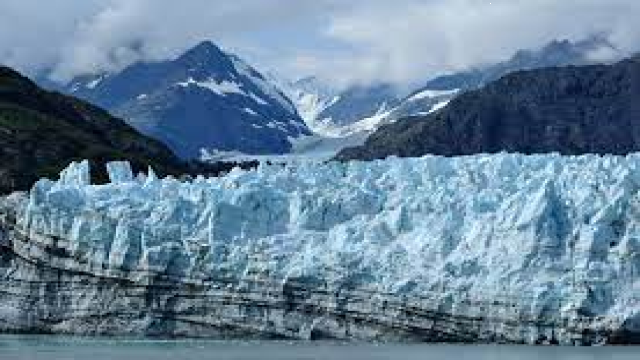
An avalanche is a rapid, downslope flow of snow, ice, and debris down a hill or mountain slope. It occurs when the stress on the snowpack exceeds its internal strength, causing a sudden mechanical failure. This phenomenon is classified under rapid mass movements and constitutes a major natural hazard in high-altitude glaciated terrains.
Types of Avalanches
- Slab Avalanche: This occurs when a cohesive layer of snow (a slab) releases as a single block and slides over a weaker sub-layer. It accounts for the majority of fatalities and is often triggered by human activity or sudden weight changes.
- Loose Snow Avalanche (Powder Avalanche): This originates from a single point on the surface of the snowpack, typically in freshly fallen, cohesionless snow. It forms a triangular path as it travels downslope.
- Wet Avalanche: This is caused by warm temperatures, rain-on-snow events, or solar radiation that melts the bonds between snow crystals. These are slower-moving but highly destructive due to their high density and mass.
- Ice Avalanche: This happens when a large chunk of glacier ice or a serac collapses over a cliff, frequently triggering a subsequent snow avalanche.
Geographical Distribution in India
In India, avalanches are primarily confined to the extra-peninsular mountain region, specifically the Himalayas. The Indian Himalayan Region (IHR) is divided into distinct avalanche zones based on snow climate, altitude, and frequency.
Major Avalanche Zones in India
| Zone | Geographical Coverage | Key Characteristics |
| Western Himalayan Zone | Jammu & Kashmir, Ladakh, Himachal Pradesh (Lahaul & Spiti, Kullu, Chamba) | High frequency, heavy winter snowfall driven by Western Disturbances, dry slab avalanches predominate. |
| Central Himalayan Zone | Uttarakhand (Garhwal and Kumaon regions) | Moderate frequency, influenced by both Western Disturbances and the Southwest Monsoon, transitional snow characteristics. |
| Eastern Himalayan Zone | Sikkim, Arunachal Pradesh | Lower frequency but high vulnerability due to steep terrain, wet snow conditions, and high moisture content. |
Critical Avalanche-Prone Valleys and Passes
- Ladakh & Jammu & Kashmir: Drass valley (known as the second coldest inhabited place in the world), Kargil, Gurez sector, Siachen Glacier, Zojila Pass, and Banihal Pass.
- Himachal Pradesh: Rohtang Pass, Solang Valley, Dhundi, and the Pin Valley.
- Uttarakhand: Mana Pass, Niti Pass, and areas surrounding Badrinath and Kedarnath.
Causal Factors of Avalanches
The occurrence of an avalanche is governed by the complex interplay of three primary factors: terrain, weather, and snowpack structure.
Terrain Factors
- Slope Angle: Avalanches occur most frequently on slopes between 30° and 45°. Slopes gentler than 30° rarely slide, while slopes steeper than 45° shed snow continuously, preventing massive accumulation.
- Slope Aspect: North-facing slopes receive less sunlight in winter, leading to colder, unstable, and weaker snowpack structures. South-facing slopes experience more melting and refreezing, leading to wet avalanches in spring.
- Terrain Roughness: Smooth surfaces like grassy slopes, bare rock faces, or glaciated pavements promote slab release. Dense forests anchor the snowpack and mitigate avalanche initiation.
Meteorological Factors
- Precipitation Rate: Rapid, heavy snowfall adds sudden load to the existing snowpack without allowing it time to settle and bond, inducing mechanical failure.
- Wind Redistribution: Wind transports snow from windward slopes and deposits it heavily on leeward slopes, creating unstable features known as wind slabs or cornices.
- Temperature Fluctuations: Rapid warming weakens the bonds between snow grains. Conversely, extreme prolonged cold promotes the formation of faceted crystals (hoar frost), creating persistent weak layers.
Anthropogenic Triggers
- Deforestation and infrastructure development (highways, tunnels) disrupt slope stability.
- Vibrations from heavy vehicular traffic, mining operations, blasting, and supersonic booms from aircraft.
- Winter sports, mountaineering expeditions, and tactical military movements in forward border areas.
Impact on Infrastructure and Security
Socio-Economic and Ecological Impact
- Loss of Life: Avalanches pose a critical threat to indigenous populations, tourists, and pilgrims (e.g., Char Dham Yatra routes).
- Strategic and Military Implications: The Indian Armed Forces maintain a round-the-clock presence in avalanche-prone areas like the Siachen Glacier and Line of Control (LoC). Avalanches cause casualties among personnel and disrupt vital supply lines.
- Infrastructure Destruction: Destruction of strategic highways (NH-1, NH-21), telecommunication networks, power transmission lines, and bridges, isolating entire mountain communities for weeks.
- Ecological Damage: Large-scale destruction of sub-alpine forests, alteration of river courses due to debris dams, and subsequent flash floods when these temporary dams burst.
Mitigation and Disaster Management Framework
India employs a structural and non-structural mix of strategies to manage avalanche risks, overseen by specialized institutional bodies.
Institutional Mechanism
- Defence Geo-Informatics Research Establishment (DGRE): Formed by merging the Snow and Avalanche Study Establishment (SASE) with the Defence Terrain Research Laboratory (DTRL) under the DRDO. It is the nodal agency for avalanche forecasting, mapping, and structural control design in India.
- National Disaster Management Authority (NDMA): Formed under the Disaster Management Act, 2005, it formulates national guidelines for managing landslides and avalanches.
- National Disaster Response Force (NDRF) & State Disaster Response Forces (SDRF): Deployed for immediate search, rescue, and relief operations in post-disaster scenarios.
Structural Mitigation Measures
- Snow Bridges and Raking Structures: Steel or wooden structures installed in the avalanche starting zone to support the snowpack weight and prevent initial failure.
- Earthen Mounds and Deflector Dams: Constructed in the run-out zones to redirect, retard, or stop the path of flowing avalanche debris away from critical installations.
- Snow Nets: Flexible wire nets anchored to the hillside to arrest the movement of small slabs.
- Avalanche Galleries: Concrete sheds built over critical highway stretches (such as parts of the Jammu-Srinagar highway) allowing avalanches to slide over the traffic safely.
Non-Structural Mitigation Measures
- Avalanche Hazard Zoning: Mapping terrain using Geographic Information Systems (GIS) and remote sensing into Red (high risk, no construction), Blue (restricted development), and Yellow (low risk) zones.
- Artificial Triggering: Using explosive artillery, mortar fire, or specialized systems like DaisyBell to deliberately trigger small avalanches under controlled conditions before massive slabs can accumulate naturally.
- Early Warning Systems: Deployment of Automated Weather Stations (AWS) by DGRE to monitor real-time wind speed, temperature, and snow depth variations for issuing daily avalanche warnings to the public and military.