
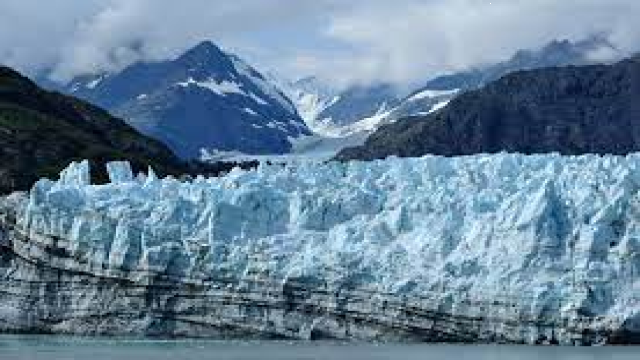
Land use classification refers to the systematic assessment of how the geographical area of a country is utilized across various socio-economic activities. In Indian Geography, understanding land use is critical for analyzing resource allocation, agricultural capacity, and environmental sustainability.
Distinction between Land Use and Land Cover
- Land Use: Focuses on the human functional arrangements, activities, and inputs undertaken in a certain land cover type to produce, change, or maintain it (e.g., agricultural land, industrial zones).
- Land Cover: Refers to the physical and biological cover observed over the earth’s surface, including water bodies, ice, bare rock, and natural vegetation.
Institutional Framework for Land Records
The Directorate of Economics and Statistics, an attached office of the Ministry of Agriculture and Farmers Welfare, collects and maintains land use statistics in India. The geographical area is tracked via two distinct metrics:
- Reporting Area: The land area for which systematically maintained village-level land records (cadastral surveys) exist. It accounts for approximately 93% of the total geographical area of India.
- Non-Reporting Area: Areas where detailed surveys are absent, primarily comprising remote parts of Jammu & Kashmir, Ladakh, and certain tribal tracts of Northeast India.
The Nine-Fold Land Use Classification
The Ministry of Agriculture utilizes a standardized nine-fold classification system to record land utilization statistics across the reporting area.
1. Forests
This category includes all lands classified as forests under any legal enactment or administered as forests, whether state-owned or private. The area under actual forest cover may differ from this legally defined “area under forest.”
2. Land Put to Non-Agricultural Uses
This comprises land occupied by buildings, transport networks (roads, railways, canals), industrial complexes, settlements, and water bodies (rivers, reservoirs) utilized for non-farming purposes. This category shows a continuous upward trend due to rapid urbanization.
3. Barren and Uncultivable Land
This includes all physically uncultivable lands such as naked mountain rock faces, deserts, deep ravines, and glacial moraines. Such land cannot be brought under cultivation except at an exorbitant economic cost.
4. Permanent Pastures and Grazing Lands
This category covers all public grazing lands, whether village common lands (Gauchar) or permanent pastures. Most of this land is under the ownership of village panchayats or the state revenue department.
5. Land under Miscellaneous Tree Crops and Groves
This includes cultivable land occupied by orchards, bamboo groves, thatch grass, and casuarina plantations that are not included under the Net Sown Area.
6. Culturable Waste Land
This represents land available for cultivation but not cultivated for more than five consecutive years. It can be brought under the plow after reclamation processes like weeding, leveling, and moisture correction.
7. Fallow Lands other than Current Fallows
This comprises cultivable land that has remained uncultivated for a period of more than one year but less than five consecutive years. It is kept fallow to naturally restore soil nutrient balances.
8. Current Fallow
This denotes cultivable land left uncultivated without crops for a maximum period of one agricultural year or less. This is a deliberate practice by farmers to allow the soil to recuperate its fertility.
9. Net Sown Area
This represents the total physical area sown with crops and orchards at least once during an agricultural year. It serves as the primary indicator of agricultural expansion and food production capacity.
Dynamics and Temporal Changes in Indian Land Use
The structural distribution of land use in India has undergone significant transformations since the independence era (1950-51) due to economic diversification, demographic pressure, and technological interventions.
| Land Use Category | Trend Profile | Major Underlying Drivers |
|---|---|---|
| Net Sown Area | Marginal Increase / Stagnant | Reached its physical ceiling; expansion occurs only via converting culturable wastes. |
| Area Under Non-Agricultural Uses | Consistent Increase | Rapid industrialization, expansion of rural and urban settlements, infrastructural corridors. |
| Forests (Reporting Area) | Steady Increase | Legal demarcations, state afforestation drives, and correction of historical land records. |
| Fallow and Culturable Waste Lands | Gradual Decline | Adoption of green revolution technologies, expansion of canal irrigation, and land reclamation. |
| Permanent Pastures | Sharp Decline | Encroachments by illegal settlements, conversion to agricultural fields, and structural neglect. |
Key Agricultural Matrices and Indices
To understand the intensity of land utilization, Indian geographers analyze specific land use ratios and indices derived from the nine-fold classification.
Gross Cropped Area (GCA)
The total area cropped in a year, counting the physical land multiple times if it is sown more than once. For instance, if a 5-hectare plot is sown in both the Kharif and Rabi seasons, it contributes 10 hectares to the Gross Cropped Area.
Area Sown More Than Once
The mathematical difference between the Gross Cropped Area and the Net Sown Area (GCA−NSA). It indicates the quantum of land supporting double or multiple cropping patterns within a single calendar year.
Cropping Intensity Index
A statistical measure of the efficiency of land utilization. It is calculated using the formula: Cropping Intensity=(Net Sown AreaGross Cropped Area)×100 India’s national cropping intensity stands at approximately 140% to 150%, with states like Punjab and Haryana exceeding 190% due to assured tube-well and canal irrigation networks.
Factors Driving Land Use Changes in India
The allocation of land across different categories is determined by a complex interplay of physical, economic, and institutional factors.
Size of the Economy
As the national Gross Domestic Product (GDP) grows over time, the demand for fixed land resources intensifies from non-agricultural sectors like manufacturing, infrastructure, and housing, compressing marginal land categories.
Composition of the Economy
The declining contribution of agriculture to the primary GDP, paired with the exponential rise of the secondary and tertiary sectors, triggers a spatial shift where peripheral agricultural zones are converted into special economic zones (SEZs) and urban centers.
Demographic Pressure
The massive increase in human population reduces the per capita availability of land, leading to the fragmentation of agricultural holdings and the physical encroachment of settlements into marginal forests and common grazing lands.
Technological Inputs
The diffusion of high-yielding variety (HYV) seeds, chemical fertilizers, and modern irrigation facilities allows farmers to cultivate multiple crops in a single year on the same piece of land, effectively increasing the Gross Cropped Area without expanding the physical Net Sown Area.
UPSC Prelims Facts and Trivia
Total Geographical vs. Reporting Area
The total geographical area of India is 328.7 million hectares. However, the official land use statistics are reported for only about 306 million hectares, which constitutes the official Reporting Area.
Culturable Command Area (CCA)
An engineering term used in irrigation geography that denotes the specific portion of a canal project’s gross area which can be physically irrigated and is completely fit for cultivation.
Common Pool Resources (CPRs)
Lands like permanent pastures, village forests, and burial grounds that belong to the community rather than an individual. CPRs provide critical fuel wood, fodder, and minor forest produce to landless and marginal rural households.
Agricultural Land Use Capability Classification
A globally accepted system that groups soils into eight distinct classes (Class I to Class VIII) based on their structural limitations. Classes I to IV are entirely capable of supporting sustainable arable crop cultivation, whereas Classes V to VIII are restricted to pastures, forestry, and wildlife conservation due to high erosion or steep terrain vulnerabilities.
Last Modified: June 5, 2026