

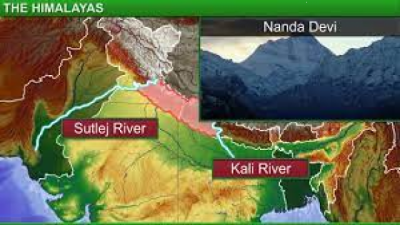
The Himalaya mountain range, often referred to as the “Abode of Snow,” is one of the most awe-inspiring geographical features on our planet. Stretching across five countries – India, Nepal, Bhutan, China, and Pakistan – the Himalayas boast a rich diversity of landscapes, cultures, and ecosystems.
The Himalayan Ranges
1. The Greater Himalaya Range
The Greater Himalaya Range, often simply called the “Himalayas,” is the central and loftiest section of this massive mountain system. It is characterized by some of the world’s highest peaks, including Mount Everest (8,848 meters) and K2 (8,611 meters). These towering mountains are predominantly located in Nepal and northern India, and they form the backbone of the entire Himalayan system.
The Greater Himalayas are primarily composed of granites, gneisses, and other metamorphic rocks, resulting in their immense height and rugged terrain. These mountains are known for their glacial activity, which feeds numerous rivers that originate here, including the Ganges, the Brahmaputra, and the Indus.
Prominent Peaks of the Greater Himalayas
- Mount Everest (8,848 meters)
- K2 (8,611 meters)
- Kangchenjunga (8,586 meters)
2. The Lesser Himalaya Range
Situated to the south of the Greater Himalayas, the Lesser Himalaya Range is characterized by lower altitudes and less rugged terrain. This range is known for its lush forests, fertile valleys, and hill stations, making it an important ecological and cultural zone. It extends across northern India, Bhutan, and parts of Nepal.
One of the distinctive features of the Lesser Himalayas is the Dharwar rock formation, which is composed of sedimentary rocks like limestone, shale, and sandstone. This geology influences the region’s unique flora and fauna.
Prominent Peaks of the Lesser Himalayas
- Nanda Devi (7,816 meters)
- Mount Trishul (7,120 meters)
- Mount Pandim (6,691 meters)
3. The Outer Himalaya Range
The Outer Himalaya Range, also known as the Siwalik Range, lies to the south of the Lesser Himalayas. It is the outermost section of the Himalaya system and is characterized by its lower altitudes and the presence of foothills. This range is mainly composed of unconsolidated sediments like sand, gravel, and clay.
The Siwalik Range is significant for its role in shaping the geography of the Indian subcontinent, as it acts as a buffer against tectonic activity. It also hosts abundant wildlife and is home to several national parks and wildlife sanctuaries.
Prominent Peaks of the Outer Himalayas
- Churia Hills (Nepal)
- Margalla Hills (Pakistan)
- Shivalik Hills (India)
The Trans-Himalaya
Beyond the Greater and Lesser Himalayan ranges, there exists another fascinating region known as the Trans-Himalaya. This area comprises the vast Tibetan Plateau, and it is distinct from the other Himalayan ranges due to its unique geographical and geological characteristics.
The Trans-Himalaya is characterized by high plateaus, wide valleys, and barren landscapes. The region is rich in mineral resources, and its elevation, which often exceeds 4,000 meters, makes it a challenging environment for human habitation. This area plays a vital role in the overall climatic patterns of the Himalayas and the surrounding regions.
The Himalayas’ Impact on Climate and Ecosystems
The Himalayas are often referred to as the “Water Towers of Asia” due to their immense influence on climate and ecosystems in the surrounding areas. The melting snow and glaciers from the Himalayan peaks feed numerous major rivers in Asia, including the Indus, Ganges, Brahmaputra, Yangtze, and Mekong. These rivers provide water for agriculture, industry, and domestic use to millions of people across the continent.
The monsoon winds, which are essential for the Indian subcontinent’s agriculture, are greatly influenced by the presence of the Himalayas. These mountains act as a barrier, forcing moisture-laden air to rise and cool, resulting in heavy rainfall during the monsoon season.
Prominent Peaks of the Himalaya System
Here is a table showcasing some of the most notable peaks in the Himalaya system, categorized by their respective ranges:
| Range | Prominent Peaks | Height (meters) |
| Greater Himalaya Range | Mount Everest, K2, Kangchenjunga | 8,848, 8,611, 8,586 |
| Lesser Himalaya Range | Nanda Devi, Mount Trishul, Mount Pandim | 7,816, 7,120, 6,691 |
| Outer Himalaya Range | Churia Hills, Margalla Hills, Shivalik Hills | Varies (lower altitudes) |
| Trans-Himalaya | Tibetan Plateau | Varies (elevation often exceeds 4,000 meters) |
The geographical classification of the Himalaya system reveals its stunning diversity, from the towering peaks of the Greater Himalayas to the fertile valleys of the Lesser Himalayas and the unique landscapes of the Trans-Himalaya. This remarkable mountain range not only shapes the physical geography of the region but also plays a crucial role in influencing climate patterns and supporting diverse ecosystems.
Last Modified: February 22, 2024