
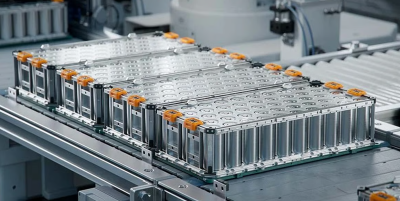
India’s ambition to build a domestic battery manufacturing ecosystem — critical for electric vehicles (EVs) and renewable energy storage — is facing serious headwinds. The ₹18,100 crore Advanced Chemistry Cell (ACC) Production Linked Incentive (PLI) scheme, launched to reduce dependence on imports and anchor the EV transition, has fallen far short of its targets, raising questions about policy design, execution capacity, and structural constraints in India’s clean energy manufacturing push.
What are Advanced Chemistry Cells and why do they matter?
Advanced Chemistry Cells are next-generation rechargeable batteries that store energy in chemical form and release it as electricity when needed. Lithium-ion batteries — ubiquitous in mobile phones and EVs — are the most widely deployed ACCs today. However, the ACC PLI scheme is technology-agnostic, allowing alternatives such as lithium iron phosphate, nickel manganese cobalt, and sodium-ion batteries.
Their strategic importance lies in three areas. First, EV affordability and driving range are heavily influenced by battery cost and performance. Second, Energy Storage Systems are essential to stabilise renewable energy generation, especially solar and wind power. Third, batteries form a large component of India’s clean energy import dependence, currently dominated by China.
The intent behind the ACC PLI scheme
Launched in October 2021, the ACC PLI scheme was designed to catalyse a domestic battery manufacturing ecosystem with a targeted capacity of 50 gigawatt-hours (GWh) by 2025. The objective went beyond assembly to include deep manufacturing of components such as cathodes, anodes, and electrolytes, thereby enabling localisation of value chains and reduction in battery costs.
Companies were expected to bid for a minimum of 5 GWh capacity, meet stringent net-worth requirements, and progressively achieve Domestic Value Addition (DVA) of 25% within two years and 60% by the fifth year. In return, incentives of up to ₹2,000 per kilowatt-hour of batteries sold were promised.
Where the scheme stands today
Actual outcomes remain modest. Against the target of 50 GWh, only 1.4 GWh has been commissioned — entirely by . Around 8.6 GWh is under development but delayed, while nearly 20 GWh has shown no progress.
Investment and employment figures mirror this lag. Only about a quarter of the targeted investment has materialised. Job creation stands at just over 1,100 positions, a minuscule share of the originally projected employment. Notably, despite a planned incentive disbursement of nearly ₹2,900 crore by this stage, no payouts have been made as none of the beneficiaries have met the prescribed milestones.
Who were the selected beneficiaries?
Three firms were chosen through the initial auction rounds. was awarded 20 GWh capacity. secured 15 GWh initially and an additional 10 GWh in the second round. received 5 GWh.
Significantly, established Indian battery manufacturers with long operational experience did not qualify under the scheme’s evaluation criteria.
Why has the ACC PLI struggled?
Multiple factors have contributed to the scheme’s underperformance. The mandated two-year gestation period for commissioning battery gigafactories has proven unrealistic, given the capital intensity, technological complexity, and novelty of large-scale cell manufacturing in India.
Domestic Value Addition targets have also clashed with structural constraints. India lacks sufficient facilities for refining and processing critical minerals such as lithium, cobalt, and nickel, making rapid localisation difficult.
Further, the selection framework prioritised DVA commitments and subsidy benchmarks over prior manufacturing experience. As a result, experienced battery makers were excluded, leaving implementation largely to firms still developing foundational technical capabilities.
India’s continued dependence on China for raw materials, equipment, and technical know-how has added to delays. Visa bottlenecks for foreign technical experts have exposed skill gaps in advanced electrochemistry and cell manufacturing.
Implications for India’s EV and energy transition
The slow pace of domestic battery capacity creation risks keeping EV costs elevated and prolonging import dependence. It also constrains the scaling up of grid-scale energy storage, a key requirement for integrating renewable energy into the power system.
At a broader level, the experience highlights the limits of incentive-led industrial policy when not accompanied by parallel investments in skills, upstream supply chains, and realistic implementation timelines.
What fixes are being suggested?
Recent assessments recommend immediate and structural corrections. In the short term, extending commissioning timelines and fast-tracking visas for specialised technical experts are seen as essential. Over the longer term, success will depend on parallel schemes for critical mineral refining, component manufacturing, focused research and development, and systematic talent creation.
What to note for Prelims?
- ACC PLI is a technology-agnostic scheme for advanced battery manufacturing.
- Target capacity: 50 GWh; commissioned capacity so far: about 1.4 GWh.
- Objectives include EV adoption, energy storage, and import substitution.
- Key beneficiaries: Ola Electric, Reliance New Energy, Rajesh Exports.
What to note for Mains?
- Design challenges in implementing PLI schemes in sunrise manufacturing sectors.
- Linkages between EV policy, critical minerals, and geopolitical dependence.
- Trade-offs between aggressive localisation targets and technological readiness.
- Lessons for future clean energy and industrial policy frameworks.