
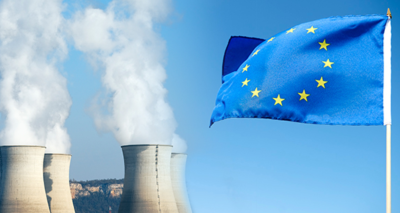
Europe is confronting a profound strategic rupture. The confrontation between Europe and Donald Trump’s United States over Greenland may eventually fade diplomatically, but the damage it has inflicted on trust within the transatlantic alliance is enduring. At a moment when the last major arms control treaty constraining U.S. and Russian nuclear arsenals is expiring, this erosion of trust has forced Europe to re-examine not only its security architecture, but also its assumptions about nuclear deterrence itself.
NATO’s founding logic and the crisis of credibility
Formed in 1949, the North Atlantic Treaty Organization was conceived as a defensive nuclear alliance against the Soviet Union, with the United States as its unquestioned security guarantor. The credibility of NATO rested not merely on military capabilities, but on trust — trust that the U.S. would uphold Article 5 commitments regardless of political disagreements.
That trust has been shaken by Washington’s coercive posture over Greenland, a sovereign territory under Danish jurisdiction. When the alliance’s hegemon openly pressures a fellow NATO member, the foundational assumption of collective security weakens. A nuclear alliance without trust is strategically hollow.
Why this moment matters for Europe’s security future
Europe now faces a defining choice. How it responds to the rupture with the U.S. will shape the continent’s long-term defence posture and its approach to nuclear weapons. If Europe doubles down on nuclear deterrence as the organising principle of security, debates may regress to Cold War-era thinking. Alternatively, this moment could catalyse a more nuanced understanding of deterrence, shaped by eight decades of lived nuclear restraint.
This reassessment is occurring as the global arms control architecture frays. The expiry of New START removes the last binding constraint on U.S. and Russian strategic arsenals, raising fears of renewed nuclear competition.
The nuclear conversation: stuck in the past?
Since the Nuclear Non-Proliferation Treaty limited horizontal proliferation, the nature of global threats has evolved dramatically. Terrorism, climate change, inequality, economic shocks and regional conflicts now dominate the security agenda — none of which are meaningfully addressed by nuclear weapons.
Yet nuclear discourse remains frozen in time. Nuclear arms continue to be portrayed as the ultimate guarantor of peace, even as their actual usability remains constrained by a powerful normative taboo. No nuclear weapon has been used since 1945, despite repeated crises and explicit nuclear threats.
Certainty versus uncertainty in deterrence theory
Early nuclear strategists debated whether deterrence depended on certainty or uncertainty. One view held that ambiguity alone could deter adversaries, by leaving them unsure of the consequences of aggression. This logic arguably shaped deterrence dynamics between India and Pakistan before 1998, and continues to underpin Israel’s opaque nuclear posture.
By contrast, the Cold War superpowers embraced certainty — large arsenals, visible tests and assured retaliation. Even as stockpiles grew, however, a strong taboo against nuclear use emerged, reinforced by arms control agreements and political restraint. Yet doctrinal thinking has barely evolved to reflect this lived reality.
Renewed nuclear build-ups and the end of restraint
The post-Cold War drawdown in nuclear arsenals is now reversing. The United States, Russia and China are all modernising and expanding their nuclear forces. China is reported to be adding roughly 100 warheads annually, reaching around 600. The United Kingdom has also reversed earlier reductions, maintaining a stockpile of about 225 warheads.
If the U.S. and Russia expand beyond their current levels following New START’s expiry, it would signal a decisive return to Cold War-style deterrence thinking — precisely when trust between allies is weakest.
Lessons Europe should draw from Ukraine
The war in Ukraine challenges conventional deterrence assumptions. Despite repeated nuclear threats by Vladimir Putin, deterrence has not rested on the promise of nuclear retaliation. Instead, it has worked through the certainty of a strong conventional and political response, with nuclear escalation deliberately left ambiguous.
Crucially, Ukraine — a non-nuclear state — has resisted a nuclear-armed adversary. While it has suffered losses and depended on external support, it has not been defeated. This reality complicates the argument that nuclear weapons are indispensable for national survival.
Europe’s emerging alternatives to U.S.-centric security
As reliance on Washington becomes uncertain, Europe is tentatively exploring alternatives. Discussions about extending French or British nuclear umbrellas to cover the continent remain cautious. More practically, a group of European states has formed the Coalition of the Willing to guarantee Ukraine’s security outside formal NATO structures.
These developments suggest a shift towards a defence architecture where nuclear weapons are present but not central — embedded within a broader framework of conventional strength, political resolve and collective action.
What is at stake for nuclear deterrence thinking
Europe’s choices in the coming years will reverberate far beyond the continent. A security architecture that treats nuclear weapons as one element among many could modernise deterrence thinking, aligning it with decades of nuclear non-use. A reflexive return to nuclear primacy, by contrast, risks reviving outdated doctrines disconnected from contemporary threats.
What to note for Prelims?
- NATO was founded in 1949 as a defensive nuclear alliance
- Greenland is under Danish sovereignty, a NATO member
- New START is the last major U.S.–Russia arms control treaty
- No nuclear weapon has been used since 1945
- China, U.S. and Russia are modernising nuclear arsenals
What to note for Mains?
- Impact of declining trust within NATO on European security
- Relevance of nuclear deterrence in contemporary threat environments
- Lessons from the Ukraine war for deterrence theory
- Arms control erosion and risks of renewed nuclear competition
- Prospects for a post-U.S.-centric European security architecture