
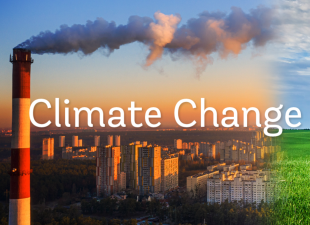
Global climate governance today is marked less by collapse than by drift. Despite decades of negotiations, summits, and declarations, the international system designed to address climate change continues to circle its goals without decisively moving toward them. The result is a widening gap between climate urgency and political delivery, most visibly reflected in the outcomes of recent Conferences of the Parties (COPs).
A governance system without a driver
The current architecture of climate governance resembles two parallel but disconnected tracks. One is anchored in the Kyoto Protocol, formally overseen through the CMP (Conference of the Parties serving as the Meeting of the Parties). The other operates under the Paris Agreement through the CMA (Conference of the Parties serving as the Meeting of the Parties). Both tracks coexist under the broader umbrella of the , yet neither imposes enforceable obligations that compel countries to reach the agreed destination.
Consensus-based decision-making, often praised as inclusive, has effectively translated into a universal veto. Every country must agree, which ensures that ambition is diluted to the lowest common denominator. As a result, bold language is confined to preambles, while operative clauses remain cautious, voluntary, and non-binding.
Politics over planetary urgency
In this institutional vacuum, national interest has consistently trumped global urgency. Climate negotiations have become arenas for managing domestic political risks rather than confronting collective planetary threats. Governments seek to avoid immediate economic and political costs, pushing difficult decisions into the future.
This explains why both the Kyoto Protocol and the Paris Agreement have struggled to deliver outcomes aligned with their stated objectives. The destination is acknowledged; the willingness to bear the cost of reaching it remains selective.
The economics of delay
Alongside politics, economics exerts an even stronger gravitational pull. Markets operate on short-term incentives, while climate stability is a long-term public good. Corporates, financiers, and technology leaders often thrive in uncertainty, where regulatory delays allow profits to accumulate without accounting for environmental costs.
Future generations, who will bear the heaviest burden of climate change, are not market participants. As a result, their interests are systematically excluded from economic decision-making. Growth imperatives overpower ecological restraint, reinforcing a cycle in which delay is rational from an economic perspective, even as it is disastrous from a planetary one.
Why citizens remain peripheral
For most people, climate change is not an everyday concern. Immediate priorities such as food, housing, health, and employment dominate public attention. Climate risks remain abstract until they manifest as floods, heatwaves, or storms, by which time citizens become victims rather than stakeholders.
This absence of sustained public pressure further reduces political incentives for decisive climate action. If voters are not demanding change, governments perceive the risks of action to outweigh the benefits.
Science settled, politics unsettled
Scientifically, the debate is over. Climate physics is well established, risks are quantified, and future scenarios are clearly mapped. What persists is not scientific uncertainty but the politics of uncertainty — the selective use of doubt to justify inaction and postpone responsibility.
Science seeks evidence-based truth; politics seeks power; economics seeks profit; individuals seek livelihood. The climate system, meanwhile, responds only to emissions. The outcome reflects this misalignment: a system functioning exactly as designed, and therefore delivering exactly the results one would expect.
COP30 and the persistence of inadequacy
The most recent summit, , reinforced this pattern. It delivered the “global mutirão” package, emphasising cooperation and solidarity, but relied overwhelmingly on voluntary measures. The principle of common but differentiated responsibilities — central to the Convention — was diluted in practice.
Despite being promoted as the COP that would “keep 1.5°C alive”, no negotiator realistically expected such an outcome. According to the UNEP Emissions Gap Report 2024, global greenhouse gas emissions reached about 57.4 GtCO₂e in 2024, the highest ever recorded. On current trajectories, the 1.5°C threshold is likely to be crossed in the early 2030s.
Finance, adaptation, and unmet promises
Climate finance followed the familiar script. While parties reiterated ambitions to scale up funding, no binding commitments were made. Developing countries require an estimated $2.4–3 trillion annually for mitigation and adaptation, yet current flows remain below $400 billion.
Adaptation finance was pledged to be “tripled”, but without a baseline year or binding funding sources, rendering the commitment largely aspirational. Loss and damage mechanisms advanced institutionally, with funds opened for applications, but capitalisation remains far below projected needs.
Technology transfer and capacity building also saw more frameworks than funding. New programmes and indicators were announced, but without the financial backing required to operationalise them. The just transition agenda acknowledged rights and principles but stopped short of delivering enforceable commitments or resources.
A widening action gap
Across mitigation, adaptation, finance, technology, capacity building, loss and damage, and just transition, the pattern is unmistakable. COP30 produced more language, more platforms, and more processes — but not more action. The gap between what the climate system requires and what politics is willing to deliver remains vast.
Why the process still matters
Despite its chronic inertia and structural flaws, the UNFCCC process remains the only universally legitimate forum for coordinated global climate action. Neither the G7, G20, BRICS, nor ad hoc coalitions possess the inclusivity or legal architecture to replace it. Abandoning it would leave the world with even fewer options.
The paradox of global climate governance is thus clear: while countries may hop on and off negotiating tracks like the CMP and CMA, there is no exit from the planet itself. The system may drift, but the consequences of inaction will not.
Last Modified: February 9, 2026