
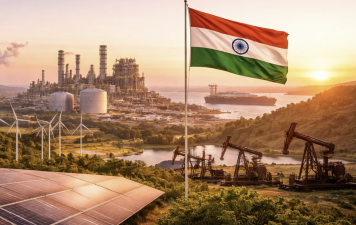
India’s energy security has become a critical issue by 2026. The country depends heavily on imported oil and gas, with imports nearing 90 per cent of its requirements. Recent geopolitical tensions, especially the 2023 Hamas attack on Israel and subsequent conflicts, have severely disrupted supply routes like the Strait of Hormuz. This has led to a cooking gas crisis, exposing gaps in India’s energy preparedness and strategic reserves.
Energy Security and Ministry of Petroleum Role
The Ministry of Petroleum and Natural Gas (MoPNG) plays a key role in India’s national security by ensuring energy supply. Twenty years ago, India depended on imports for 70 per cent of its oil and gas needs. Since then, this dependency has increased. The ministry’s task is twofold – develop domestic energy sources and secure external supplies. Domestic efforts include deep drilling through difficult geological formations such as the Deccan Traps and deep-sea exploration in the Arabian Sea. These require advanced technology and global collaboration.
Geopolitical Energy Strategies
India’s energy security depends on foreign supplies from West Asia and Central Asia. The government aimed to secure energy fields in Iran, the Gulf, and the Caspian region despite competition from China. Pipelines like Baku-Ceyhan and proposals to extend routes through Israel and North Africa were considered to bypass vulnerable choke points like the Strait of Hormuz and Bab al-Mandab. Plans to pipe natural gas from Iran through Pakistan and from Myanmar through Bangladesh to India were also explored to reduce energy shortages.
Failures and Present Crisis
Despite early initiatives, successive governments neglected energy security, focusing on buying imported supplies instead. This increased India’s vulnerability to geopolitical shocks. The 2023 Israel-Hamas conflict and subsequent wars in West Asia exposed India’s lack of LPG reserves. Strategic LPG stocks cover only about one or two days of consumption. The government’s delayed response to ramp up LPG production and diversify supply sources worsened the crisis. Current efforts to secure LPG from over 40 countries are reactive rather than preventive.
Technological and Policy Imperatives
India needs to prioritise energy security through technology and diplomacy. Developing domestic resources using cutting-edge technology is vital. Strengthening strategic reserves of crude oil and LPG is essential to buffer against supply disruptions. Diplomatic engagement to secure energy routes and diversify suppliers must continue. Energy security must be integrated with national security and economic planning to avoid future crises.
Topics for Prelims:
Ministry of Petroleum and Natural Gas (MoPNG)
- Responsible for India’s oil and gas policy and supply.
- Works on domestic exploration and production of hydrocarbons.
- Coordinates with public-sector oil companies and research bodies.
- Plays a role in energy security linked to national security.
- Faced criticism for lack of focus on strategic reserves.
Energy Security
- Ensures reliable energy supply for economic and national security.
- Involves domestic production and external procurement of energy resources.
- Requires technological innovation for resource extraction.
- Depends on securing supply routes and strategic reserves.
- Is challenged by geopolitical conflicts and market volatility.
Strait of Hormuz
- Critical choke point for global oil transportation.
- Located between the Persian Gulf and the Gulf of Oman.
- Closure disrupts oil and gas supplies worldwide.
- Iran’s potential to close it poses strategic risks to India.
- Alternative pipelines and routes are sought to bypass it.
Questions for Mains:
- Critically analyse the role of energy security in India’s national security framework with suitable examples. [GS-II-Governance]
- Explain the geopolitical challenges India faces in securing its energy imports and how diplomatic strategies can mitigate these risks. [GS-II-International Relations]
- With suitable examples, comment on the importance of strategic reserves in managing energy crises and the shortcomings in India’s current approach. [GS-III-Economic Development]
- Underline the role of technology and international cooperation in enhancing domestic energy production and reducing import dependence. How can India leverage these to achieve sustainable energy security? [GS-III-Science & Technology]
Answer Hints:
1. Critically analyse the role of energy security in India’s national security framework with suitable examples. [GS-II-Governance]
- Energy security complements geopolitical and economic security to form the broader national security framework.
- India’s rising import dependency (from 70% to nearly 90%) increases vulnerability to external shocks and geopolitical conflicts.
- Examples – Dependence on LPG imports exposed during 2023 Israel-Hamas conflict and Strait of Hormuz tensions affecting supply.
- MoPNG’s role in balancing domestic production and external procurement is critical for stable energy supply.
- Neglect of strategic reserves and domestic exploration weakens energy security, impacting national resilience.
- Energy disruptions can cause economic instability, social unrest, and weaken India’s strategic autonomy.
2. Explain the geopolitical challenges India faces in securing its energy imports and how diplomatic strategies can mitigate these risks. [GS-II-International Relations]
- Heavy reliance on West Asia, Central Asia, and Gulf countries exposes India to regional conflicts and supply disruptions.
- Choke points like the Strait of Hormuz and Bab al-Mandab are vulnerable to closure, risking energy supply.
- Competition from China for energy resources in proximate regions intensifies geopolitical rivalry.
- Diplomatic efforts include securing foreign exploratory fields, pipeline projects (e.g., Iran-Pakistan-India, Baku-Ceyhan), and diversifying suppliers.
- Engagement with multiple countries and international cooperation helps bypass choke points and mitigate risks.
- Proactive diplomacy is essential to anticipate crises and maintain uninterrupted energy flows.
3. With suitable examples, comment on the importance of strategic reserves in managing energy crises and the shortcomings in India’s current approach. [GS-III-Economic Development]
- Strategic reserves act as buffers to absorb supply shocks and stabilize markets during geopolitical or natural disruptions.
- India holds crude oil reserves and limited LPG storage (Visakhapatnam, Mangaluru) but LPG reserves cover only 1-2 days’ consumption.
- Example – The 2023 cooking gas crisis exposed inadequate LPG stockpiles and lack of foresight in stockpiling policies.
- Delayed government response in ramping up LPG production and imports worsened the crisis.
- Shortcomings include insufficient reserve capacity, reactive rather than proactive stock management, and over-reliance on imports.
- Strengthening and expanding strategic reserves is vital for energy crisis resilience and economic stability.
4. Underline the role of technology and international cooperation in enhancing domestic energy production and reducing import dependence. How can India leverage these to achieve sustainable energy security? [GS-III-Science & Technology]
- Advanced technology is required for deep drilling in challenging geological formations like Deccan Traps and deep-sea exploration in Arabian Sea.
- Global scientific networks and collaboration provide access to cutting-edge extraction and exploration techniques.
- International cooperation facilitates knowledge transfer, joint ventures, and access to foreign energy fields.
- Examples – Learning from Exxon’s deep-water drilling in Gulf of Mexico; collaboration with global research institutions and oil companies.
- Leveraging technology reduces import dependence by increasing domestic production and tapping unconventional reserves.
- Integrating technological innovation with policy support ensures sustainable, long-term energy security aligned with environmental goals.