
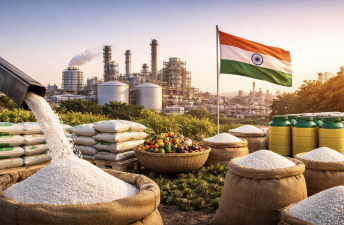
Recent tensions in the Gulf region have exposed India’s vulnerability in energy and fertiliser supplies. The ongoing war between Iran, Israel, and the US threatens vital maritime routes like the Strait of Hormuz. This corridor handles much of the world’s oil and gas trade. Disruptions here have caused sharp rises in crude oil, LPG, and LNG prices. India, heavily dependent on imports from the Gulf, faces risks to its food and energy security. The situation demands urgent reforms in the fertiliser sector to reduce import dependence and ensure stable supplies.
India’s Energy and Fertiliser Import Dependence
India imports about 88% of its crude oil, mainly from the Middle East. In 2024-25, it imported 243 million tonnes of crude oil worth $137 billion. LPG imports cover two-thirds of domestic demand, also routed through the Strait of Hormuz. LNG imports meet half of the country’s need, with Qatar as a major supplier. Rising global prices and supply constraints have pushed domestic fuel prices up. Fertiliser production, especially urea, depends heavily on imported natural gas which supplies 85% of feedstock gas. India imports around 10 million tonnes of urea, mostly from the Gulf, making it vulnerable to geopolitical risks.
Impact on Fertiliser Prices and Food Security
Global urea prices surged by 35% within days after the Gulf conflict escalated. Other fertiliser inputs like ammonia, sulphur, potassic fertilisers, and phosphatic raw materials are also largely imported from the Gulf region. India’s overall import dependence for fertiliser inputs is about 68-70%. This creates a direct threat to food security as fertiliser supply disruptions can lower crop yields. Rising fertiliser costs will increase subsidy bills, potentially crossing Rs 2 lakh crore in 2026-27, straining government finances.
Proposed Strategic Reforms in Fertiliser Sector
India must diversify fertiliser and energy imports beyond the Gulf to reduce risk. Overseas investments in fertiliser minerals and production assets should be expanded. A dedicated $1 billion fertiliser investment fund could support equity stakes in global mining and domestic exploration. Policy reforms are needed in pricing and subsidies. Direct Benefit Transfer (DBT) of subsidies and gradual price deregulation would encourage balanced fertiliser use and reduce fiscal burden. Targeted quantitative restrictions based on farm size and crop needs could limit misuse. Bringing urea under the Nutrient-Based Subsidy (NBS) scheme would align its price with other fertilisers and promote balanced nutrient application.
Ensuring Long-Term Fertiliser Security
Reforms must focus on supply diversification and subsidy rationalisation. Leveraging technology like AgriStack can help implement targeted fertiliser distribution. Strategic investments and policy changes will reduce import dependence and enhance food security. The crisis offers an opportunity to transform India’s fertiliser sector into a more resilient and self-reliant system.
Topics for Prelims:
India’s Energy Imports
- India imports 88% of crude oil, mainly from the Middle East.
- 243 million tonnes of crude oil imported in FY25 worth $137 billion.
- LPG imports cover two-thirds of domestic demand.
- LNG imports meet half the country’s requirement with Qatar as a key supplier.
- Strait of Hormuz is a critical maritime chokepoint for energy imports.
Fertiliser Import Dependence
- India consumes about 40 Mt of urea annually but produces only 30 Mt domestically.
- Urea imports expected to nearly double to 10 Mt in FY26.
- Over 60% of fertiliser imports come from the Persian Gulf region.
- Import dependence for fertiliser inputs is around 68-70%.
- Natural gas feedstock for urea is 85% imported.
Fertiliser Sector Reforms
- Need to diversify fertiliser imports beyond Gulf countries.
- Proposed $1 billion fertiliser investment fund for overseas and domestic projects.
- Direct Benefit Transfer of subsidies to farmers suggested.
- Gradual deregulation of fertiliser prices to reduce fiscal burden.
- Inclusion of urea under Nutrient-Based Subsidy scheme recommended.
Questions for Mains:
- Critically analyse the impact of geopolitical tensions in the Gulf region on India’s energy security and agricultural sector. With suitable examples, suggest measures to mitigate these risks. [GS-III-Economic Development]
- Estimate the role of import dependence in India’s fertiliser sector and point out how diversification and policy reforms can enhance food security. [GS-III-Economic Development]
- Underline the significance of maritime chokepoints like the Strait of Hormuz in global trade and discuss India’s strategic options to secure its energy imports. [GS-II-International Relations]
- With examples, critically analyse the challenges and opportunities in implementing Direct Benefit Transfer (DBT) for fertiliser subsidies in India. How can technology like AgriStack aid this process? [GS-II-Governance]
Answer Hints:
1. Critically analyse the impact of geopolitical tensions in the Gulf region on India’s energy security and agricultural sector. With suitable examples, suggest measures to mitigate these risks. [GS-III-Economic Development]
- India imports 88% of crude oil and major share of LPG, LNG, and fertiliser feedstocks from the Gulf, making it vulnerable to regional conflicts.
- Recent Gulf war caused crude oil prices to spike from $66 to $120 per barrel, increasing import costs and domestic fuel prices.
- Fertiliser sector affected as natural gas (85% imported) and urea imports surged, threatening food security and increasing subsidy burden.
- Disruptions at Strait of Hormuz, a vital maritime chokepoint, exacerbate supply risks for oil, gas, and fertilisers.
- Mitigation measures – diversify import sources beyond Gulf countries; invest in overseas fertiliser assets and domestic exploration; strategic reserves; subsidy reforms to reduce fiscal stress.
- Promote alternative energy sources and develop domestic fertiliser production capacity to reduce external dependence.
2. Estimate the role of import dependence in India’s fertiliser sector and point out how diversification and policy reforms can enhance food security. [GS-III-Economic Development]
- India consumes ~40 Mt urea annually but produces only ~30 Mt domestically; imports expected to double to 10 Mt in FY26.
- Overall fertiliser import dependence (including intermediates and feedstocks) is about 68-70%, mainly from Persian Gulf countries.
- Natural gas, key for urea, is 85% imported, increasing vulnerability to global price shocks and supply disruptions.
- Diversification of import sources and overseas investments can reduce geopolitical risks and supply uncertainties.
- Policy reforms – implement Direct Benefit Transfer (DBT) of subsidies, deregulate prices gradually, and bring urea under Nutrient-Based Subsidy (NBS) to encourage balanced fertiliser use and reduce fiscal burden.
- Targeted quantitative restrictions on fertiliser sales can prevent misuse and promote efficient nutrient application, supporting food security.
3. Underline the significance of maritime chokepoints like the Strait of Hormuz in global trade and discuss India’s strategic options to secure its energy imports. [GS-II-International Relations]
- Strait of Hormuz handles a substantial share of global oil and gas trade; disruptions lead to immediate global commodity price volatility.
- India’s 50% crude oil and majority LPG imports transit through this chokepoint, making it critical for energy security.
- Geopolitical instability in the Gulf region threatens uninterrupted flow of energy supplies through this narrow passage.
- Strategic options – diversify import routes and suppliers (e.g., from Africa, Russia, Americas); develop strategic petroleum reserves.
- Enhance naval presence and maritime diplomacy to secure sea lanes; engage in multilateral security frameworks to ensure free navigation.
- Invest in alternative energy sources and domestic energy production to reduce dependence on vulnerable chokepoints.
4. With examples, critically analyse the challenges and opportunities in implementing Direct Benefit Transfer (DBT) for fertiliser subsidies in India. How can technology like AgriStack aid this process? [GS-II-Governance]
- DBT can reduce subsidy leakages (currently ~20%) and ensure targeted support directly to farmers, improving subsidy efficiency.
- Challenges include accurate farmer identification, digital literacy, access to banking and Aadhaar seeding, and resistance from stakeholders benefiting from current system.
- Examples – Successful DBT in LPG subsidies and PM-Kisan scheme show feasibility but also show infrastructural gaps.
- AgriStack, a digital agriculture ecosystem, can provide farm-level data (farm size, cropping patterns, nutrient needs), enabling precise subsidy allocation and monitoring.
- Technology can facilitate quantitative restrictions based on scientific nutrient recommendations, promoting balanced fertiliser use and environmental sustainability.
- Successful DBT implementation requires robust IT infrastructure, farmer awareness programs, and policy support to manage transition challenges.