
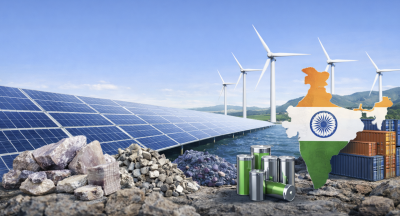
The global shift to green energy and Artificial Intelligence (AI) is creating an unprecedented demand for critical minerals. These minerals include copper, lithium, cobalt, and rare earth elements. They are essential in sectors like clean energy, defence, consumer electronics, and aerospace. India faces challenges as most refining and processing capacities are controlled by a few countries, especially China. China dominates 60% of rare earth mining and 91% of refining globally as of 2024. India aims to secure its supply chain to meet its net-zero goals and economic growth targets.
India’s Critical Minerals Reserves and Challenges
India holds the world’s fifth-largest rare earth reserves. It also has large deposits of copper and cobalt ore. However, India lacks large-scale processing and refining facilities. Existing capacities are mostly at pilot scale. The National Critical Mineral Mission (NCMM) 2025 has allocated ₹34,000 crore for seven years, which is modest compared to China’s $21.44 billion investment in 2024. India must focus on infrastructure and value chain development to utilise its reserves effectively.
Government Policies and Financial Support
The government is promoting rare-earth corridors and exempting customs duties on capital goods for processing. Financial support includes concessional loans, production tax credits, and revenue stabilisation tools like contracts for difference (CfD). These measures aim to attract private investments despite high risks and costs involved in mining and refining. Encouraging innovation and AI-driven technology in exploration can reduce costs and increase success rates in mineral discovery.
Social and Environmental Considerations
Mining activities often cause environmental damage and social unrest in local communities. The government plans to involve local populations as co-investors in mining projects. Financial facilities managed by professionals could provide capital to local projects and ensure community benefits. This approach may improve project execution and reduce conflicts.
Global Partnerships and Supply Chain Security
India is building international partnerships to diversify its critical mineral supply. The state-owned firm Khanij Bidesh India Ltd. (KABIL) collaborates with mining entities in Australia, Argentina, and Chile. These alliances help secure raw materials for batteries and other green technologies. India’s strategy includes acquiring overseas assets while respecting local interests to strengthen supply chain resilience.
Topics for Prelims:
Critical Minerals
- Include copper, lithium, cobalt, rare earth elements.
- Used in clean energy, defence, AI, aerospace.
- China dominates mining and refining globally.
- India has large untapped reserves.
- Processing capacity is a major gap in India.
National Critical Mineral Mission (NCMM)
- Launched in 2025 with ₹34,000 crore outlay.
- Focuses on infrastructure and value chain development.
- Encourages private sector participation.
- Supports rare-earth corridors and customs duty exemptions.
- Aims to reduce import dependence.
Khanij Bidesh India Ltd. (KABIL)
- State-owned company for global mineral acquisition.
- Partners with Australia, Argentina, Chile mining firms.
- Secures supply of battery and critical minerals.
- Supports India’s green energy and defence sectors.
- Focuses on sustainable and ethical mining abroad.
Questions for Mains:
- Discuss in the light of India’s net-zero ambitions, how critical minerals influence economic and energy security. Illustrate with examples of global supply chain dynamics. [GS-III-Economic Development]
- Analyse the role of government policies and financial incentives in promoting critical minerals mining and processing in India. How can these policies balance environmental and social concerns? [GS-II-Governance]
- Critically discuss the significance of international partnerships like Khanij Bidesh India Ltd. in securing critical mineral supply chains amidst geopolitical uncertainties. [GS-II-International Relations]
- With suitable examples, examine how Artificial Intelligence can transform mineral exploration and processing. Discuss its potential impact on India’s green transition goals. [GS-III-Science & Technology]
Answer Hints:
1. Discuss in the light of India’s net-zero ambitions, how critical minerals influence economic and energy security. Illustrate with examples of global supply chain dynamics. [GS-III-Economic Development]
- Critical minerals (copper, lithium, cobalt, rare earths) are essential for clean energy technologies (solar, wind, batteries) and AI systems, crucial for India’s net-zero targets.
- India holds reserves (5th largest rare earths, large copper and cobalt), but lacks large-scale refining/processing capacity, affecting energy security.
- China dominates 60% of rare earth mining and 91% of refining globally, creating supply chain vulnerabilities for India.
- Global demand surge driven by green transition and AI intensifies competition and price volatility, impacting economic stability.
- Securing supply chains through indigenous value chains and international partnerships is vital to reduce import dependence and ensure uninterrupted energy transition.
- Policy initiatives like National Critical Mineral Mission aim to develop infrastructure and processing to strengthen economic and energy security.
2. Analyse the role of government policies and financial incentives in promoting critical minerals mining and processing in India. How can these policies balance environmental and social concerns? [GS-II-Governance]
- Government initiatives include National Critical Mineral Mission (₹34,000 crore), rare-earth corridors, and customs duty exemptions on capital goods to boost investment.
- Financial incentives such as concessional loans, production tax credits, and contracts for difference (CfD) mitigate high risks and attract private sector participation.
- Promotion of AI-driven exploration reduces costs and improves discovery success rates, enhancing efficiency.
- Environmental safeguards and social inclusion are emphasized by tying incentives to high standards and involving local communities as co-investors.
- Establishing financial facilities for local community investments ensures benefits sharing, reducing social unrest and encouraging faster project execution.
- Balanced policies address economic goals while minimizing ecological damage and addressing community concerns for sustainable mining.
3. Critically discuss the significance of international partnerships like Khanij Bidesh India Ltd. in securing critical mineral supply chains amidst geopolitical uncertainties. [GS-II-International Relations]
- Khanij Bidesh India Ltd. (KABIL) is a state-owned enterprise focused on acquiring and developing critical mineral assets globally.
- Partnerships with Australian, Argentine, and Chilean mining firms diversify India’s supply sources, reducing overreliance on China.
- These alliances secure raw materials for batteries and green technologies, crucial for India’s energy transition and defence needs.
- International cooperation enhances supply chain resilience amid geopolitical tensions and trade restrictions.
- Respecting local aspirations and sustainable mining practices improves diplomatic relations and project viability abroad.
- Such strategic global engagement helps India mitigate supply risks and strengthens its position in the global green economy.
4. With suitable examples, examine how Artificial Intelligence can transform mineral exploration and processing. Discuss its potential impact on India’s green transition goals. [GS-III-Science & Technology]
- AI-driven geological analysis can reduce drilling costs and increase mineral discovery success rates by over three times, optimizing exploration.
- Machine learning models enable better prediction of mineral deposits and efficient resource allocation in mining operations.
- AI enhances refining and processing efficiency, lowering energy consumption and environmental footprint.
- Integration of AI supports development of innovative technologies in clean energy and battery materials, accelerating green transition.
- Public funding and incentives for AI innovation attract investments from electronics, automotive, and energy sectors, hedging raw material risks.
- Adoption of AI can help India bridge the gap in large-scale processing capacity and improve competitiveness globally.