
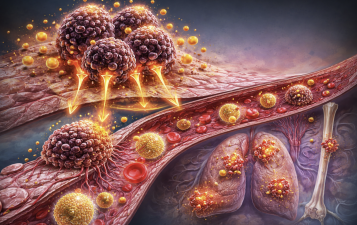
Recent studies have revealed a surprising factor that helps melanoma cancer spread. Researchers found that cholesterol in the nuclear envelope of cancer cells makes the nucleus softer and easier to deform. This softness allows cancer cells to squeeze through tight spaces and invade new tissues. The fragile nuclear envelope also tears easily, causing DNA damage and new mutations that make the cancer more aggressive. Lowering cholesterol in cancer cells reduced their invasiveness, linking cholesterol metabolism to cancer progression.
Cholesterol and Nuclear Envelope in Cancer
Cholesterol accumulates in the nuclear envelope, the thin membrane around the cell nucleus. High cholesterol makes this envelope more flexible but fragile. This flexibility helps cancer cells move through narrow gaps during metastasis. Tears in the envelope expose DNA to damage, increasing mutations. Reducing cholesterol strengthens the envelope and slows cancer spread. This pattern is seen in melanoma, breast, and prostate cancers.
Lamin B Receptor (LBR) and Cholesterol Production
LBR is a protein in the nuclear envelope with dual roles – attaching DNA to the nucleus and producing cholesterol. Many melanoma cells produce excess LBR, raising cholesterol levels and softening the nucleus. When LBR is reduced, the nuclear envelope becomes tougher and less deformable. LBR’s cholesterol-making function is crucial for this effect. Mutations or silencing of LBR reduce nuclear fragility and cancer invasiveness.
Implications for Cancer Treatment
High LBR and cholesterol appear early in cancer development. Repeated nuclear envelope damage can increase DNA mutations, promoting malignancy. Animal studies show tumours with normal LBR have more nuclear envelope ruptures than those with silenced LBR. Patient data shows higher LBR levels predict worse outcomes in melanoma. Targeting LBR or cholesterol synthesis could slow metastasis. Statins, which lower blood cholesterol, may help reduce cancer progression.
Scientific and Medical Significance
LBR’s role in cholesterol production was first linked to fungi sterol genes decades ago. This basic research unexpectedly connected to cancer biology. About cholesterol’s impact on nuclear mechanics opens new avenues for cancer therapy. It marks how fundamental biology can inform medical advances and suggests new prognostic markers and drug targets in melanoma.
Topics for Prelims:
Lamin B Receptor (LBR)
- Protein in inner nuclear membrane
- Attaches DNA to nuclear envelope
- Enzyme that produces cholesterol
- Overexpressed in melanoma cells
- Target for reducing cancer invasiveness
Cholesterol in Cancer Cells
- Present in nuclear envelope
- Makes nucleus more deformable
- Increases nuclear envelope fragility
- Facilitates cancer cell metastasis
- Lowering cholesterol reduces spread
Melanoma Cancer
- Originates in melanocytes
- Highly aggressive skin cancer
- Spreads through metastasis
- Linked to nuclear envelope cholesterol
- Prognosis worsens with high LBR levels
Questions for Mains:
- Critically analyse the role of cholesterol metabolism in cancer progression and metastasis with suitable examples. [GS-III-Science & Technology]
- Explain the significance of nuclear envelope mechanics in cellular function and how its alteration can lead to diseases such as cancer. [GS-III-Science & Technology]
- Comment on the importance of basic biological research in advancing medical treatments, citing the example of lamin B receptor (LBR) research and its implications. [GS-III-Science & Technology]
- With suitable examples, discuss the potential of targeting metabolic pathways such as cholesterol synthesis in cancer therapy and the challenges involved. [GS-III-Economic Development]
Answer Hints:
1. Critically analyse the role of cholesterol metabolism in cancer progression and metastasis with suitable examples. [GS-III-Science & Technology]
- Cholesterol accumulates in the nuclear envelope of cancer cells, increasing nuclear deformability and fragility.
- High cholesterol makes the nucleus squishy, enabling cancer cells to squeeze through tight spaces during metastasis.
- Tears in the nuclear envelope caused by cholesterol exposure lead to DNA damage and new mutations, increasing cancer aggressiveness.
- Examples include melanoma, breast, and prostate cancers showing this cholesterol-linked metastatic behavior.
- Lowering cholesterol in cancer cells (e.g., via statins) reduces invasiveness and slows progression.
- Excess cholesterol synthesis driven by overexpressed lamin B receptor (LBR) is a key metabolic alteration promoting metastasis.
2. Explain the significance of nuclear envelope mechanics in cellular function and how its alteration can lead to diseases such as cancer. [GS-III-Science & Technology]
- The nuclear envelope protects DNA and regulates nuclear shape and mechanical stability.
- Normal nuclear envelope rigidity maintains genome integrity during cell movement and stress.
- In cancer, increased cholesterol softens and weakens the nuclear envelope, making it more deformable but fragile.
- Fragile nuclear envelopes rupture, exposing DNA to damage and mutations, accelerating malignancy.
- Altered nuclear mechanics facilitate cancer cell migration and metastasis by easing passage through tight spaces.
- Thus, nuclear envelope mechanics are critical for genome stability and cellular function; their disruption contributes to cancer progression.
3. Comment on the importance of basic biological research in advancing medical treatments, citing the example of lamin B receptor (LBR) research and its implications. [GS-III-Science & Technology]
- LBR’s cholesterol-producing role was first discovered through fungal sterol gene studies unrelated to cancer.
- Basic curiosity-driven research revealed LBR’s enzymatic function, later linked to nuclear cholesterol in human cells.
- About LBR’s role helped identify its contribution to nuclear envelope fragility and cancer metastasis.
- This foundational knowledge enabled recognition of LBR as a prognostic marker and therapeutic target in melanoma.
- Shows how fundamental biology can unexpectedly inform medical advances and new treatment strategies.
- Highlights the value of investing in basic research for long-term health benefits and innovation.
4. With suitable examples, discuss the potential of targeting metabolic pathways such as cholesterol synthesis in cancer therapy and the challenges involved. [GS-III-Economic Development]
- Targeting cholesterol synthesis (e.g., via LBR inhibition or statins) can reduce nuclear envelope fragility and cancer invasiveness.
- Statins, which lower systemic cholesterol, are associated epidemiologically with slower melanoma progression.
- Metabolic targeting can impair cancer cell proliferation and ability to survive nutrient deprivation.
- Challenges include specificity, as cholesterol is vital for normal cell function and systemic metabolism.
- Potential side effects and resistance mechanisms may limit efficacy of metabolic inhibitors.
- Requires careful design of drugs to selectively affect tumor cells without harming healthy tissues.