
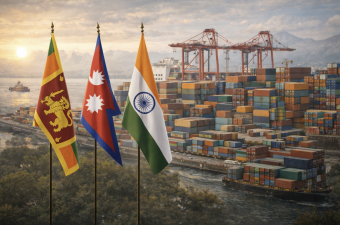
Recent political changes in South Asia offer India a fresh chance to reset its neighbourhood policy. New governments in Bangladesh, Nepal, and Sri Lanka signal a shift towards pragmatic and interest-based relations. This evolving landscape requires India to rethink its approach, especially in trade and connectivity, to encourage mutual growth and stability.
Political Shifts in South Asia
Bangladesh’s recent election gave a strong mandate to Tarique Rahman and the Bangladesh Nationalist Party. Rahman’s Bangladesh First stance opens doors for a practical partnership with India. Nepal witnessed a generational change with the rise of the Rastriya Swatantra Party and Balendra Shah, ending cycles of distrust. Sri Lanka, under new leadership since 2024, is moving towards pragmatic ties with India, leaving behind historical animosities. These changes create an opportunity for India to engage as an equal partner respecting sovereignty.
Trade and Economic Interdependence
India’s regional trade policy has been protectionist, limiting benefits despite geographic proximity. Bangladesh and Sri Lanka mainly export to the West, while China dominates imports. India remains Nepal’s largest trading partner but with limited growth due to infrastructure and trade barriers. India runs trade surpluses with neighbours but faces deficits with China. The solution lies in importing more from neighbours, improving investment, and modernising borders to boost regional trade.
Connectivity and Regional Cooperation
Better connectivity between India, Bangladesh, and Nepal can uplift the eastern Subcontinent’s poorest regions. This requires infrastructure upgrades, simplified customs, and agreed rules of origin. Cooperation on economic and energy security with Bangladesh, Bhutan, Nepal, Sri Lanka, and the Maldives is essential amid global uncertainties and Gulf region instability. Progress needs political will and innovative policies rather than new regional forums like SAARC.
Changing Mindsets for Partnership
India’s past neighbourhood policy assumed smaller neighbours should be grateful for Indian favours. This bred resentment and political friction. New governments seek partnership, not patronage. Agreements must deliver clear benefits such as jobs, exports, and growth. India must move beyond rhetoric and protectionism to build genuine, mutually beneficial ties in South Asia.
Topics for Prelims:
Bangladesh Nationalist Party (BNP)
- Founded in 1978 by Ziaur Rahman.
- Key opposition party in Bangladesh politics.
- Supports Bangladesh First nationalist policies.
- Led by Tarique Rahman since 2018.
- Focuses on economic development and regional cooperation.
Rastriya Swatantra Party (Nepal)
- Formed in 2022 as a reformist party.
- Won seats in 2026 elections.
- Led by Balendra Shah, a popular independent figure.
- Advocates transparency and sovereignty.
- Seeks to end traditional political distrust.
India-Bangladesh Trade Relations
- Share a 4,000 km border.
- Deep economic interdependence over the last decade.
- India runs trade surpluses with Bangladesh.
- Trade hampered by infrastructure and non-tariff barriers.
- Potential for growth through improved connectivity and market access.
Questions for Mains:
- Critically analyse the impact of political transitions in South Asia on India’s neighbourhood policy and regional stability. [GS-II-International Relations]
- Comment on the role of trade liberalisation in enhancing India’s influence in South Asia and its challenges. [GS-III-Economic Development]
- Explain the importance of connectivity infrastructure in regional cooperation and economic growth in South Asia with suitable examples. [GS-III-World & Physical Geography]
- Underline the need for changing mindsets in India’s foreign policy towards neighbours and discuss how equitable partnerships can be established. [GS-II-Governance]
Answer Hints:
1. Critically analyse the impact of political transitions in South Asia on India’s neighbourhood policy and regional stability. [GS-II-International Relations]
- Recent elections in Bangladesh, Nepal, and Sri Lanka brought new governments with pragmatic, interest-based approaches.
- Bangladesh Nationalist Party’s Bangladesh First stance offers opportunity for mature, unsentimental ties with India.
- Nepal’s generational shift, led by Rastriya Swatantra Party, demands respect for sovereignty and equality, moving beyond old distrust.
- Sri Lanka’s new leadership since 2024 is breaking historical animosities, favoring pragmatic engagement with India.
- These shifts reduce political toxicity and open space for resetting India’s neighbourhood policy on partnership, not patronage.
- Overall, political transitions enhance regional stability if India adapts with respect and mutual benefit focus.
2. Comment on the role of trade liberalisation in enhancing India’s influence in South Asia and its challenges. [GS-III-Economic Development]
- India’s past regional trade policy was protectionist, limiting benefits despite geographic proximity.
- Trade liberalisation can boost India’s influence by increasing regional economic interdependence and market access.
- India runs trade surpluses with neighbours but faces deficits with China; importing more from neighbours can balance trade.
- Challenges include poor infrastructure, non-tariff barriers, and reluctance to offer neighbours market access.
- Trade facilitation, investment ties, and modernised border infrastructure are needed to overcome protectionism.
- Effective trade liberalisation would translate into jobs, exports, and growth for India and its neighbours alike.
3. Explain the importance of connectivity infrastructure in regional cooperation and economic growth in South Asia with suitable examples. [GS-III-World & Physical Geography]
- Connectivity boosts trade, investment, and people-to-people contacts, essential for regional cooperation.
- India-Bangladesh-Nepal connectivity can uplift poorest eastern Subcontinent regions through improved infrastructure.
- Examples – open borders hampered by poor roads, customs delays, and non-tariff barriers limit trade potential.
- Modernised border infrastructure and simplified customs can reduce transaction costs and encourage cross-border trade.
- Enhanced connectivity supports energy security cooperation with Bangladesh, Bhutan, Nepal, Sri Lanka, and Maldives.
- Improved connectivity encourages regional economic growth, stability, and integration amid global uncertainties.
4. Underline the need for changing mindsets in India’s foreign policy towards neighbours and discuss how equitable partnerships can be established. [GS-II-Governance]
- Past policy assumed India’s role as a patron offering favours, expecting gratitude and deference, breeding resentment.
- New governments in neighbourhood seek partnership based on equality, sovereignty, and mutual benefit.
- Changing mindset requires moving from rhetoric to delivering visible, measurable benefits like jobs, exports, and growth.
- Equitable partnerships need open markets, improved connectivity, and shared political ownership of agreements.
- Policy innovation, institutional agility, and political will are crucial to sustain these partnerships.
- Rejecting dependency and clientelism, India must treat neighbours as equal stakeholders for long-term stability.