
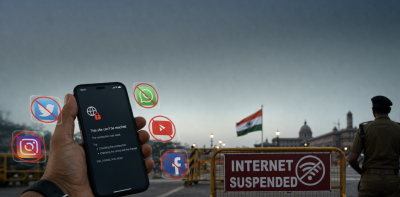
A comprehensive study analysed website blocking by Indian Internet Service Providers (ISPs). It revealed wide inconsistencies in how ISPs implement government-mandated blocking orders. These orders arise under Sections 69A and 79 of the Information Technology Act, 2000. The study focused on DNS-level blocking across six major and regional ISPs.
Legal Framework and ISP Obligations
The Government of India uses Sections 69A and 79 of the IT Act to issue blocking orders to ISPs and intermediaries. ISPs must comply as per their licensing agreements. These orders are confidential and binding. However, no standardised guidelines exist on how ISPs should implement these blocks, leading to varied practices.
Technical Implementation of Blocking
ISPs can block websites using different Internet protocols such as HTTP, TLS, or DNS. Most Indian ISPs rely on DNS poisoning, which returns false addresses when users try to access blocked domains. This method is cost-effective and avoids deep packet inspection but is easier to circumvent and inconsistent across providers.
Findings on Blocking Patterns
The study tested 294 million domains and found 43,083 blocked by at least one ISP. Only 1,414 domains were blocked by all six ISPs on the DNS layer. Blocks related to piracy, pornography, gambling, and peer-to-peer sharing were inconsistent. Terrorism-related content showed higher consensus. Some sensitive sites like Weibo.com and The Kashmir Walla were uniformly blocked, indicating selective strictness.
Issues and Transparency Challenges
The blocking regime is opaque and arbitrary, with no public disclosure of blocked domains except in rare cases. This lack of transparency and uniformity undermines user experience and raises concerns about censorship fairness. An ideal system would publicly disclose blocked sites, except for national security or child abuse material.
Topics for Prelims:
Information Technology Act, 2000
- Section 69A empowers blocking of websites for sovereignty, security, and public order.
- Section 79 provides safe harbour protection to intermediaries.
- Blocking orders are confidential and binding on ISPs.
- No uniform implementation guidelines exist for blocking.
- ISPs must comply under licensing agreements.
DNS Poisoning and Internet Protocols
- DNS translates domain names into IP addresses.
- DNS poisoning returns false addresses to block sites.
- It is cost-effective and widely used by Indian ISPs.
- Other protocols used for blocking include HTTP and TLS.
- DNS blocking is easier to circumvent than deep packet inspection.
Internet Censorship Patterns in India
- 43,083 domains blocked by at least one ISP in 2025 study.
- Only 1,414 domains blocked by all six ISPs on DNS layer.
- Inconsistent blocking for piracy, gambling, pornography.
- High consensus on terrorism and militancy content blocking.
- Opaque and arbitrary blocking practices prevail.
Questions for Mains:
- Discuss in the light of Indian legal provisions how Internet censorship impacts freedom of expression and the challenges in its implementation. [GS-II-Constitution of India & Polity]
- Analyse the role of Internet Service Providers in enforcing government censorship orders and the implications for digital rights in India. [GS-II-Governance]
- With suitable examples, examine the technological methods used for Internet censorship and their effectiveness in the Indian context. [GS-III-Science & Technology]
- Critically discuss the need for transparency and uniformity in Internet blocking practices in India and its impact on democratic accountability. [GS-II-Social Justice]
Answer Hints:
1. Discuss in the light of Indian legal provisions how Internet censorship impacts freedom of expression and the challenges in its implementation. [GS-II-Constitution of India & Polity]
- Sections 69A and 79 of IT Act, 2000 empower government to block content for sovereignty, security, public order.
- Blocking orders are binding and confidential, limiting judicial or public scrutiny.
- Censorship impacts freedom of expression guaranteed under Article 19(1)(a) but is subject to reasonable restrictions under Article 19(2).
- Lack of uniform guidelines causes arbitrary and inconsistent blocking, affecting fair access to information.
- Opaque implementation restricts transparency, raising concerns over overreach and misuse.
- Challenges include balancing national security with democratic freedoms and ensuring due process in censorship decisions.
2. Analyse the role of Internet Service Providers in enforcing government censorship orders and the implications for digital rights in India. [GS-II-Governance]
- ISPs are legally obligated under licensing agreements to implement blocking orders from government.
- They primarily use DNS poisoning, a cost-effective but inconsistent and easily circumvented method.
- ISPs’ inconsistent blocking across providers leads to unequal Internet access and user experience.
- Confidentiality of orders and lack of transparency limit user awareness and redressal options.
- ISPs act as intermediaries, raising questions on their accountability and role in protecting digital rights.
- Implications include potential violation of users’ right to information and freedom of expression online.
3. With suitable examples, examine the technological methods used for Internet censorship and their effectiveness in the Indian context. [GS-III-Science & Technology]
- DNS poisoning – ISPs return false IPs for blocked domains; widely used due to low cost and simplicity.
- HTTP and TLS blocking – deeper inspection methods that can block specific URLs or content but costlier and complex.
- Effectiveness varies – DNS blocking is inconsistent and easily bypassed via alternative DNS or VPNs.
- Study shows only 1,414 domains uniformly blocked on DNS layer among 43,083 blocked overall.
- Examples – Uniform blocking of sensitive sites like Weibo.com and Kashmir Walla vs. inconsistent blocking of piracy or gambling sites.
- Technological gaps and lack of uniform standards undermine effective and fair censorship implementation.
4. Critically discuss the need for transparency and uniformity in Internet blocking practices in India and its impact on democratic accountability. [GS-II-Social Justice]
- Current blocking regime is opaque; blocked domain lists are confidential except rare sensitive cases.
- Lack of uniformity causes arbitrary, inconsistent censorship across ISPs, undermining fairness.
- Transparency is essential for public oversight, trust, and preventing misuse of blocking powers.
- Disclosure of blocked sites (except for national security/child abuse) promotes accountability and user awareness.
- Uniform guidelines and standardized implementation reduce confusion and ensure equal Internet access.
- Transparency and uniformity strengthen democratic principles by protecting freedom of expression and enabling judicial review.