
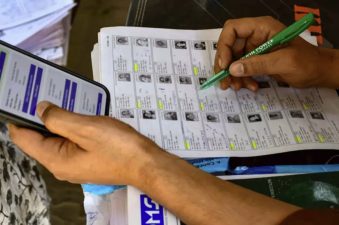
The Special Intensive Revision (SIR) of electoral rolls in West Bengal began on November 4, 2025, with 7.66 crore voters. The Election Commission of India (ECI) deleted over 90.8 lakh names after the revision, reducing eligible voters to 6.77 crore. The process involved categorising voters under absent, shifted, dead, duplicate (ASDD), unmapped, and logical discrepancy categories.
Logical Discrepancies and AI Algorithm
The ECI used an AI algorithm to identify five types of logical discrepancies: spelling differences in names between 2002 and 2025 rolls; more than six voters linked to a single ancestor; age gaps between voters and parents outside 15-45 years; grandparents’ age difference less than 40 years; and gender-name mismatches. Of 1.5 crore cases flagged, 60 lakh remained disputed and were placed under adjudication.
Adjudication and Judicial Intervention
The Supreme Court intervened in March 2026 due to a trust deficit between the ECI and the West Bengal government. It deployed nearly 700 judicial officers from West Bengal, Odisha, and Jharkhand to adjudicate 60 lakh disputed cases. The officers rejected 27 lakh names, while the remaining voters can appeal to 19 special tribunals. Electoral rolls were frozen for the upcoming Assembly elections.
Political and Demographic Impact
The Bharatiya Janata Party (BJP) supported the SIR process, while the Trinamool Congress (TMC) criticised it, alleging voter disenfranchisement. TMC leader Mamata Banerjee approached the Supreme Court against the roll freeze. Civil society activists claimed the deletions disproportionately affected Muslim voters, especially in Murshidabad, Malda, and Uttar Dinajpur districts, and targeted women in Matua-dominated areas.
Electoral Roll Changes and Future Prospects
Post-SIR, West Bengal’s electoral rolls shrank by over 90 lakh names from the pre-2025 list. The final rolls list 6.77 crore eligible voters. Those excluded but cleared by tribunals may not vote in the upcoming polls due to frozen rolls. The Supreme Court is scheduled to hear petitions challenging the roll freeze on April 13, 2026.
What to Study for UPSC Exams?
- Electoral Roll Management in India
- Role of Judiciary in Electoral Disputes
- AI and Technology in Election Processes
- Communal Demography and Electoral Politics
Electoral Roll Management in India
Electoral roll management is overseen by the Election Commission of India, involving continuous updating through additions, deletions, and corrections. The process includes periodic revisions like the Special Intensive Revision (SIR) and continuous updating via claims and objections. Voter lists are categorized by age, residence, and eligibility, with strict legal provisions to prevent duplicate or fraudulent entries. The system uses voter ID cards and biometric data to enhance accuracy.
Role of Judiciary in Electoral Disputes
The judiciary in India acts as an impartial arbitrator in electoral disputes, ensuring adherence to constitutional provisions. It adjudicates challenges related to electoral rolls, candidate eligibility, and election conduct. Courts can appoint special tribunals or officers for dispute resolution and have the power to freeze electoral rolls or order re-elections. Judicial intervention maintains electoral integrity and public trust by enforcing legal remedies against malpractices.
AI and Technology in Election Processes
Artificial intelligence is increasingly used to detect anomalies in voter data, such as duplicate entries and logical discrepancies. Technologies include facial recognition, biometric verification, and data analytics to improve accuracy and transparency. AI algorithms can flag inconsistencies in names, ages, and familial relationships, reducing human error. Electronic Voting Machines (EVMs) and Voter Verifiable Paper Audit Trails (VVPAT) are also integral to modern election technology.
Communal Demography and Electoral Politics
Communal demography studies population distribution by religion and ethnicity, influencing voting patterns and political strategies. Political parties often target specific communities to consolidate vote banks. Demographic shifts can alter electoral outcomes, with communal identity sometimes shaping candidate selection and campaign focus. Census and electoral data are analyzed to understand and predict communal voting behavior in diverse societies.
Last Modified: April 12, 2026