
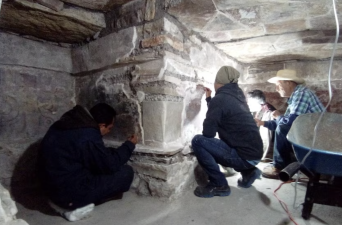
Archaeologists in Mexico have uncovered a 1,400-year-old tomb linked to the Zapotec civilisation in San Pablo Huitzo, Oaxaca. The burial site, dated to around A.D. 600, is notable for its exceptional preservation, including a carved owl, multicoloured murals, calendrical inscriptions and human remains. Officials described it as one of the most important archaeological finds in Mexico in recent years.
Discovery and Location
The tomb was found in San Pablo Huitzo, a municipality in southern Mexico’s Oaxaca state. It was identified after an investigation into an anonymous report of looting at the site. The burial chamber belongs to the Zapotec culture, an Indigenous civilisation that flourished in the region for centuries.
Key Archaeological Features
The tomb entrance features a large sculpted owl with a painted human face in its beak. In Zapotec symbolism, the owl was associated with death and power. Inside, archaeologists found:
- Carved stone slabs with calendrical names.
- Figures of a man and a woman flanking the doorway.
- Murals in white, green, red and blue.
- Depictions of a funeral procession carrying copal resin.
Historical Significance
The tomb offers insight into Zapotec social organisation, funerary practices and religious worldview. The Zapotec civilisation emerged around 700 B.C. and later declined after the Spanish conquest in 1521. However, Zapotec-speaking communities continue to live in Mexico , especially in Oaxaca.
Conservation and Research
An interdisciplinary team from Mexico’s National Institute of Anthropology and History is working to conserve the tomb and study its ceramic remains, iconography and human bones. The discovery adds to a growing list of Zapotec tombs found in Oaxaca, although many earlier sites were damaged by looting before proper study.
Last Modified: April 27, 2026