
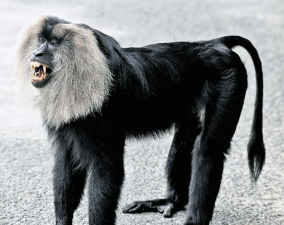
The lion-tailed macaque, one of India’s most endangered primates, is showing unusual population growth in the fragmented rainforests of the Anamalai Hills in the Western Ghats. However, scientists warn that this apparent success in plantations, tourist corridors and other human-dominated spaces may mask deeper conservation risks. A long-term study suggests that food availability linked to human activity is supporting macaque numbers outside protected forests, but also increasing exposure to accidents, disturbance and habitat degradation.
Population Pattern in Anamalai Hills
Researchers studied 37 macaque groups across 10 rainforest fragments over four decades. Of these, 29 groups lived inside protected forests, while eight occupied non-protected areas such as tea, coffee and teak plantations, settlements and grazing lands. Population growth was more visible in non-protected zones, where fruit trees, garbage and food waste provide easy access to food.
Protected Forests Remain More Stable
Inside protected areas, macaque groups were demographically more stable. Although growth was slower, these groups had healthier age and sex structures, including a stronger presence of adult females. Birth rates did not differ between protected and unprotected areas, but long-term stability was better in intact forest habitats.
Human Disturbance Raises Long-Term Risk
Scientists caution that dependence on human-linked food sources can increase mortality. Road accidents, electrocution, tourism pressure and logging are major threats in unprotected landscapes. The species also depends on continuous canopy cover, and group size showed a negative correlation with canopy height, underlining the need for intact arboreal pathways.
Conservation Measures Suggested
The study calls for urgent habitat management, including canopy continuity, traffic regulation at wildlife crossing points, speed limits, speed breakers and control of tourist inflow into sensitive areas. Pilot measures in Tamil Nadu have shown promise. Researchers say a comprehensive management plan for the lion-tailed macaque could serve as a model for conservation in the Western Ghats.
Last Modified: April 28, 2026