
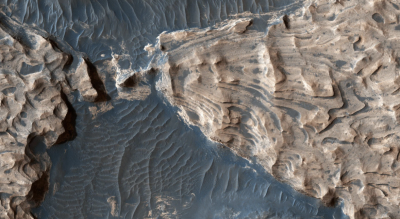
Mars has yielded evidence of a rare iron sulfate phase that may represent a previously unknown mineral. The finding comes from combined orbital observations and laboratory experiments focused on layered sulfate deposits near Valles Marineris, one of the largest canyon systems in the solar system. The study strengthens the view that heat, water, and oxidation have continued to shape parts of Mars long after its ancient wet period.
Discovery of Ferric Hydroxysulfate
Scientists identified an uncommon ferric hydroxysulfate phase in Martian sulfate-bearing deposits. The material shows unusual spectral signatures that had puzzled researchers for nearly two decades. It was detected using data from the CRISM instrument on an orbiting spacecraft. The mineral appears to have a distinct crystal structure and thermal behaviour, suggesting it may be a new mineral species, although formal recognition would require finding it on Earth as well.
Study Sites Near Valles Marineris
The research examined two key locations:
- Aram Chaos, a rugged terrain northeast of Valles Marineris.
- Juventae Plateau, above Juventae Chasma, a deep canyon north of the main canyon system.
Both sites preserve layered sulfate deposits and geological signs of ancient water activity. In Juventae Plateau, sulfate minerals were found in thin layers around one metre thick, likely formed as sulfate-rich water evaporated from small pools. In Aram Chaos, layered sulfates appear linked to ancient flooding and later exposure to heat.
Laboratory Tests and Mineral Formation
Experiments showed that hydrated ferrous sulfates change with heating. At about 50°C, polyhydrated sulfates convert into monohydrated forms. Above 100°C, ferric hydroxysulfate forms. This indicates that geothermal heat or volcanic activity likely altered the minerals after deposition. The reaction also requires oxygen, which is present in Mars’ thin atmosphere in small amounts.
Significance for Martian History
The discovery suggests that parts of Mars remained chemically active more recently than previously thought, possibly during the Amazonian period, less than 3 billion years ago. The rare mineral may point to local geothermal sources beneath Aram Chaos and volcanic heating at Juventae Plateau. These findings provide new clues about Mars’ thermal evolution, past water chemistry, and the planet’s potential habitability.
Last Modified: April 29, 2026